If you find something unusual while walking, it might be useful to take a picture of it for later use. I happened to take a picture of an unusual waterway, which was the distribution canal of the Yatsuzawa Power Station, an important cultural asset.
Kamitorisawa-juku
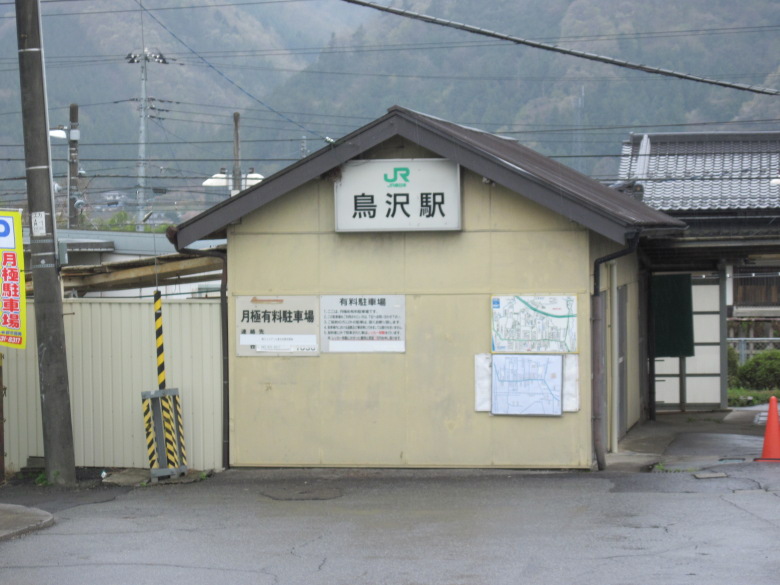
Torisawa Station
Departing from Torisawa Station, I reached the old Koshu Kaido highway in less than 100 meters.
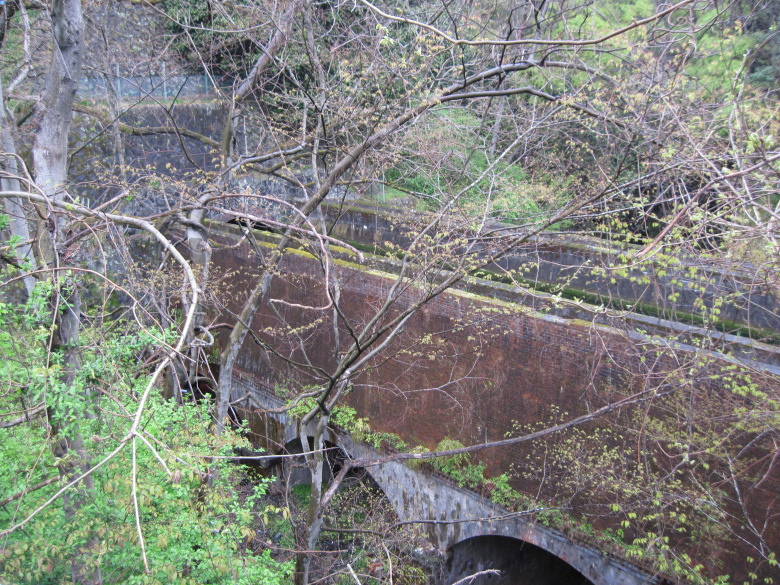
Yatsusawa Power Plant Facility No. 3 Aqueduct
After walking about two kilometers, I found a canal! The water was flowing quite vigorously. The water was flowing quite vigorously, so I took a picture of it since it was unusual.
I didn’t know it when I was walking, but this is the third aqueduct of the Yatsusawa Power Plant. This waterway drains the Komabashi Power Station to the west, and is drawn around for about 14 km, resulting in an effective drop of 116.29m, which is used for power generation at the Yatsuzawa Power Station.
The construction of the entire canal was started in 1910 and completed in 1914, and the entire set of power plant facilities, including the canal, was designated as an Important Cultural Property in 2005.
From these facts, I can learn many things.
First, the drop in water is precious. Otherwise, I wouldn’t have constructed 14 kilometers in just four years.
Secondly, the Katsura River is a rapid river. The elevation changes by about 10 meters per kilometer.
Third, Japan’s civil engineering technology is superior. The closer a waterway is to horizontal, the greater the effective drop. However, if the channel is horizontal, water cannot flow, so it is sloped to some extent. Moreover, most of them are culverts.
The waterway is still working after 100 years and has an excellent design. The technology and efforts of our ancestors are truly amazing.
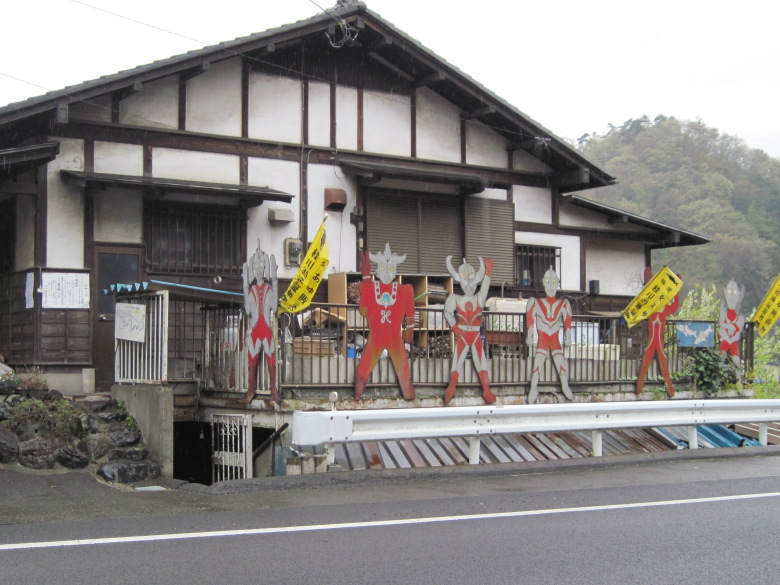
Ultraman’s Family
Four minutes later, I found Ultraman’s family, and they are 3.8 heads tall. So short. They should have made it with better looking proportions.
Saruhashi-juku
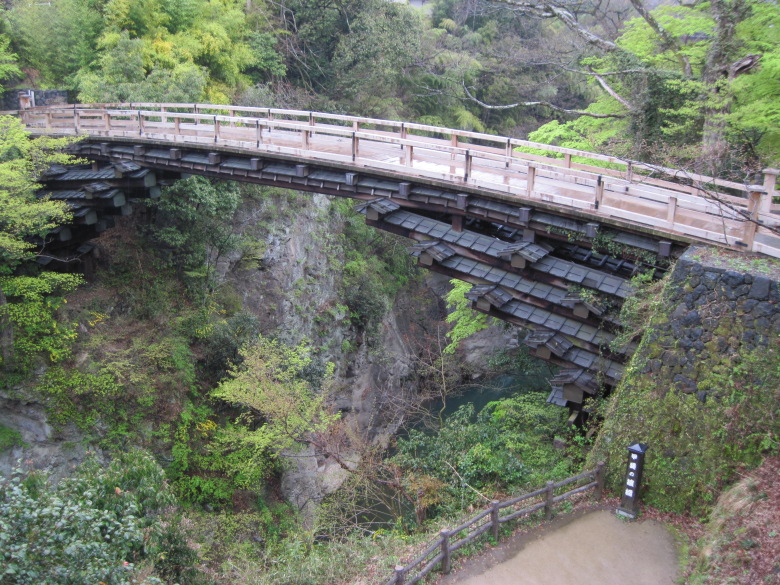
Saruhashi
I came to Saruhashi.
Did you know that the Saruhashi Bridge appears in the book “Tokaidochu Hizakurige”?
When Yaji and Kita cross the Banyu River (Sagami River), it says, “This river flows down from the Saruhashi Bridge in Kai.” People in the Edo period knew their geography very well, didn’t they?
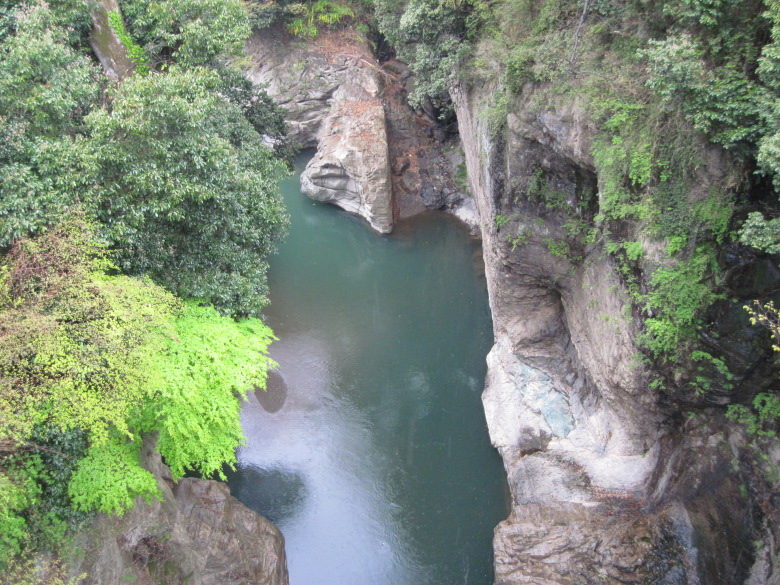
The source of the Banyu River
The source of the Banyu River is here.

Yatsusawa Power Plant Facility No. 1 Aqueduct
Just downstream from the Saruhashi (monkey bridge), I found the first aqueduct of the Yatsusawa Hydroelectric Power Plant facility! This one, too, I only thought of as an unusual bridge on the spot.
Incidentally, the Saruhashi in Kai is considered to be one of the three oddest bridges in Japan. The other two are the Kintai Bridge in Iwakuni and the Kazura Bridge in Iya. There seems to be some disagreement about the Kazura Bridge. But I think it’s the Kazura Bridge, because if I did, I would have conquered all three bridges with this Saruhashi, and that’s my personal reason.
I found some photos to prove it, so I’ll post them here.
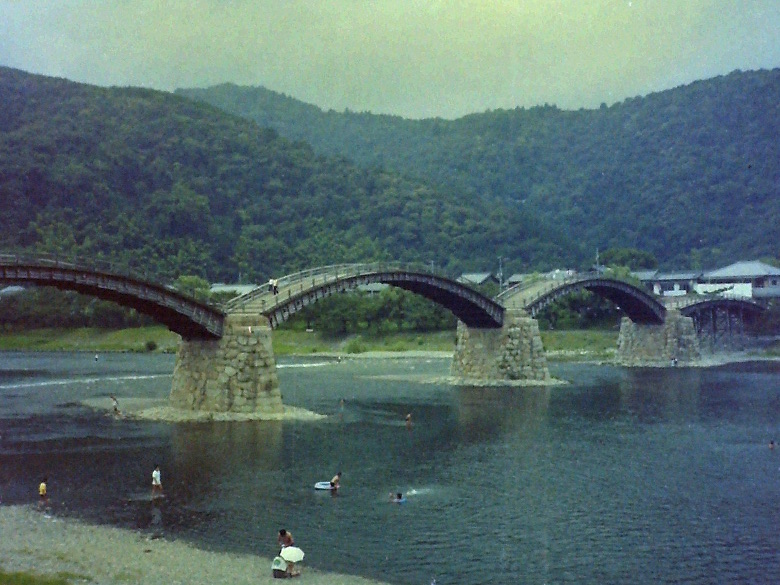
[Reference] Kintai Bridge
The Nishiki River is a beautiful river, isn’t it? People are swimming in it. I didn’t remember that at all until I found this photo.
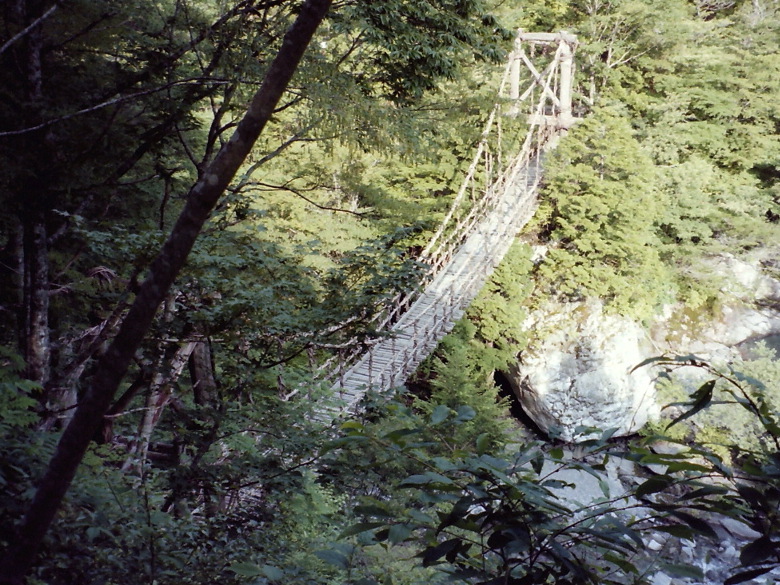
[Reference] Kazura Bridge
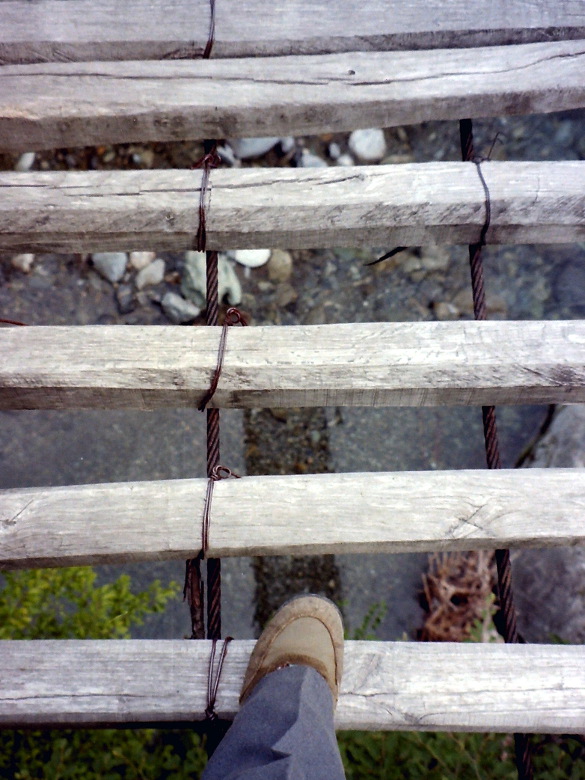
Crossing the Kazura Bridge
From a distance, it looked like just a bridge suspended by vines, but when I crossed it, I was scared that it would sway and I might step off. It was deep in the mountains with no one around, so I had to be very careful crossing it.
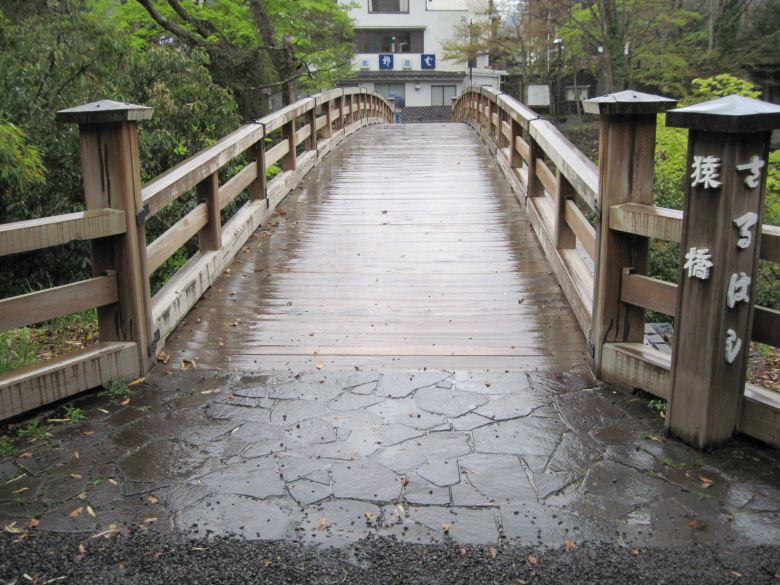
Saruhashi before crossing
By the way, let’s go back to the monkey bridge. This is what the Saruhashi looks like before crossing. It’s safe and easy to cross. This is an image taken with a compact digital camera.
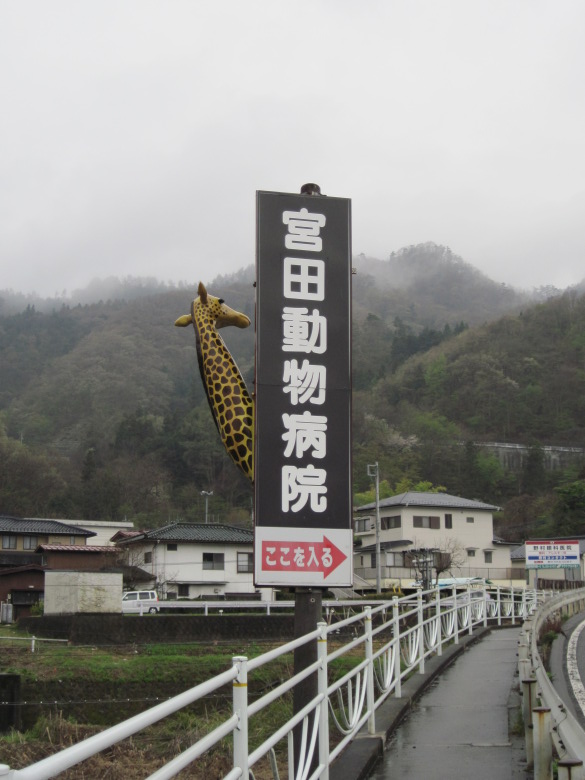
Sign with giraffe
Suddenly, a giraffe appears!
This is a sign for Miyata Animal Hospital. It’s very well done. The giraffe is an order of cetaceans, so I wonder if they even reproduced the fact that it has no front teeth on its upper jaw.
When I came here, I wondered if whales also had front teeth on their upper jaw, so I googled it.
When I looked at the photo of the killer whale skeleton, I was sure that it did not have front teeth in the upper jaw. It looks like they don’t have front teeth on the lower jaw either.
Komahashi-juku
I came to Komabashi. This is near the starting point of the 14km waterway.
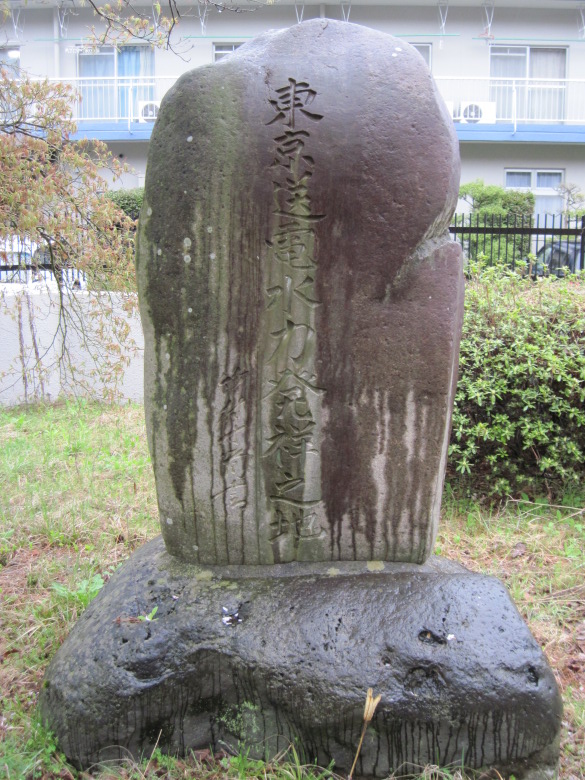
Birthplace of Tokyo Power Transmission Hydro
This is a stone monument to the “Birthplace of Tokyo Power Transmission Hydro.” The word order is a bit confusing, but I understand what you mean. I guess they tried to show in a minimum number of letters that they were the first to transmit electricity from “hydropower” to “Tokyo”.
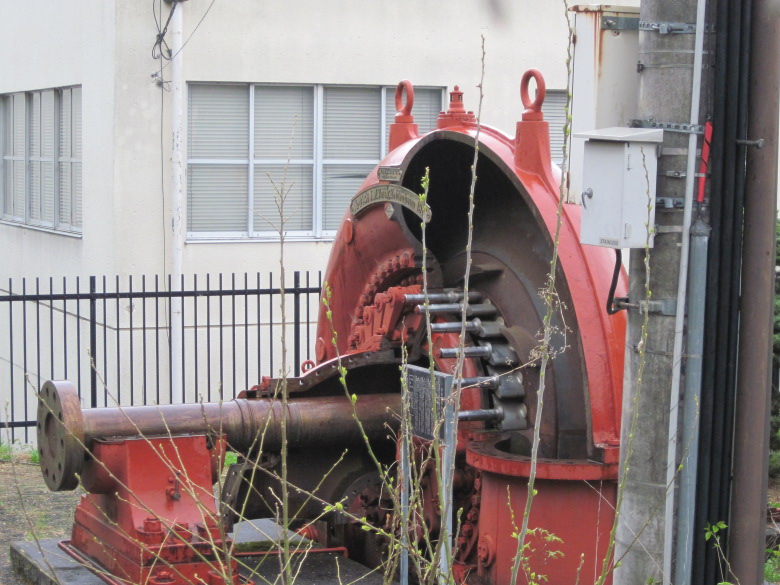
Francis waterwheel used at the Shikadome Power Station
Inside the gate of Komabashi Power Station, there is an old water wheel on display.
After returning home, I found out that this was a Francis waterwheel used at a power station in Tsuru called the Shikadome Power Station. You can definitely see the guide vanes.
One of the Francis turbines used in Komabashi is in the Electricity Museum.
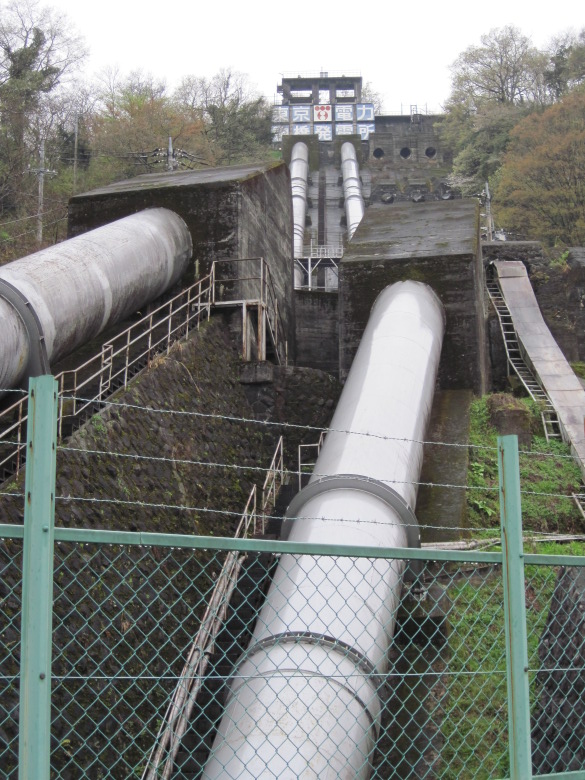
Water pressure pipe at Komahashi Power Plant
When I look up, I see a thick hydraulic pipe coming all the way down. I wondered about this. Why is it the same thickness from top to bottom?
When you let out a little water from the tap, doesn’t it get thinner the lower you go compared to the faucet? Because the lower you go, the faster the water goes. Then, shouldn’t the water pressure pipe also be thinner the lower it goes? What? Is it okay to keep the thickness constant because the water is all packed inside the pipe and flows at the same speed from top to bottom? That would be a violation of the law of mechanical energy. What? Is it conserved as pressure by Bernoulli’s theorem? Then the pressure at the top of the water pressure pipe is getting smaller and causing cavitation, isn’t it? Doesn’t it corrode and get torn to pieces quickly? I really don’t know. Well, the water wheel is still turning.
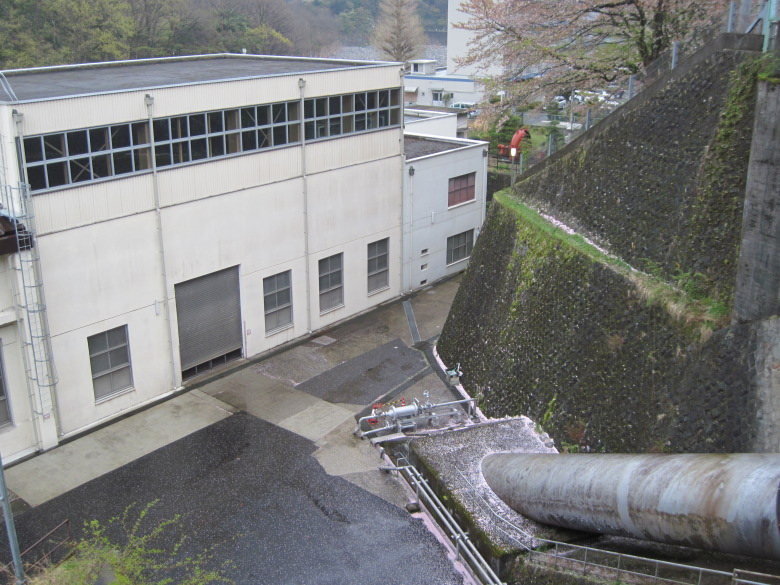
Hydraulic pipe heading to the power plant
By the way, this is what the water pressure pipe looks like on the way into the power plant.
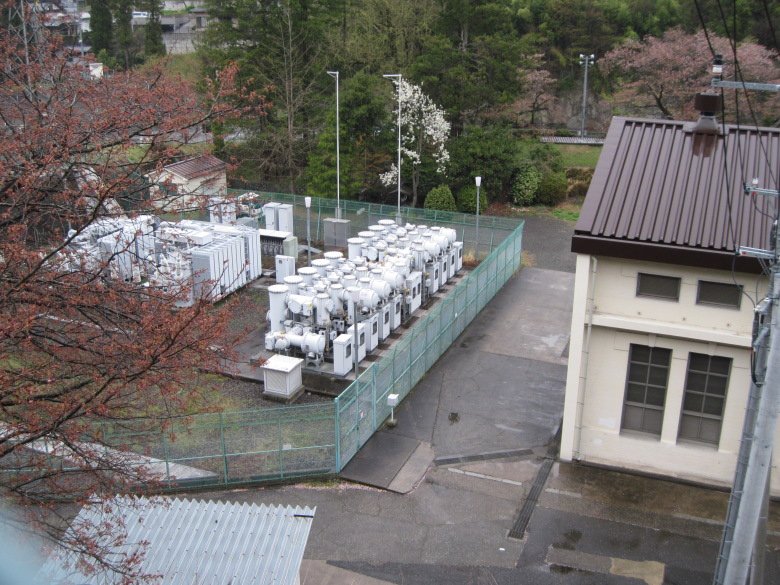
Power transformer
What you see lined up is probably a transformer.
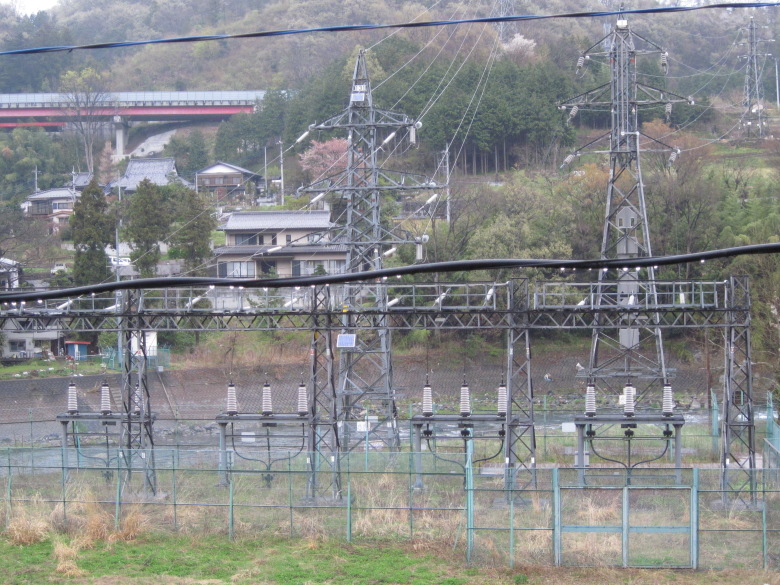
power distribution end
This is the power transmission and receiving end. The transmission voltage in 1907 was 55,000V, and now it is 66,000V. In the upper left is the Chuo Expressway.
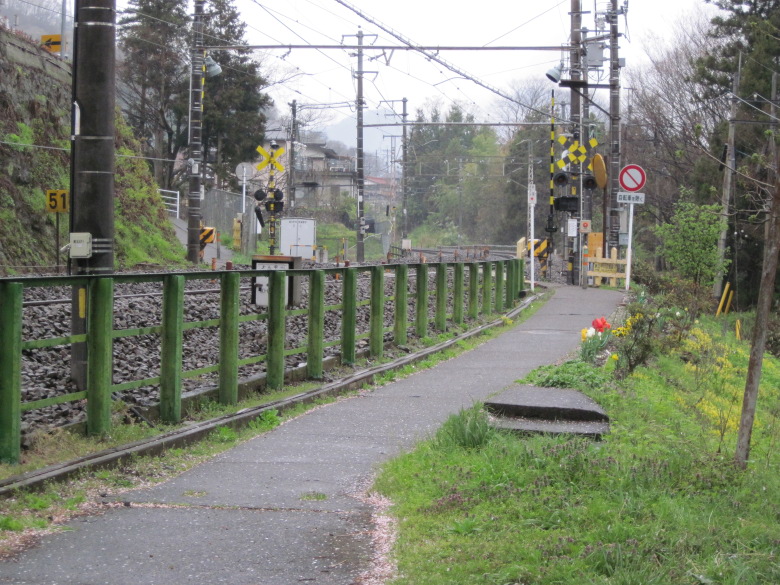
Fifth Koshu Kaido Crossing
This is the 5th Koshu Kaido crossing. Do the 1st through 4th crossings also exist?
Otsuki-juku
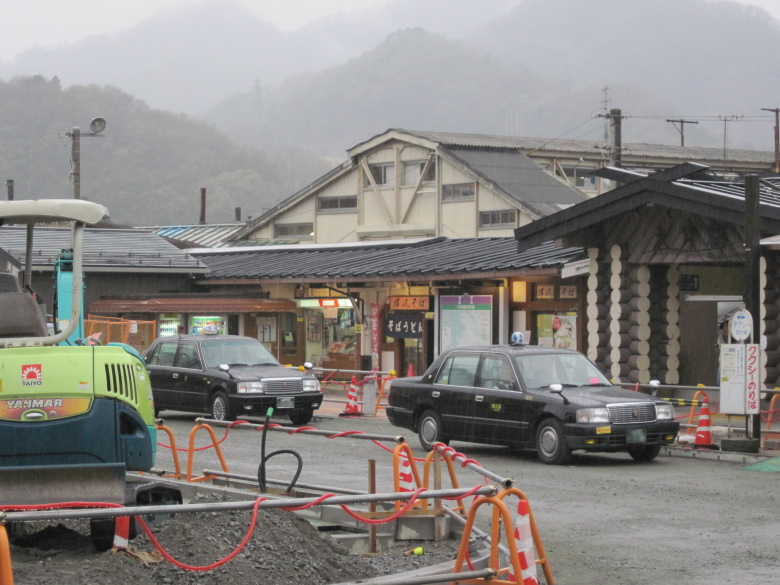
Ohtsuki Station
I arrived at Ohtsuki Station.
There is some construction going on. If so, this photo might be a valuable picture of the construction work in progress.
Walking data
Course:JR Chuo Line Torisawa Station -> Kamitorisawa-juku -> Saruhashi-juku -> Komahashi-juku -> Otsuki-juku -> JR Chuo Line Otsuki Station
Distance: 8km
Time: 2h19m
References
(*) Jippensha Ikkyu: Tokaido Chu Hizakurige, Iwanami Bunko, Ki 227-1, Iwanami Shoten, p.96, 1973, ISBN 4-00-302271-8

