There are still traditional old townscapes in places along the major highways. Today, I came across a beautiful town called Arimatsu.
Okazaki-juku
I left the hotel a little after 6:00 and began the continuation of the 27 turns under Okazaki Castle.
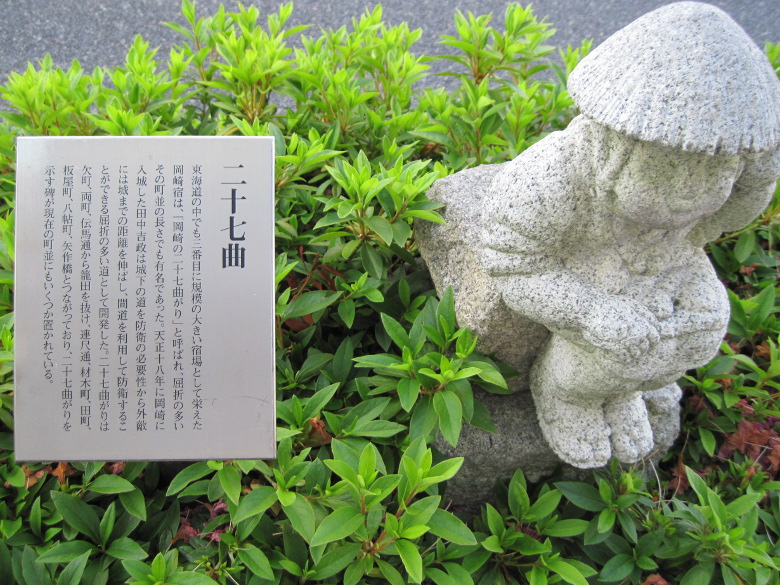
27 turns stone sculpture
The road was covered with stone carvings in many places.
The 27 turns can be tricky to get past if you don’t concentrate on the standing signs at the turns.
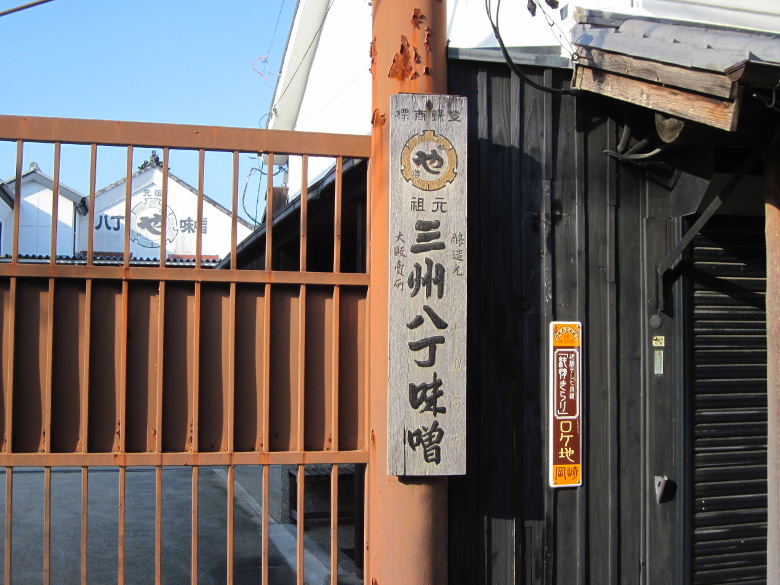
Breweries of Hatcho miso
There were several breweries of Hatcho miso. This area was spared from the war, and there were still some old buildings.
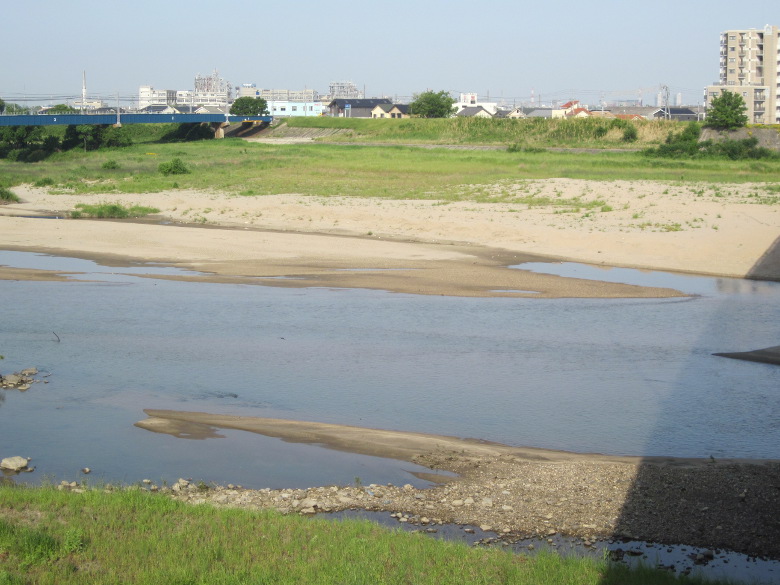
Yahagi River.
After an hour of walking, I came to the Yahagi River. In the Edo period (1603-1868), the longest wooden bridge on the Tokaido Highway was built over this Yahagi River.
Chiryu-juku
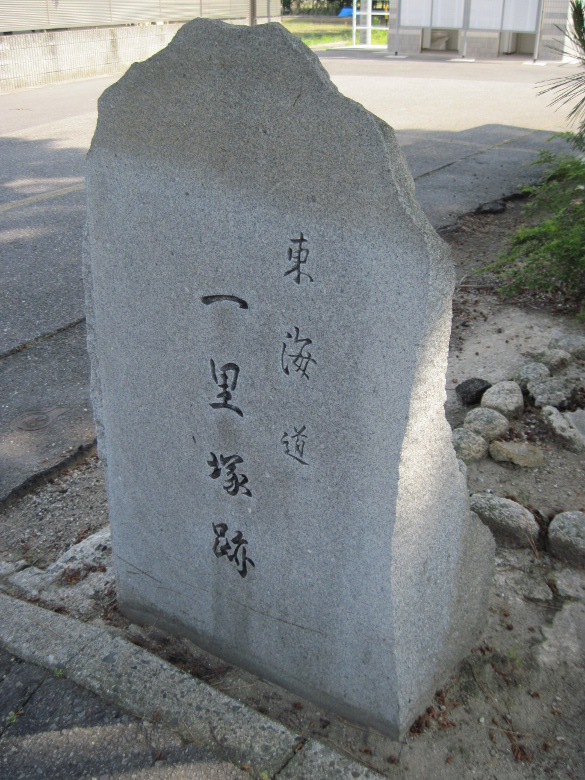
Site of Ozaki Ichirizuka
After another hour, I found the site of Ozaki Ichirizuka (83 ri). The 1st Okazaki Naval Air Squadron was established in this area at the end of World War II, and there was a board explaining this.
Not long after Ichirizuka, I saw a man in his late 50s wearing a type of traditional Japanese conical hat from the opposite direction. He said he was walking the Tokaido Highway, and was carrying the same amount of luggage on his back. He said that if there was no accommodation at the place where he finished walking for the day, he would take the train and stay at a hotel near another station.
He asked me what I was planning to do at the Shichiri no Ferry, and when I told him I was planning to take the Saya Kaido, he said, “You should take Route 1 because there are not many old roads and it is easy to get lost. I had no intention of using Route 1, which has nothing to do with the old Tokaido, and since I had a handheld GPS, I didn’t have to worry about getting lost, but it would take time to explain, so I just said, “I see.”
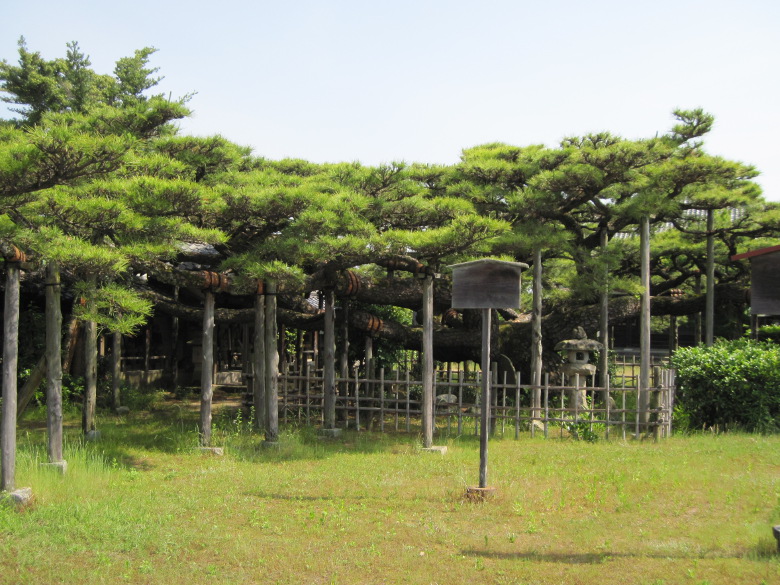
Unryu pine tree at Eianji Temple
I heard that the Unryu pine tree at Eianji Temple was magnificent, so I took a detour. There is something about a large tree that moves me, whether it is overwhelming or healing.
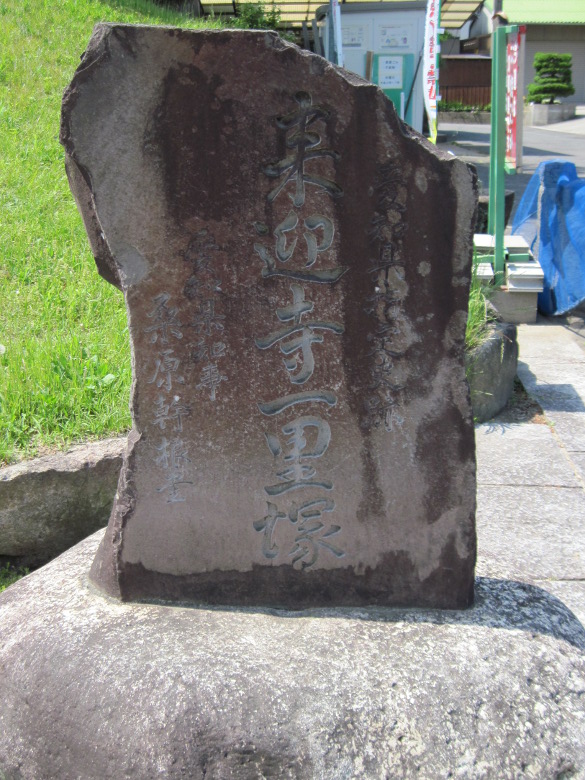
Raigoji Ichirizuka
I passed Raigoji Ichirizuka a little before 10:00.
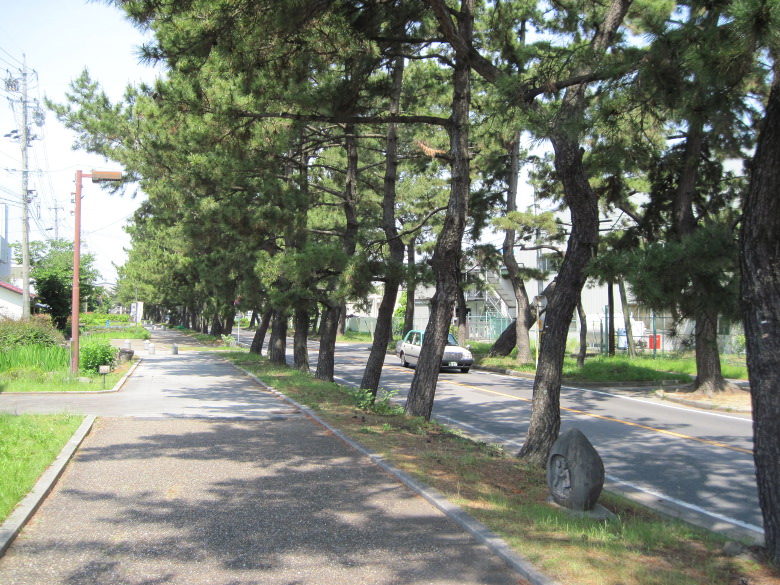
Pine trees in Chiryu
This is a row of pine trees in Chiryu. This area was famous for its horse market. It is said that horses were brought from as far away as Yamanashi. The fact that they would travel all the way here and back to sell their horses means that they made a lot of money when they bought and sold them.
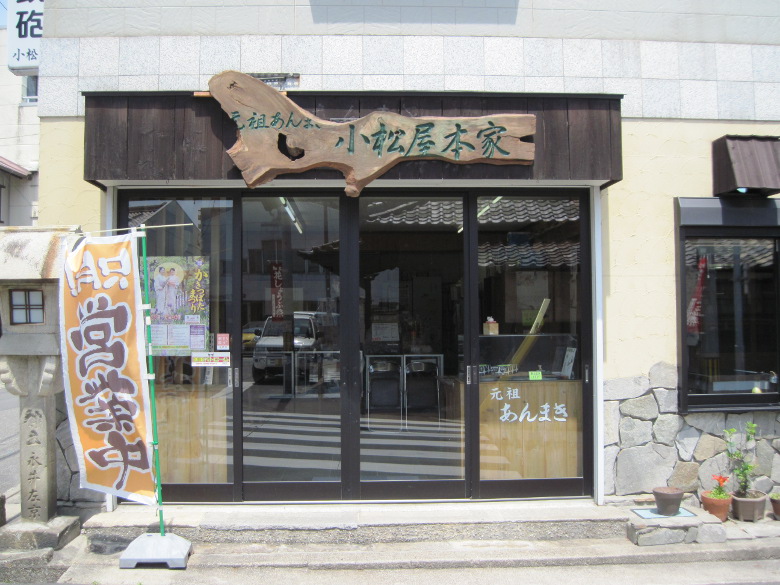
Komatsuya Honke
There was Komatsuya Honke selling large Anmaki along the street. They have been in business since 1887. I bought one black bean jam roll and one white bean jam roll.
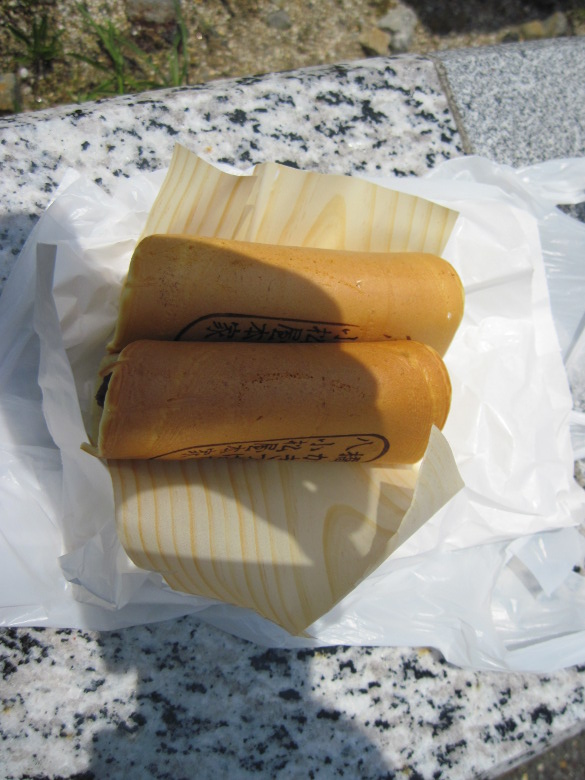
Large Anmaki
There was a comfortable chair, so I sat down and started to eat a large Anmaki. But it was a bus stop, so the bus stopped. When I expressed my intention not to get on, the driver was annoyed. I’m sorry.
The big Anmaki was like a Dorayaki, but the skin was harder than Dorayaki. It was a delicious snack with a perfect balance between the not-so-sweet bean paste and the skin.
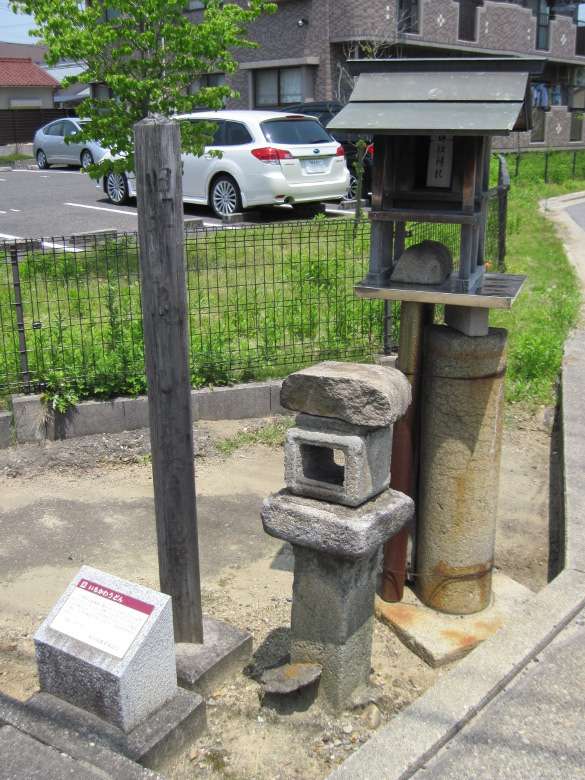
Birthplace of Himokawa Udon
The wooden stake in front of this small shrine seems to say, “The birthplace of Himokawa Udon, the former site of Imogawa. The explanation made by the Kariya City Board of Education says that Imogawa udon was a specialty in the Edo period, and that it was introduced to the east, and that Tokyo still calls udon “Himokawa.” By the way, even though I have lived in Tokyo for more than 10 years, I have never heard “Udon” referred to as “Himokawa”.
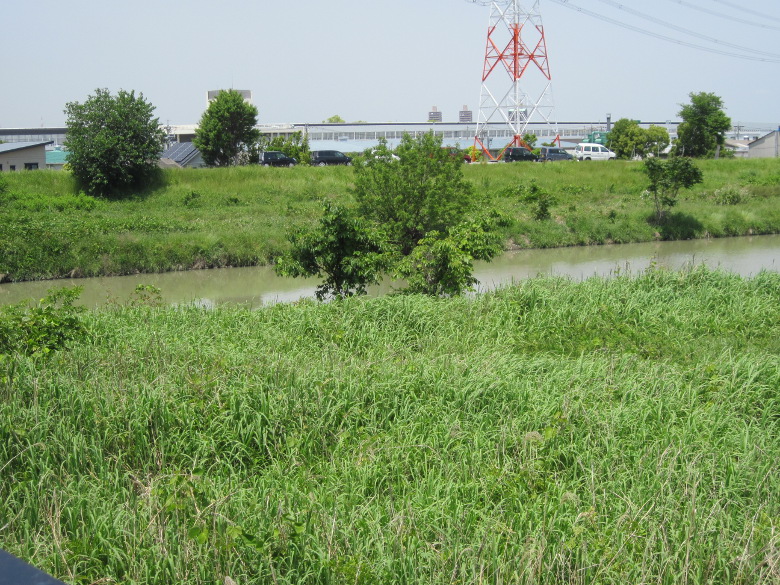
The Sakai River on the border between Owari and Mikawa
Following yesterday, a creek named Sakai River appeared again today. It was the border between Owari and Mikawa.
Narumi-juku

Ano Ichirizuka
It has been a long time since I came across an Ichirizuka. Ano Ichirizuka (86 ri) remains in its original form on both sides of the road. It is a national historic site.
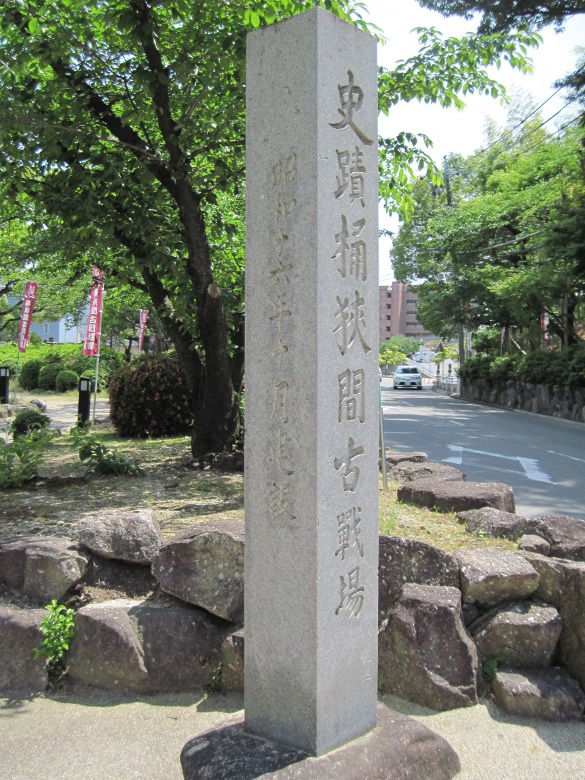
Old battlefield of Okehazama
I’m meeting a friend today, so I’m at ease since the planned walking distance is less than 40km. I heard that there was an old battlefield of Okehazama about 200 meters away from the street, so I went to see it. There was a place where Imagawa Yoshimoto died in battle, etc., which made me feel closer to the man I had only known from history textbooks. The volunteer guides were kind enough to give me explanations.

Townscape of Arimatsu
Arimatsu, an in-between Juku (inn) between the official Jukus, is a traditional town with a rich emotional atmosphere. Hiroshige’s “Narumi” also seems to depict the inn in Arimatsu.
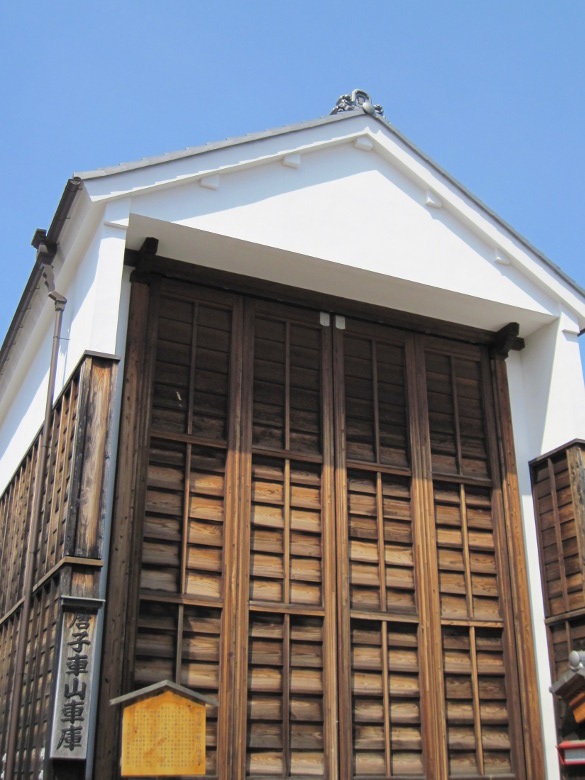
Garage for floats
In this region, there are garages here and there that are equipped to hold floats. Some of the garages were open to visitors.
Miya-juku
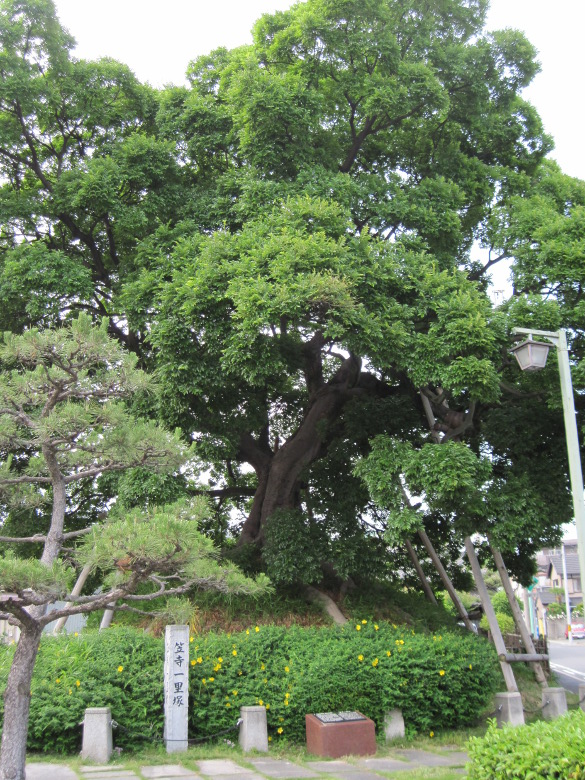
Kasadera Ichirizuka
Kasadera Ichirizuka (88 ri) is also a magnificent milestone, and together with the scenery from Arimatsu, I felt like I was back in the Edo period for a moment.
I arrived at an inn called Washington Hotel Plaza. The map in the Tokaido guidebook only showed Hon Kasadera Station, so I assumed the hotel was near that station, but it turned out that JR Kasadera Station, about 800 meters away, was the nearest station. There is an arena near the hotel, and probably because there was a concert there, the cheap hotel rooms were occupied, and the only room available was the one that cost 9,260 yen for a bare night’s stay.
Afterwards, I met a friend and had hitsu-mabushi. It was a very tasty meal.
Walking data
Course: Okazaki-juku -> Chiryu-juku -> Narumi-juku -> Miya-juku
Distance: 38.3km
Time: 13h18m

