I have seen many Ichirizuka, but today’s one, Nomura Ichirizuka, has a lot of dignity. It is planted with giant muku trees and is designated as a national historic site.
Shono-juku
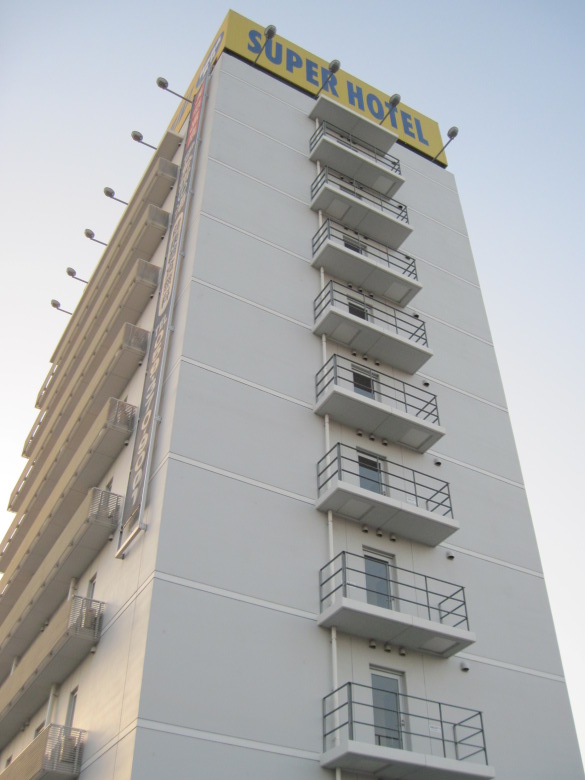
Super Hotel Suzuka
I took a picture of the Super Hotel Suzuka where I stayed and left. It’s a simple design.
There’s no stairs at the emergency exit! When I looked closely, I found a square hole under the balcony, and it looks like there are stairs to the lower floor from there. It looks like it would be hard to escape from the upper floors.
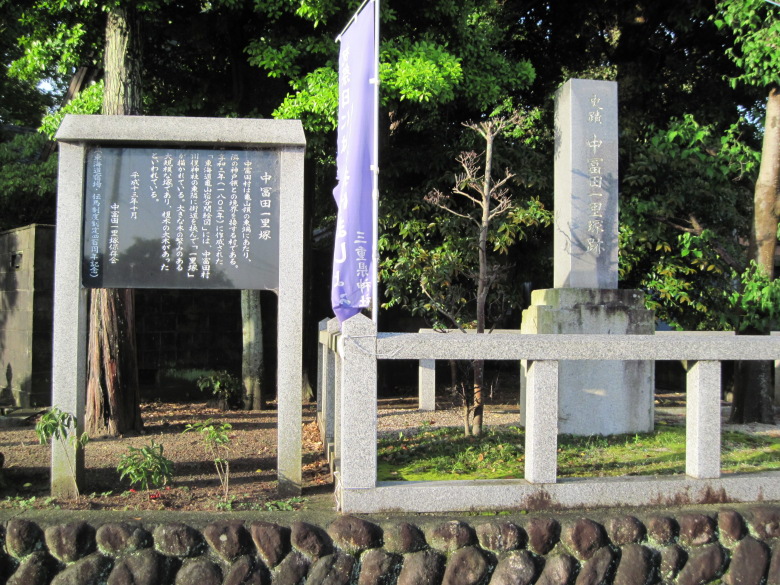
Nakatomida Ichirizuka Site
After walking about 2.5 km, I returned to the Tokaido and found the Nakatomida Ichirizuka site (103 ri) about 1 km from there. The mound itself was not there, but it was carefully built with a stone fence.
Kameyama-juku
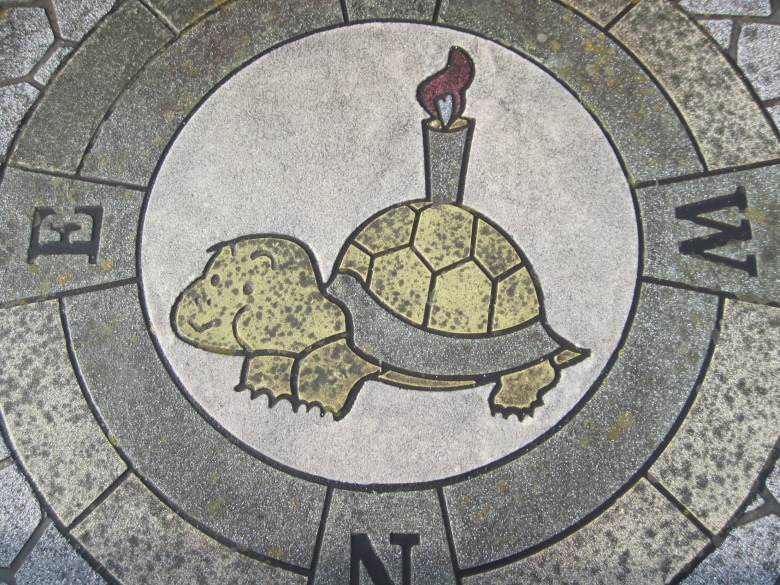
Picture of a turtle with a candle on its back
There was a picture of a turtle carrying a candle on its back on the pedestrian bridge just past Idagawa station.
Kameyama is famous for its candles.
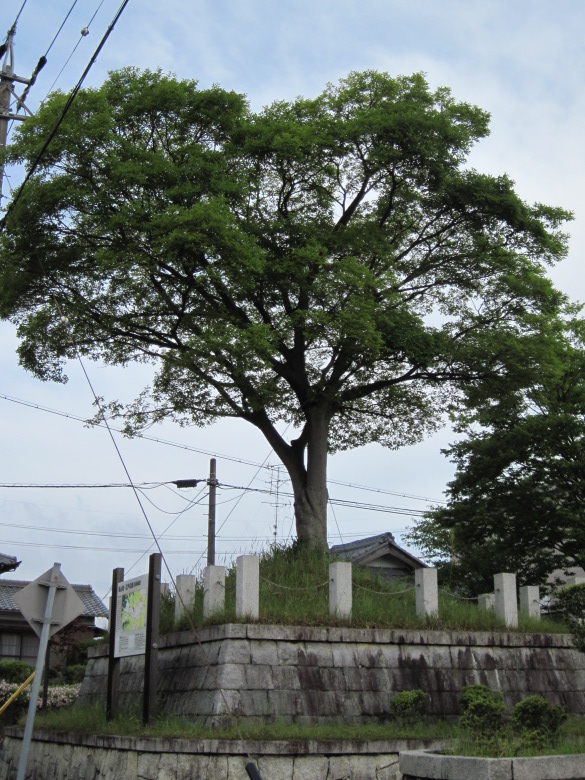
Wada Ichirizuka
Wada Ichirizuka (104 ri) is said to be a replica reconstruction. However, it looks like an old Ichirizuka with huge trees growing on it.
By the way, the local people around here are very kind. When they saw that I was walking along the Tokaido highway, they came out to the middle of the road and told me that the Ichirizuka had been there for 500 meters.
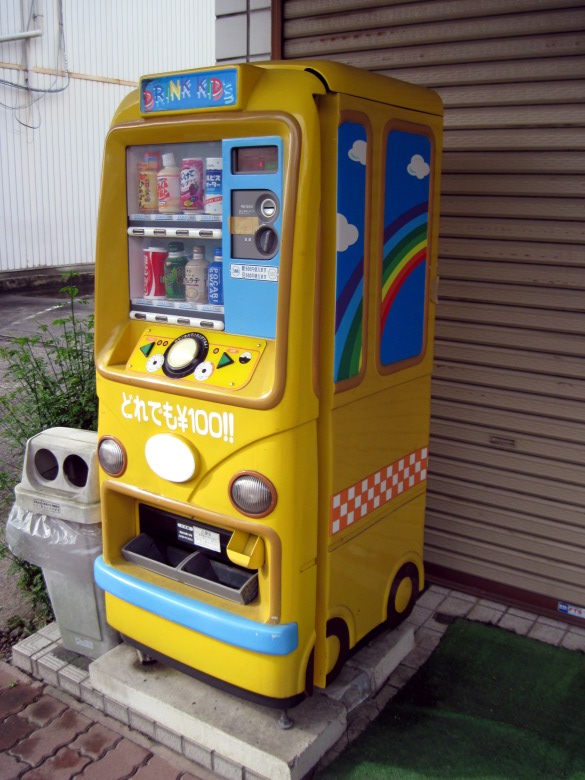
Vending machine in the shape of a bus
I found a vending machine in the shape of a bus that I’ve never seen before! It had big buttons and arrows, like a game. I wanted to buy some, but they didn’t sell water, so I decided not to.
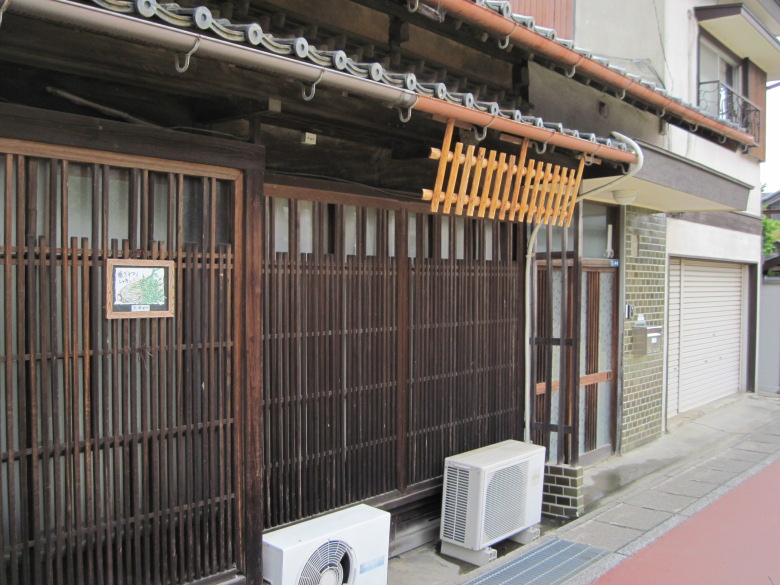
Wooden ladder-like object
I found a wooden ladder-like object hanging under the eaves of a house. I don’t know what it is for. Is it a religious object?
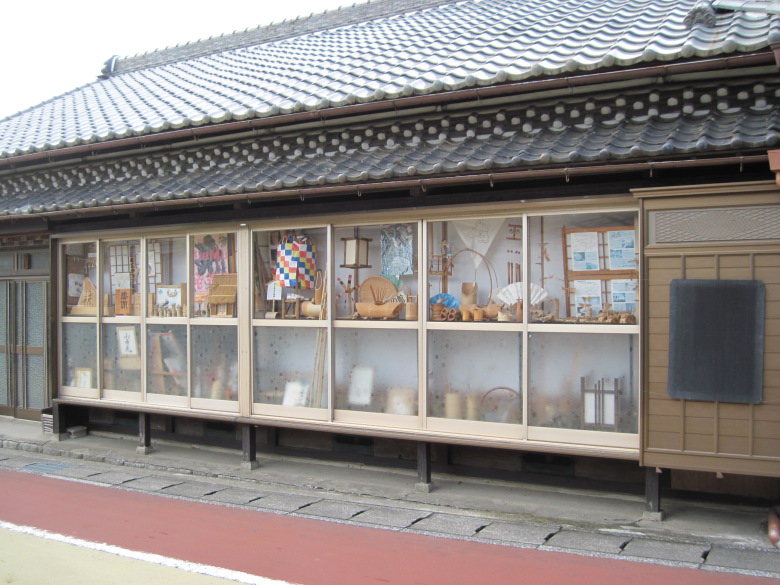
Exhibition of woodwork
Inside one of the other houses, there were many woodworking works on display. They seemed to be the work of the Mie Woodworkers Club. Are they for sale or are they just on display?

Nomura Ichirizuka
Discovered Nomura Ichirizuka (105 ri)! It is a national historic site. A huge muku (muku means muku in Japanese) tree was planted here. It has a dignified appearance.
Ichirizuka with a muku tree seems to be rare. The Muku River runs north of the Tokaido Highway in this area, which may have something to do with it.
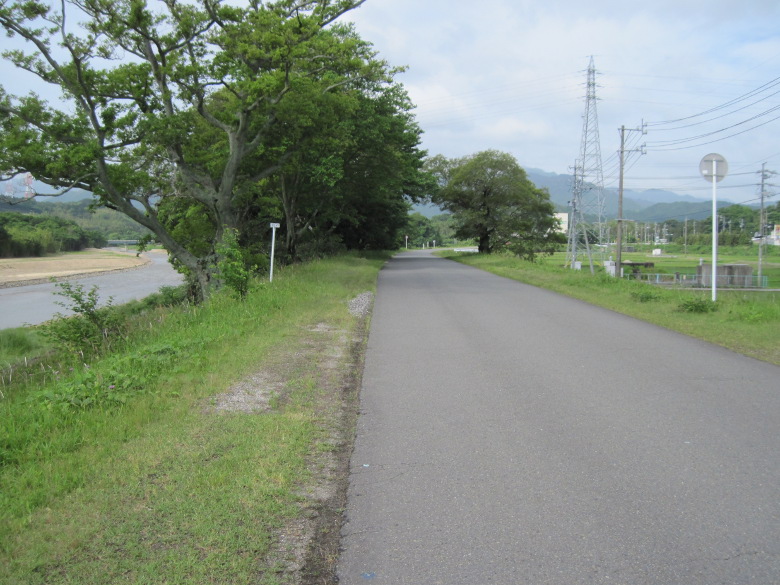
Taikouji nawate
I go through the Taikouji nawate. There were hardly any cars on the road, so it was nice to have it all to myself. On the way, I met a local who had finished his morning flag-waving. He told us many things to see and do in Seki, such as that people actually live in old houses and that the famous confectionary is “Seki no To”.
Seki-juku
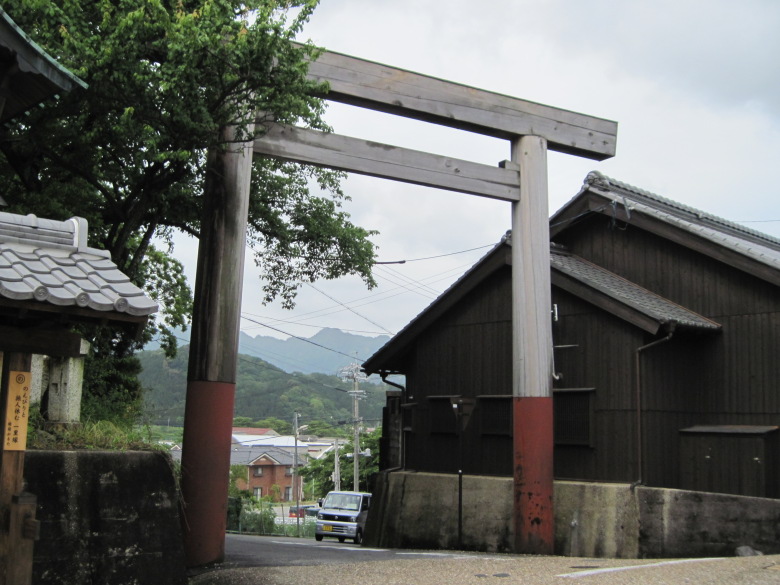
Higashi-no-Oiwake
Higashi-no-Oiwake is the junction with Iseji. The Oiwake at Hinaga, about 100 ri from Edo, was also a junction with the Ise Road. Hinaga is an Oiwake for people visiting Ise from the Kanto area, and this is an Oiwake for people visiting Ise from the Kansai area.
Near the first torii gate, cars were driving fast, and it was quite dangerous to take pictures.
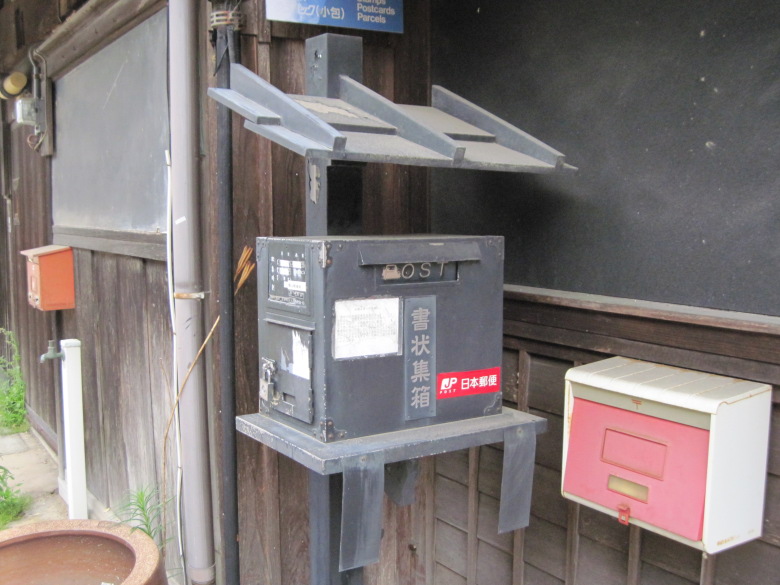
Shojou Atsumebako
At the beginning of the streets of Seki-Juku, there was an old-fashioned mailbox labeled “Shojou Atsumebako. It seems to be the same type that was used when the postal service was established in 1871.
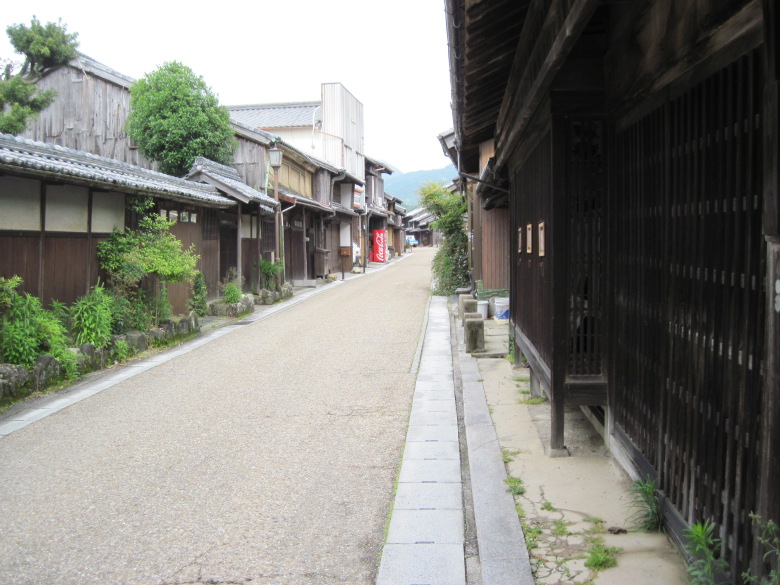
The streets of Seki
The streets of Seki are calm and relaxing in some way. I heard that there are no electric poles to improve the scenery.
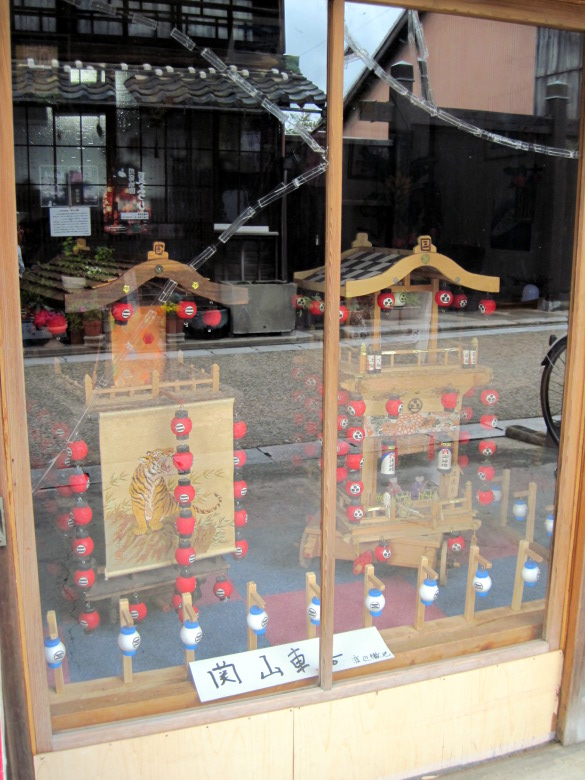
Model of Seki’s floats
A model of a float was displayed in front of the store. There was no detailed description, but there are probably two types of floats in Seki.
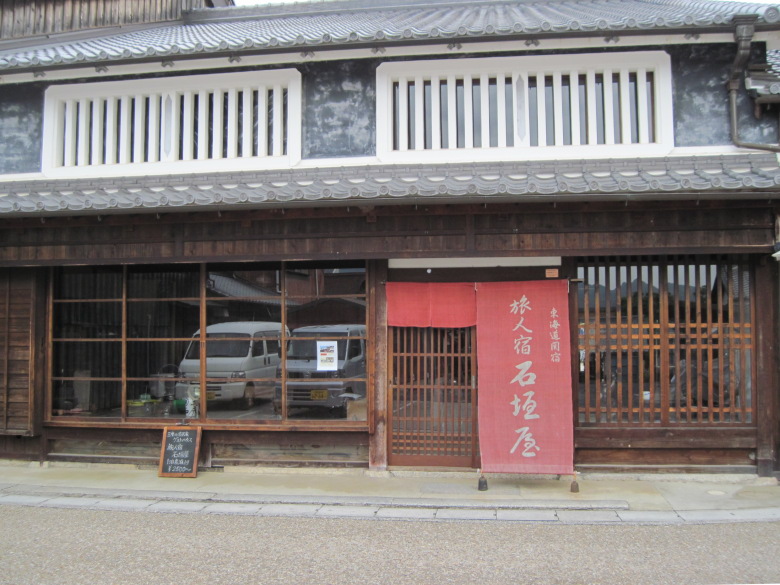
Traveler’s inn Ishigakiya
I found a traveler’s inn called Ishigakiya. It says, “From 2,500 yen per night.” I would have loved to stay there if I had known about it, since it was a very inexpensive place to stay in such a quiet juku (inn town).
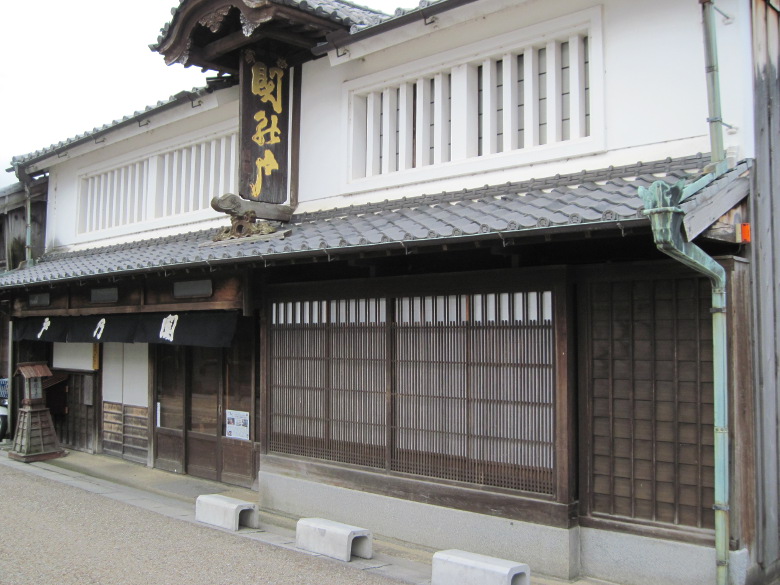
Sekinoto
Although I was told about the famous confectionery called Sekinoto, the store was not open because it was still before nine o’clock.
The kanji of the logo is different between the sign and the curtain. I guess old shops don’t care about the details of their logo.
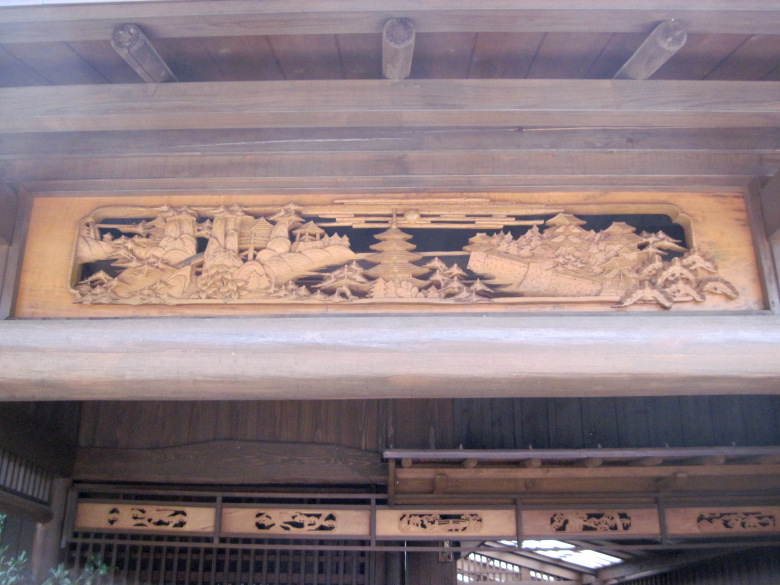
Opulent carvings in an ordinary house
I found a magnificent sculpture in an ordinary house. The wood is still new. This is how the streetscape will be protected in the future, through maintenance by each house.
Sakashita-juku
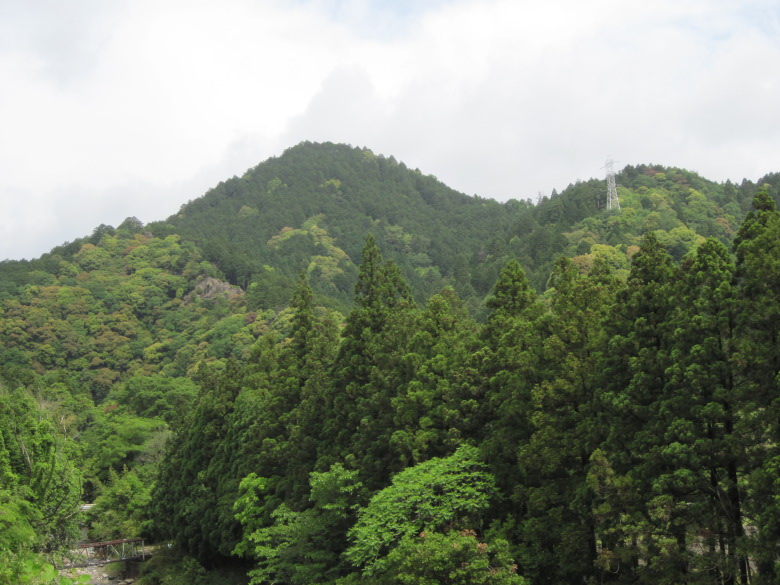
Mount Fudasute
About two kilometers past the old town, I found Mount Fudasute (realizing that he has no talent for painting, he throws away his brush).
There are two theories about the origin of the mountain’s name: one is that it was too beautiful, and the other is that after a night’s sleep, the mountain’s landscape had changed so much that he could not continue painting. I guess I vote for the theory that the shape of the mountain changed.
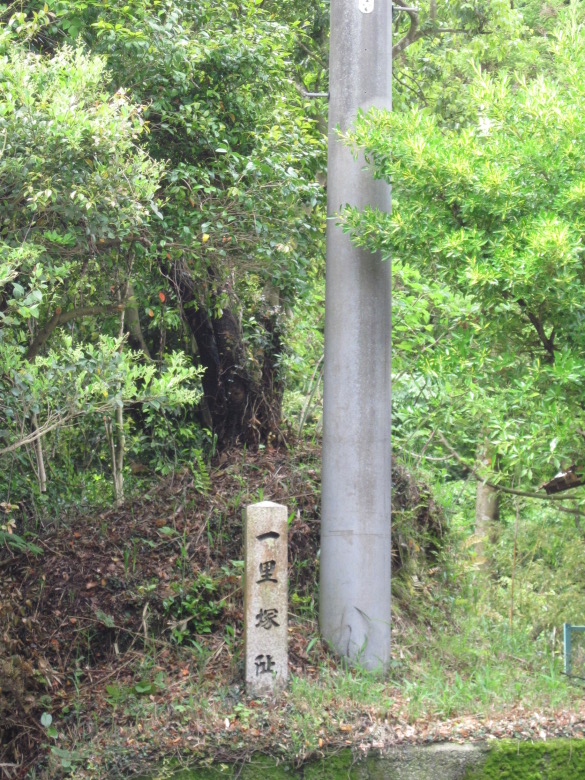
Site of Sakashita Ichinose Ichirizuka
The site of Sakashita Ichinose Ichirizuka (107 ri) was quietly located beside an electric pole.
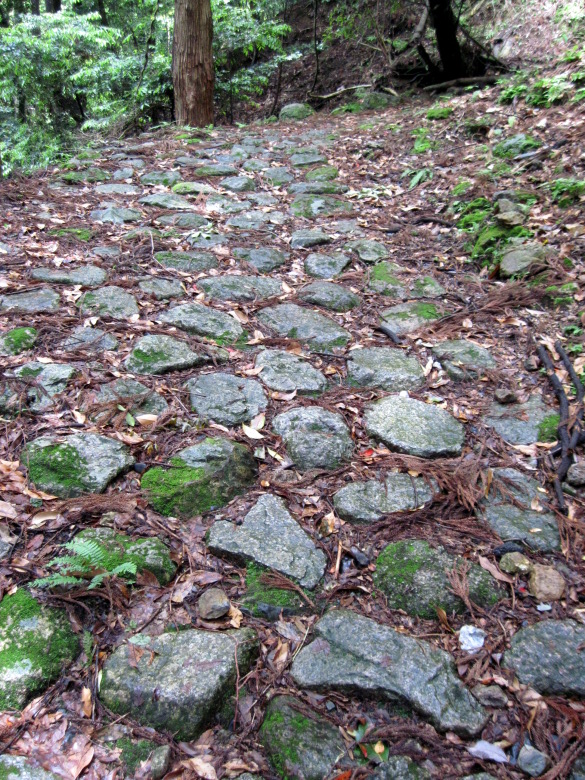
Stone pavement at Suzuka Pass
The Suzuka Pass was paved with stones.
The Suzuka Pass was paved with stones.
On the way up the pass, I lost the old road near Katayama Shrine and ended up on Route 1 when I shouldn’t have. I was able to get back on the road because I had a GPS, but with only a map, I might have gotten lost.
The climb up the Suzuka Pass was not too tough, probably because the slope was relatively gentle. The descent was also relatively gentle, and to be honest, I couldn’t really tell where the pass was.
Tsuchiyama-juku
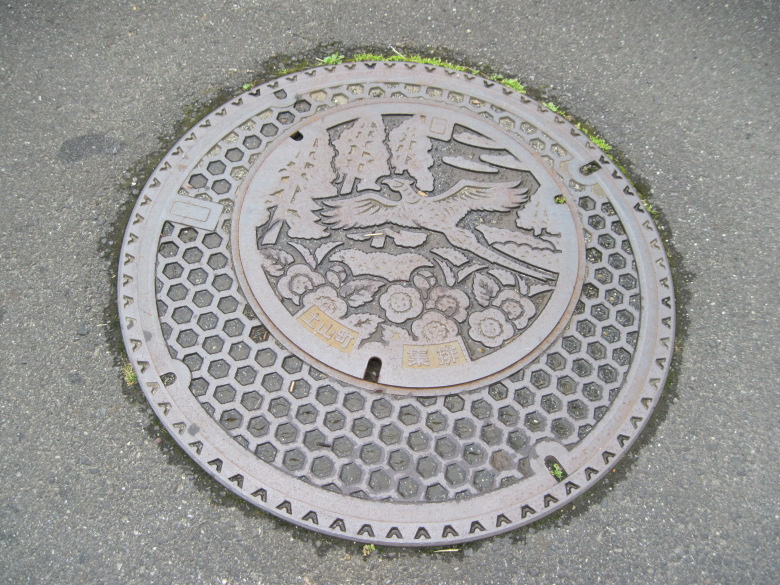
Manhole in Tsuchiyama Town
At the intersection of the new Meishin Expressway, I found a manhole with a small lid inside a large lid! I’d like to take a look inside to see why they have this configuration. I heard that the reason the manhole is round is to prevent the lid from falling inside, but I wonder if there is any risk of the smaller lid falling into the hole when the larger one is opened.
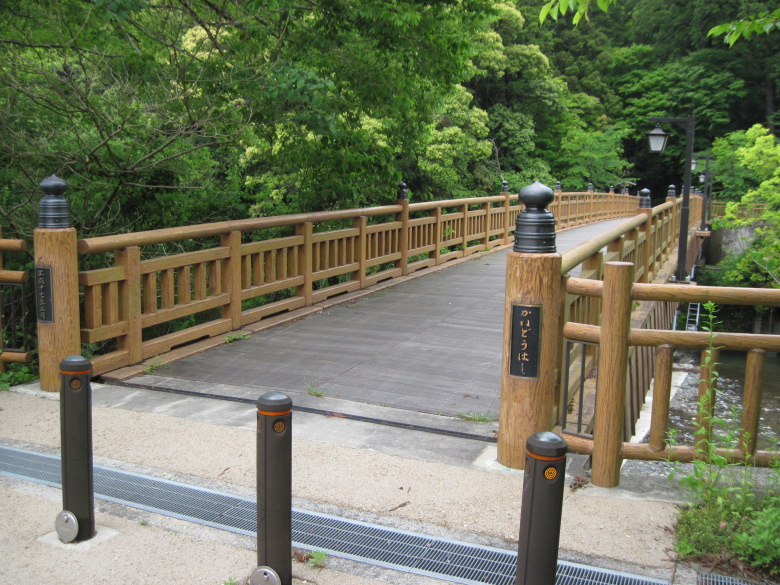
Kaido Bridge
An explanatory board stands by the beautiful Kaido Bridge. This bridge was built by the people of Tsuchiyama who contributed money to build it, and they had to pay 3 mon (an old monetary unit) as long as the bridge existed. Since there was no one to collect the money, and unfortunately I didn’t have 3 mon, I crossed the bridge without paying.
I was planning to take a lunch break at the roadside station “Aino Tsuchiyama”, but it was closed on Tuesday. I guess I’ll skip lunch today.
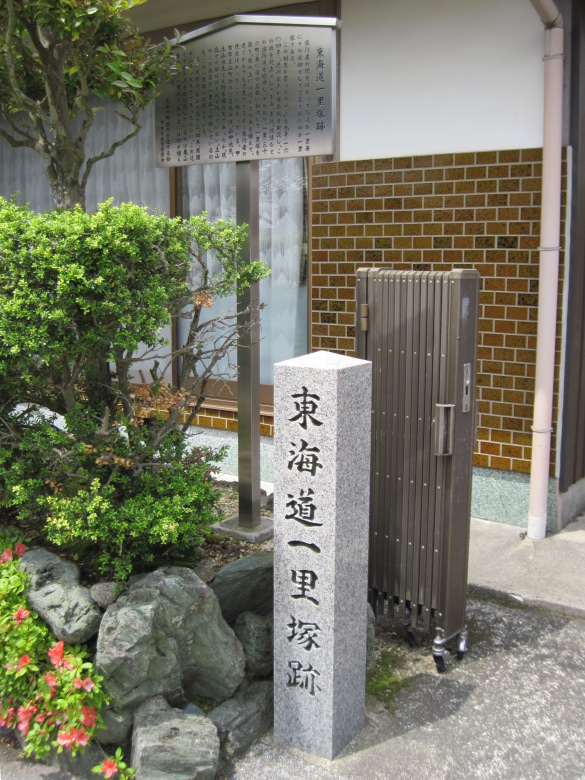
Remains of Tsuchiyama Ichirizuka
As I trudged along, I saw the remains of Tsuchiyama Ichirizuka (110 ri) in the yard of a house.
As I continued to trudge along, I came across a restaurant called “Ukaiya,” which was listed in my guidebook as a place to eat. Glancing at it, it looked like a souvenir shop. But in the back, it was a diner.
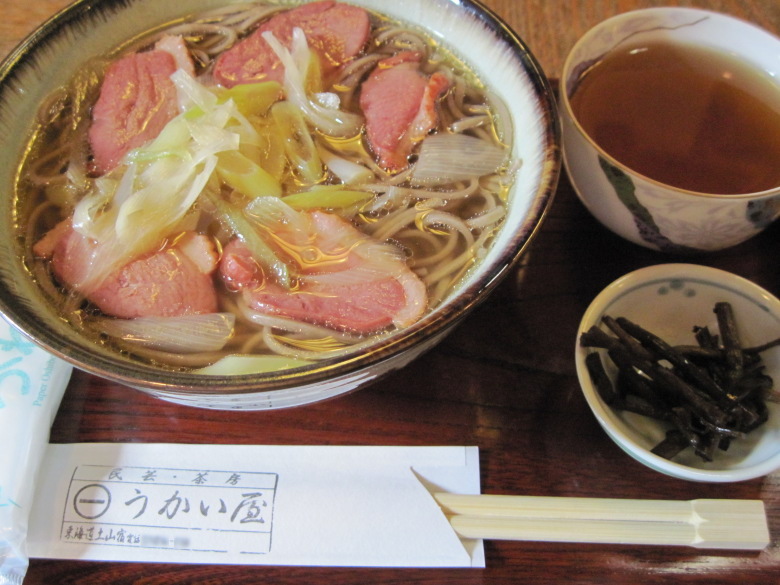
Duck nanban at Ukaiya
I had read in the guidebook that travelers in the past ate “Yugiri Soba” in Tsuchiyama, so I told him I wanted to try that, but he said there were no written records of how to make it, so he served me duck nanban.
When I asked him about it, he told me that he was one of the authors of the guidebook. He said that in 2001, the 400th anniversary of the Tokaido Highway, there were many customers, but now there are only one or two people a day. But the fact that there are customers every day, even though not all of them stop by this store, means that even today there are a good number of people who travel along the Tokaido on foot.
When I told him I was planning to stay in Minaguchi today, he introduced me to a relatively upscale inn that served Kaiseki cuisine. He also advised me to make a reservation.
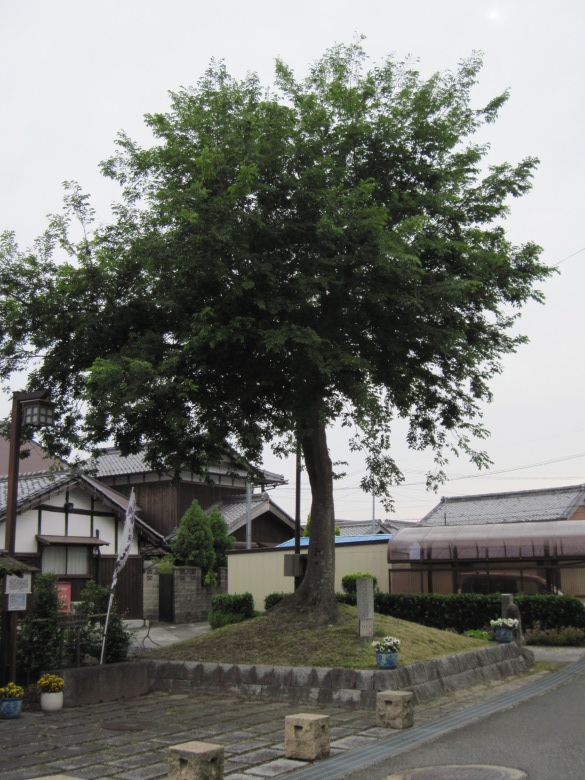
Imago Ichirizuka
At Imago Ichirizuka (112 ri), I have walked 45 km. With only four kilometers to go, I would be in the center of the Minaguchi-juku, so I would be able to get to Minaguchi in good light.
Minaguchi-juku
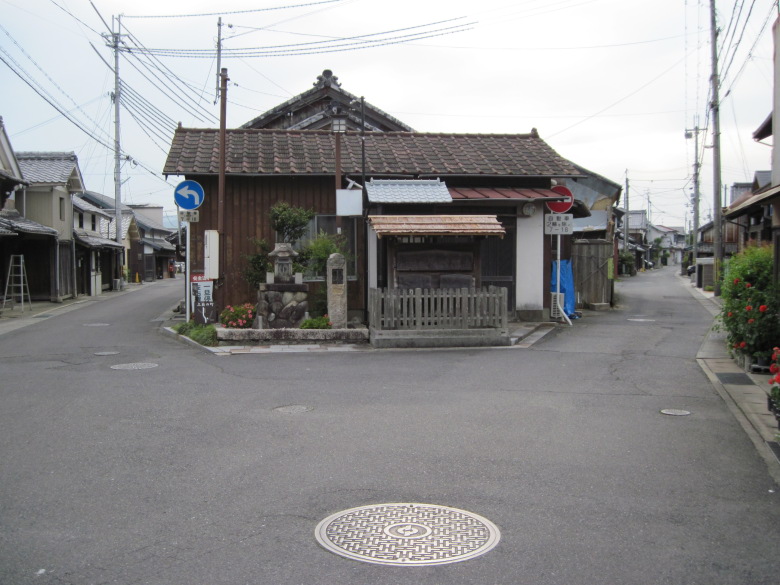
The junction of the Minaguchi-juku
In Minaguchi, the road runs in three directions. First, at the fork in the photo, the path splits into two, and then the left side of the path splits into two more, making three paths.
It would be very difficult to go through all three, so I decided to go through the middle one.
Before arriving at Minaguchi, I had imagined a glamorous shopping street with lanterns hanging down like a hot spring resort. In reality, it was more like an old residential area.
When I visited the inn I had been told about during lunch, I was refused because I hadn’t made a reservation. I thought I could make it work for one person, but they only seem to stock enough for one person. If I had made a reservation, I am sure I could have had a good meal at a reasonable price.
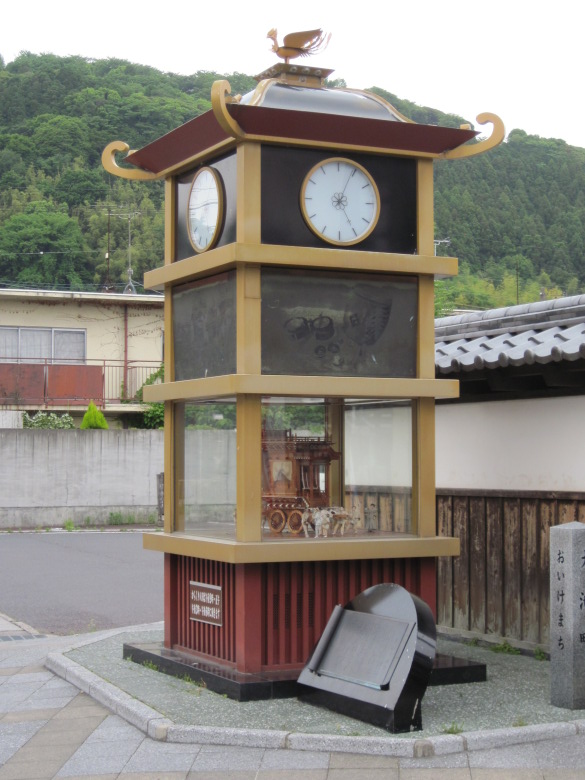
Clock Tower at Minaguchi-juku
There was a clock tower where the three paths ended, and a model of a float was displayed at the bottom.
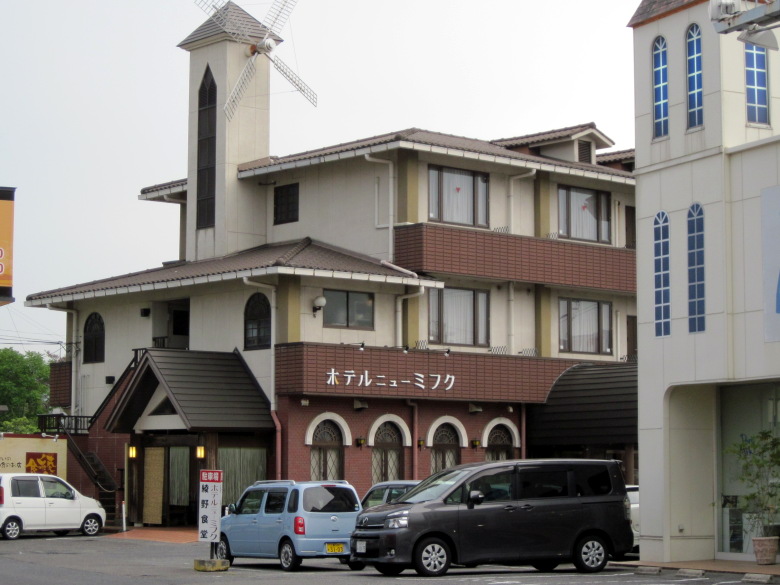
Hotel New Mifuku
I decided to stay at the Hotel New Mifuku for the day. Although it was about 500 meters away from the Tokaido Highway, there was a supermarket nearby where I could buy a well-balanced lunch. There was also a Seven-Eleven where I could drop off some money. Also, it is located near the exit of Minaguchi-Juku, which has the advantage of being a little closer to Kyoto.
Also, Kyoto is just over 50 kilometers away. It’s not a distance you can’t walk in a day. I feel like I’m leaving something behind, but I’m going to the Sanjo Bridge tomorrow.
Walking data
Course: Shono-juku → Kameyama-juku → Seki-juku → Sakashita-juku → Tsuchiyama-juku → Minaguchi-juku
Distance: 52.6km
Time: 13h37m
Expenses: Accommodation 5,500, Food 1,651

