I went to Okinawa for a short trip.
Thursday, March 19, 2020 Rain
Gangarra Valley
I arrived at Naha on JAL 903 departing from Haneda at 7:35, rented a car and went straight to the Gangarra Valley. The Valley of Gangarra is a limestone cave where it is said that the Minatogawa people have lived for 18,000 years.

Cave Cafe in the Valley of Gangarra
I had some time before the guided tour I had booked, so I took a break at the Cave Cafe at the meeting point. They were selling Kabuki-age like crackers, so I ate them while waiting.
The area covered with a sheet at the entrance of the cave is an excavation site, and work is still going on there.

Aomiokatanish
The guided tour goes slowly, looking at plants and creatures.
This is an Aomiokatanish. As the name suggests, it is not a snail, but a pond snail (Tanishi) on a hill (Oka).
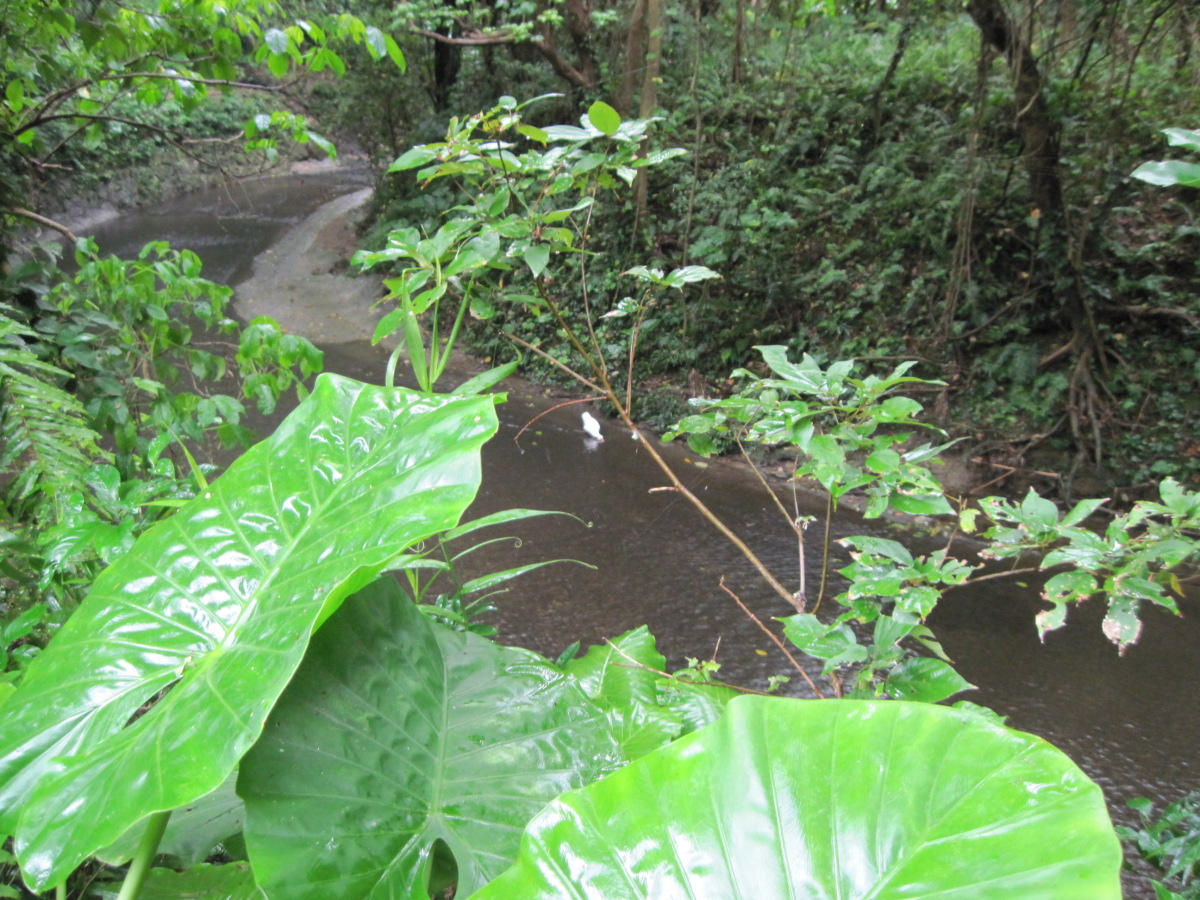
Water yam(Kuwazuimo)
This river was polluted for a while, but thanks to the efforts of the local people, the clear water has returned.
The white bird at the far end of the river is said to usually come in pairs, but today there was only one. I couldn’t remember its name.
The shiny leaves in the foreground are Kuwazuimo (meaning inedible potatoes). I heard this is bad. So that means someone tried to eat it, right?

Exploration Lamp
As I entered the dark cave, the guide handed us a lamp. It smelled a little like kerosene.
The guide was the one with his back to us. He was wearing a water bottle of Sanpin-cha, an Okinawan drink, on his waist. He handed out water bottles to us as well. Sanpin-cha is similar to jasmine tea in taste and aroma.

The Banyan Tree of Ufush (Great Lord)
This is the Ufush (Great Lord) Banyan. It is one of the largest plants in the tour.
The banyan has roots that grow down from the branches, and when they reach the ground, they suck up nutrients from the roots and gradually increase their thickness, killing the original roots so that they can move. I was surprised.

A plant that germinated from a seed carried by a bird
This plant was a fruit of some kind. They said it was a seed brought by a bird that had germinated.
At the dismissal point, there was a hub on display. It had a small head and looked cute, but it is very poisonous.
Okinawa Peace Memorial Park
Since it was raining, I was given a ride in an electric car driven by a senior citizen, which took me around the park where there were memorial towers for each prefecture. The fee was 100 yen.

Ticket to the Okinawa Peace Memorial Museum
After that, I went into the museum.
I watched a ten-minute video that gave me a good overview of the Battle of Okinawa.
The U.S. forces first landed on the central coast in the west, invaded the east coast, and then expanded their forces further north and south.
Fortunately or unfortunately, there were many Gama (limestone caves), so they were able to fight back thoroughly, and both the islanders and the U.S. troops suffered a great deal of damage.
The many images and written testimonies were all very grim.
As I walked past the “Heiwa-No-Ishiji (Cornerstone of Peace)” with over 200,000 names written on it, I was reminded of the importance of peace.
This was my third visit to Okinawa, but it was the first time I thought about war.
Friday, March 20, 2020 Sunny, then cloudy
Naha City Traditional Craft Center
In the morning, I took a walk along Kokusai Street and came to the Naha City Traditional Craft Center.
I had made a reservation in advance to experience Shuri-ori weaving.
First, I chose the weaving method. The options were Hana-ori (flower weaving) and Doton-ori (Lawton weaving). I was told that the Doton-ori weaving could be used to make both coasters and bookmarks, so I chose the Doton-ori.

Loom with Doton-ori specifications
In Doton-ori, patterns can be created by stepping on the treadle.
In other words, stepping on 12 and 34 creates a plain weave, while stepping on 12 and 13 or 34 and 24 creates a patterned weave.
If you change the color of the weft, the impression of the work will change.
I made a coaster with white weft and a bookmark with yellow weft.
I was told that eight weft threads are bound together to make the fabric thicker.
The most difficult part was to keep the edges from being uneven.
If the weft yarn is left too much room, it will become convex, and if it is pulled too much, it will become concave.
To make a pattern, you need to count the number of steps. I don’t have the time to count the number of steps while weaving. It is also troublesome to count the number of steps in the weaving area, but the instructor counted them without any difficulty and gave me precise instructions.
Thanks to her, I finished weaving in less than an hour.
I was told that the most important thing to remember when using Shuri-ori is to run it through water to prevent partial shrinkage.

The Great Tug of War
There is a park behind the Naha City Traditional Craft Museum where the rope of the great tug of war is displayed.
The Kachina sticks that are inserted into the rope are very distinctive.
Dai-ichi Makishi Public Market

Ichiba-Hon-Dori
I walked down Ichiba-Hon-Dori (the main street of the First Makishi Public Market). I didn’t buy anything in particular, but it was an attractive shopping street.
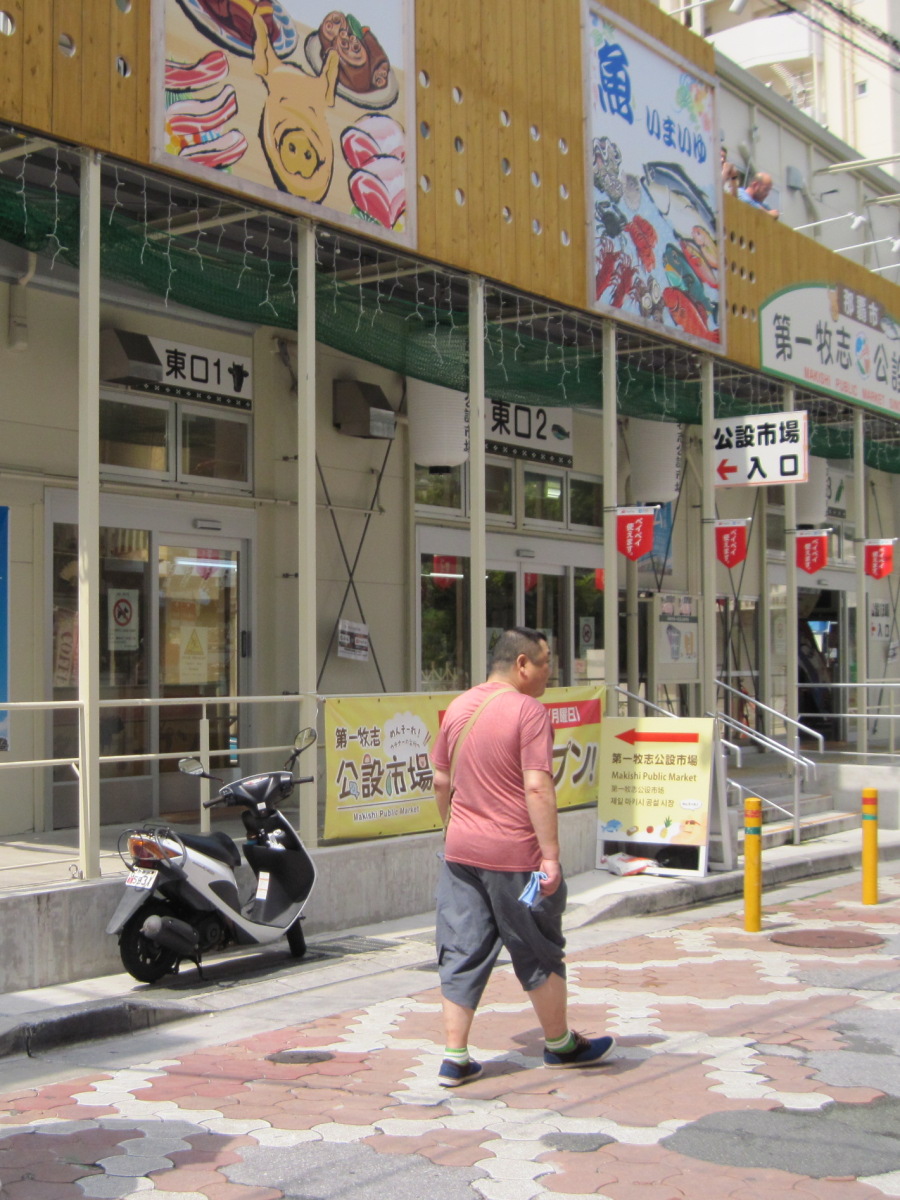
The First Makishi Public Market
The Dai-ichi Makishi Public Market was smaller than I expected.
On the first floor, there were large fish and shellfish such as lobsters and milgai in a tank.
You can buy fish on the first floor and bring it to the second floor to have it cooked for you. However, it wasn’t long after breakfast, so I decided to just watch.
But in hindsight, I should have eaten some of the many delicious looking seafood.
Himeyuri Tower
I came to Himeyuri Tower, which I thought I should visit at least once.
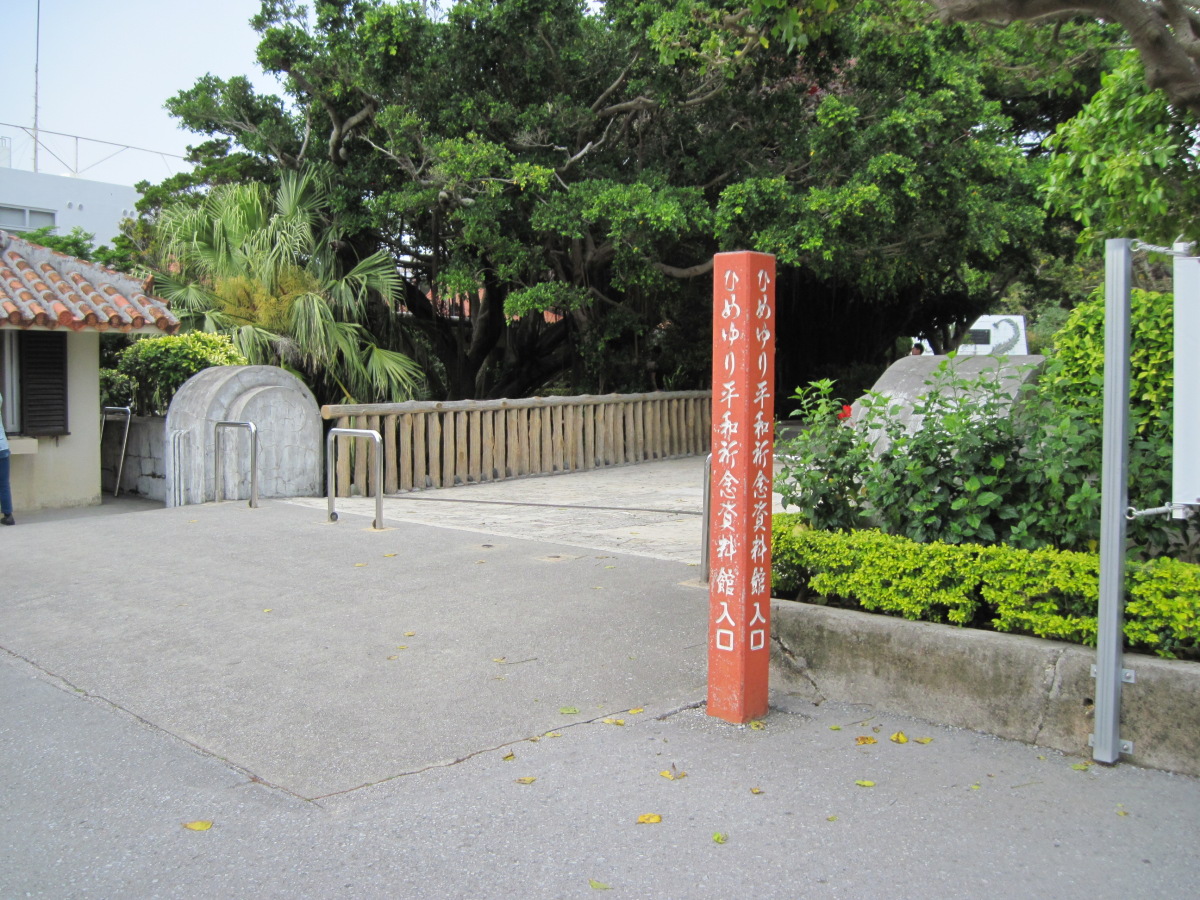
Entrance to Himeyuri Tower
In the back of the photo, you can see a little of the new square tower. To the right of this new tower stands an older, smaller tower. In between these towers is a Gama (a cave).
It is a peaceful place now, but 75 years ago, a terrible tragedy took place there.
After praying at the tower, I visited the Himeyuri Peace Museum behind the tower.
The students of Okinawa Prefectural First High School for Girls were an elite group, with about one student per town or village from all over the prefecture.
When they were first assigned to the Third Department of Surgery at the Okinawa Army Hospital, they thought they would be working in a place where bullets would not come, but they were wrong. They were soon caught in a horrible situation.
I watched a video of the narrator who survived. The narrator explained the situation clearly, calling her friends by their full names.
At first, it must have been difficult for them to even remember. However, thanks to the narrator who overcame the difficulties and told the story, I was able to recognize the importance of peace.
Okinawa Churaumi Aquarium
From Himeyuri Tower, I headed to the Okinawa Churaumi Aquarium.
I took the expressway from one end to the other. The toll was 1,000 yen.
The center of the island was occupied by the base.
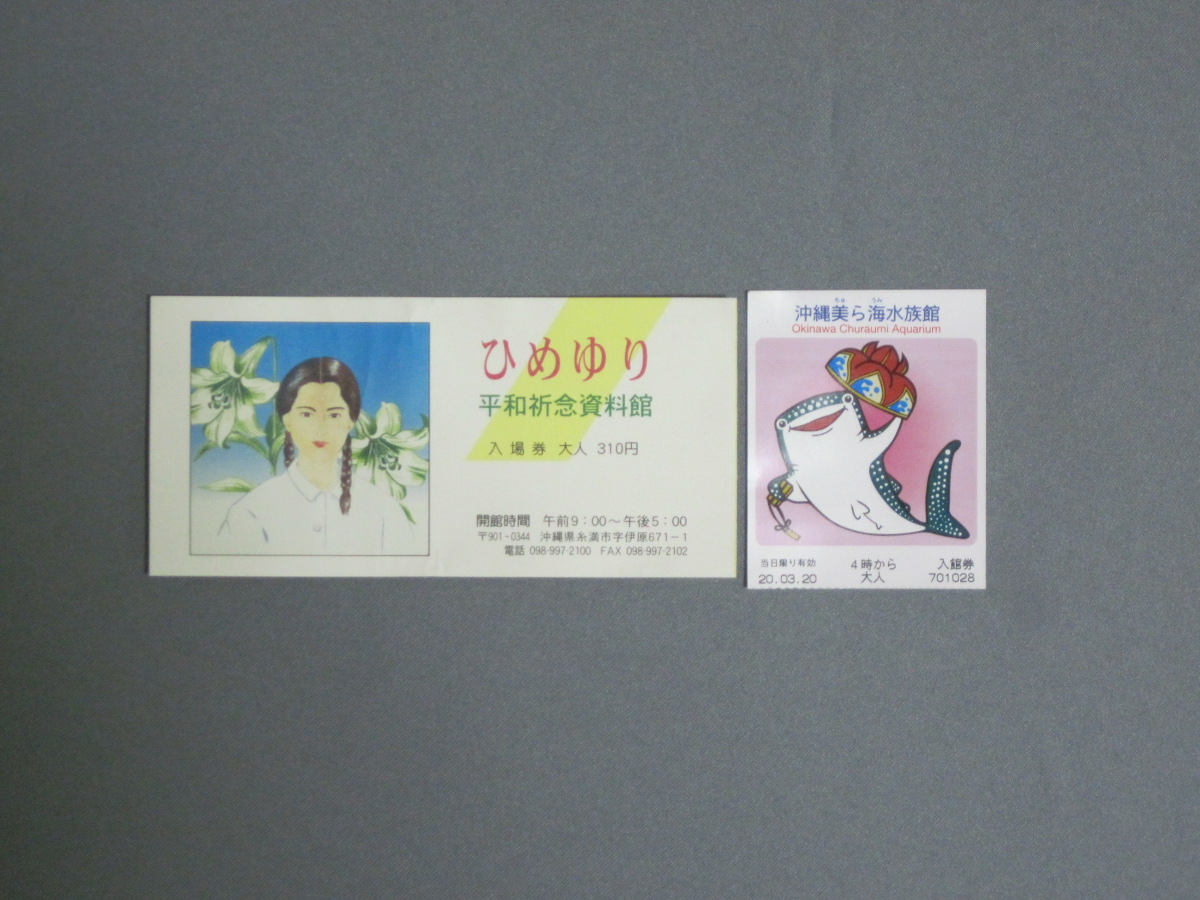
Tickets
By the time I arrived at the aquarium, it was around 4pm. The aquarium has a discount ticket called “Yojikara chiketto (4 o’clock ticket)”. When I presented my regular ticket to the ticket counter, they refunded me the difference. It was a conscientious gesture.

Churaumi Aquarium “The Kuroshio Sea”
The whale sharks migrating through the “The Kuroshio Sea” were still a sight to behold.
The manta rays were continuously somersaulting in the fine bubbles that spewed out from below. I guess manta rays have a playful side. It was cute.
I was told that there are two types of manta rays in this tank.
As for dangerous marine life, I saw amboyna mussels, spiny lobsters, and lobsters. I thought there might be sea snakes and leopard octopuses, but I couldn’t find any.
Okinawa Hanasaki Marche
It was around seven o’clock when I left the aquarium.
It was going to be late when I returned to Naha, so I decided to get something to eat on the way.
I checked on my phone and found out that there was a shopping mall called “Okinawa Hanasaki Marche”, so I decided to go there.
It had been open for almost a year, but I couldn’t find the Chinese restaurant I was planning to go to, probably because it had already left.

Delicious set menus at the food court
I had no choice but to go into the food court and eat a set meal. It was even better than I expected.
Saturday, March 21, 2020 Cloudy, then sunny
Onna-no-Eki
During our drive, I stopped at Onna-no-Eki. It is a roadside station. The parking lot was almost full and crowded. It seemed to be used mainly by the locals. I decided to eat some “Umi-Budou (Sea grapes)”, which I was curious about.

Sea Grapes (Caulerpa lentillifera)
It came out chilled with ice. The sauce is ponzu. If you chew it with your teeth, it will be crushed and the thick contents will come out. It’s a taste that’s hard to express, but I like it.
There was shaved ice, but I gave it up because it was too big to eat.
A fruit called Atemoya was sold at the shop. The fruit is so sweet that it is called forest ice cream. I hesitated because the price was high. However, I don’t see it outside of Okinawa, and I think it was in season, so I should have eaten it even if I was forced to do so.
Bios no Oka
I came to Bios no Oka (Bios Hill). It’s a theme park that makes use of nature, although it’s a character that you see when your computer starts up.
I was offered a canoe at the entrance. However, I refrained from doing so because it is said that 80% of people will get water.

Mini Pot Fishing
In the rustic area, you can fish for miniature pots. If you catch one, you can take one home with you. I was able to catch one, but since I was traveling, I didn’t take it home.
Like Heidi’s house, there are swings and hammocks all over the place. There is also a building that looks like Tom Sawyer’s hut. You can even walk the goats.

A buffalo cart on Bios no Oka
Water buffalo carts are also running around. It made me feel peaceful.
I went around the park, through a maze of hedges, and finally to the exit.
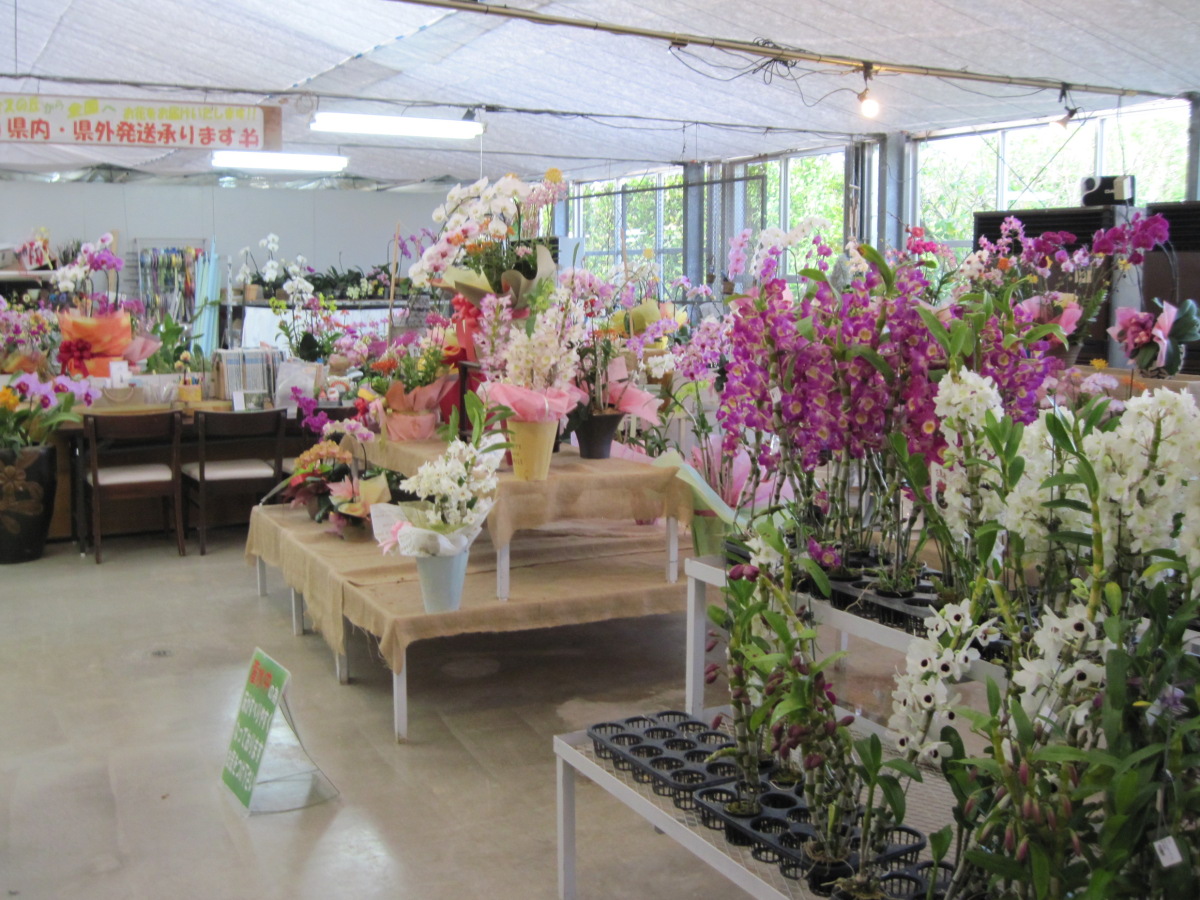
A lot of orchids
At the exit building, there were orchids for sale.
In Okinawa, orchids are in bloom everywhere you go.
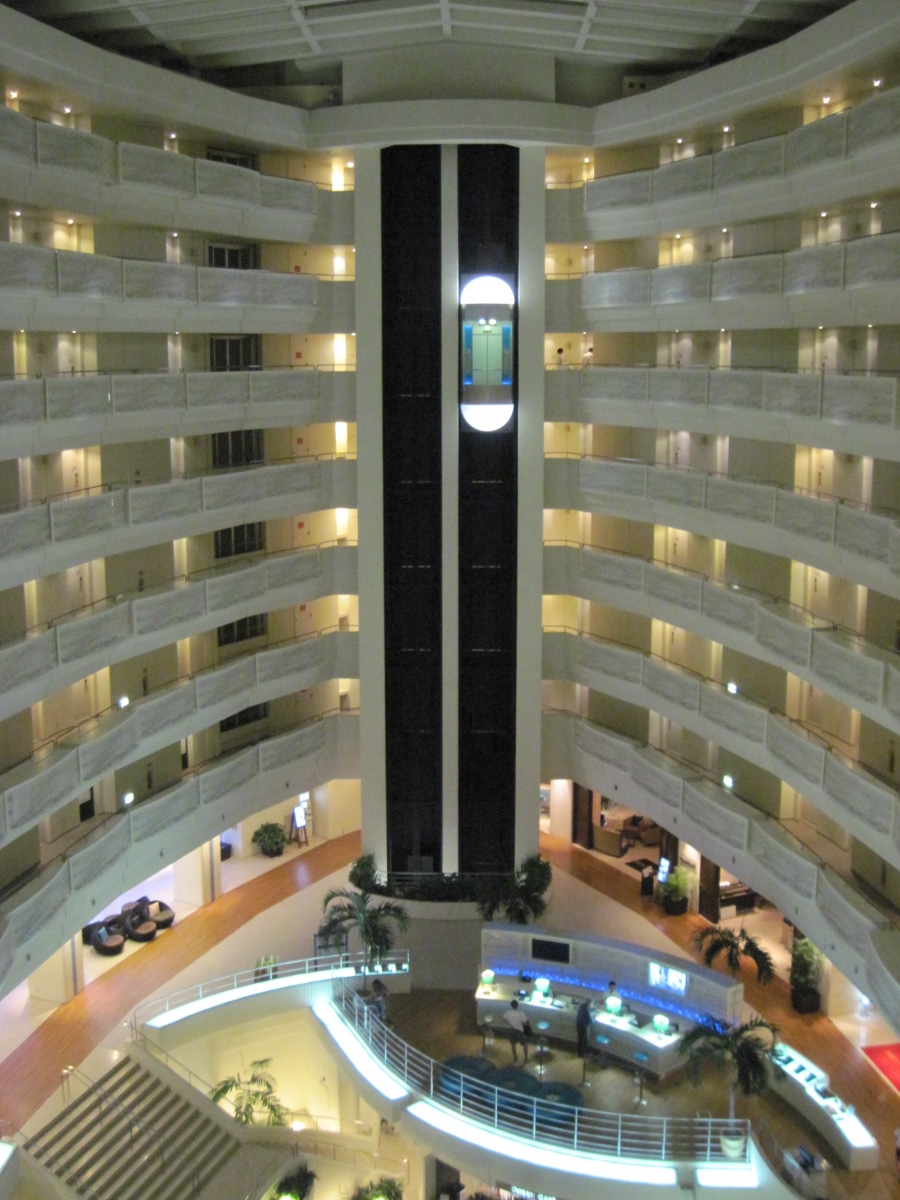
The interior of the hotel, shaped like a ship
Today I am staying at a hotel shaped like a ship. The shape of the interior was also very unique.
Sunday, March 22, 2020 Cloudy, then sunny
ANA InterContinental Manza Beach Resort

Ocean View
Our ocean view room faced west.
I saw the sunset last night, but unfortunately it was hidden in the clouds before it reached the horizon, so I could not see the sunset.

Church
A little further north, I saw a church.
Later, when I came back from breakfast, there seemed to be a wedding and I was taking pictures with the bride and groom.
Today was the opening of Manza Beach, but it was chilly.It was also raining at times.
Before leaving, I took a short walk along the beach.
There were many corals on the beach, a little thicker than a pencil and about 5 cm long.
As for living things, there were small snails and hermit crabs. There were no fish to be found.
Naha Airport
When I arrived at the airport, I checked in my baggage at the automatic baggage check-in machine.
Convenient, isn’t it?
But they must have X-rayed it somewhere.
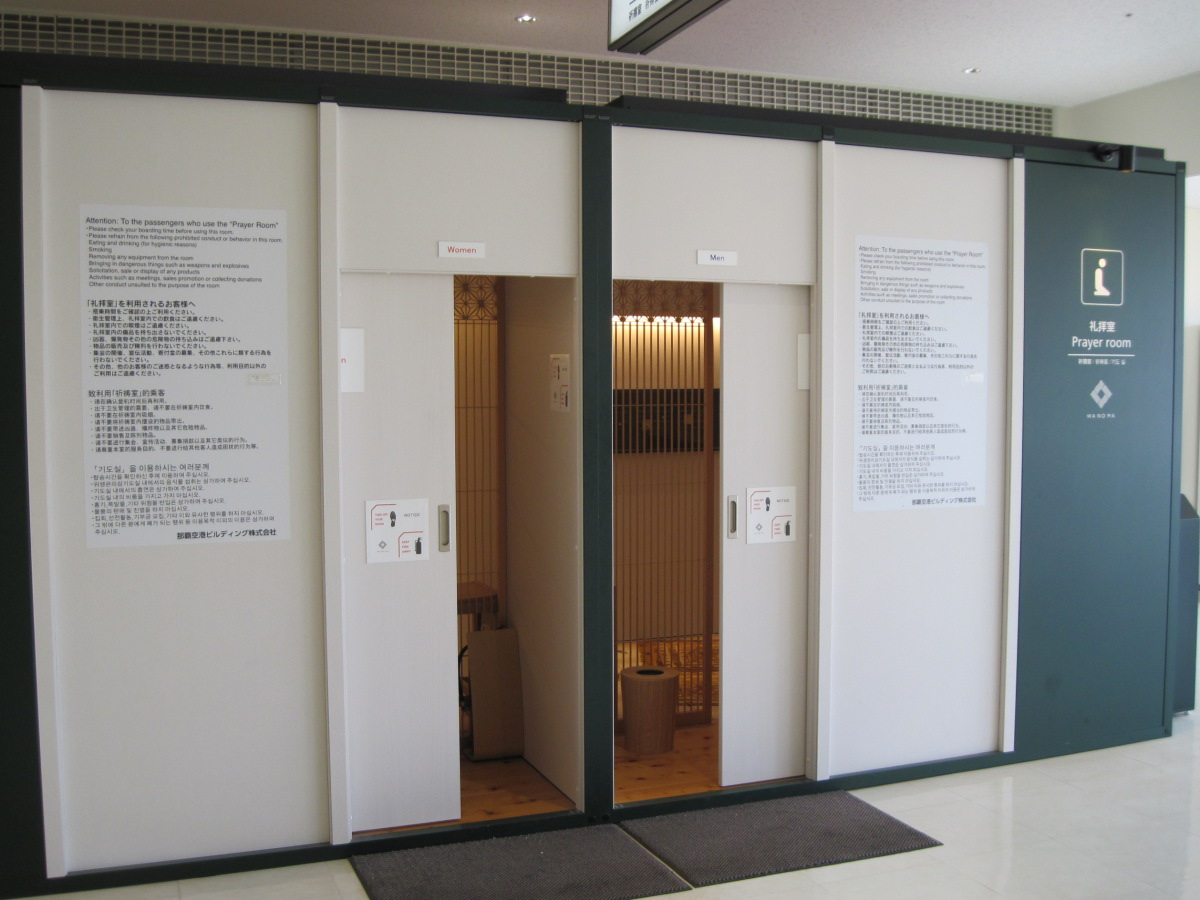
Worship Room in Naha Airport
While exploring the airport, I found a prayer room.
I think it is for Muslims, but it is Japanese style.
Orchids are also in full bloom here. They were not artificial flowers, but all fresh flowers.

ANA Flight 468
I came back on this ANA468 flight.
Walking Data
Distance: 15.3km / 4 days
Valley of Gangarra: 1.4km
Peace Memorial Park: 1.0km
Kokusai Street: 1.8km
Himeyuri Tower: 1.6km
Churaumi Aquarium : 1.3km
Okinawa Hanasaki Marche : 0.8km
Ryukyu Village : 2.3km
Onna-no-eki : 0.8km
Naha Airport: 1.8km ・Bios Hill: 2.5km
Naha Airport: 1.8km

