Does physical play in kindergarten lead to an athletic adult? Kohoku Shirayuri Kindergarten, which has a full range of playground equipment, is the kindergarten from which Hikaru Mori graduated.
Nishiarai Daishi
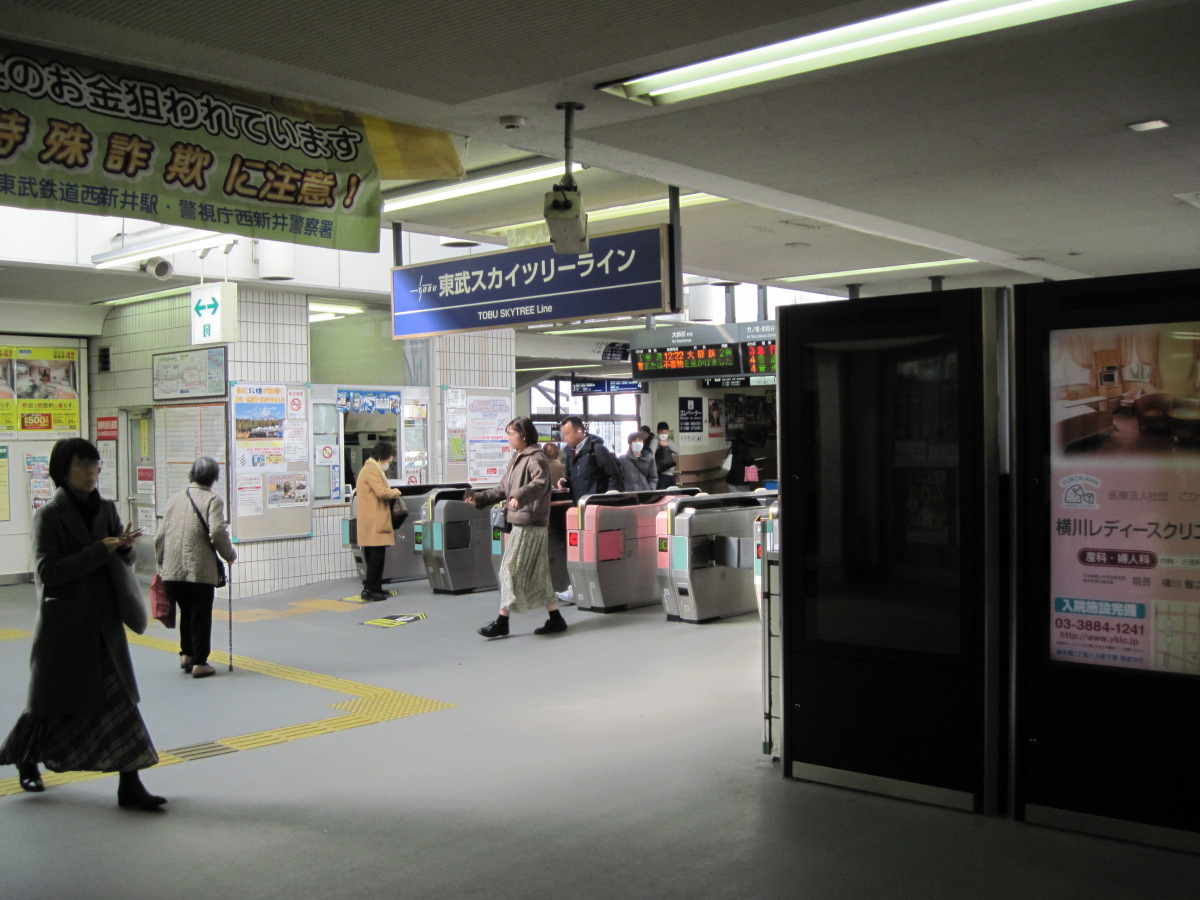
Nishiarai Station ticket gate
This is Nishiarai Station.
I always take pictures of the entrances and exits, so I decided to take a picture of the ticket gates for a change.
The Tobu Skytree Line is clearly displayed. Thanks to the Skytree, the station has become much more urban than it used to be.
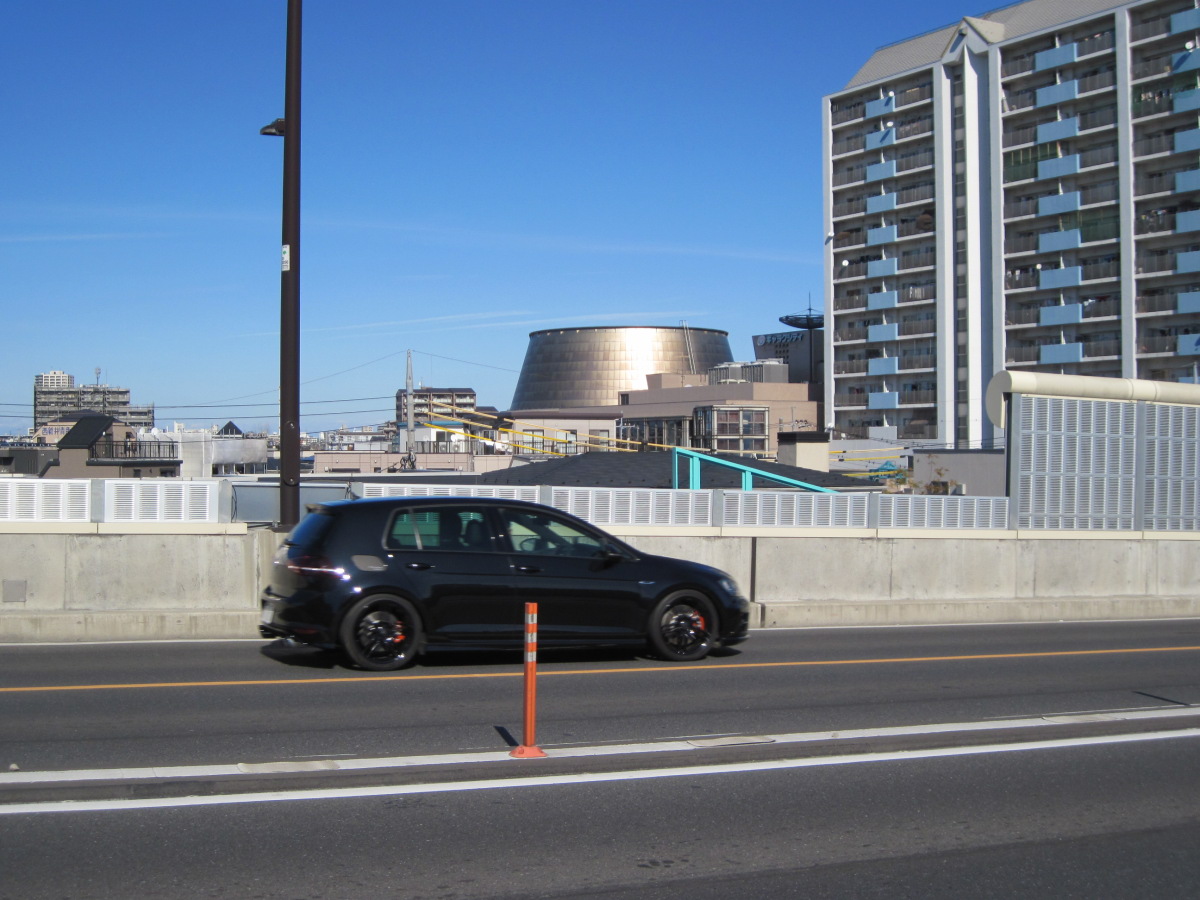
Galaxcity
I went out the east exit onto Kannana-Dori Ave, and as I approached the Tobu Line overpass, I spotted a building that looked like a low chimney!
I thought it might be a religious building, but it seems to be the Adachi City Children’s Future Creation Center (Galaxcity).From the shape of it, I guessed it was a planetarium.
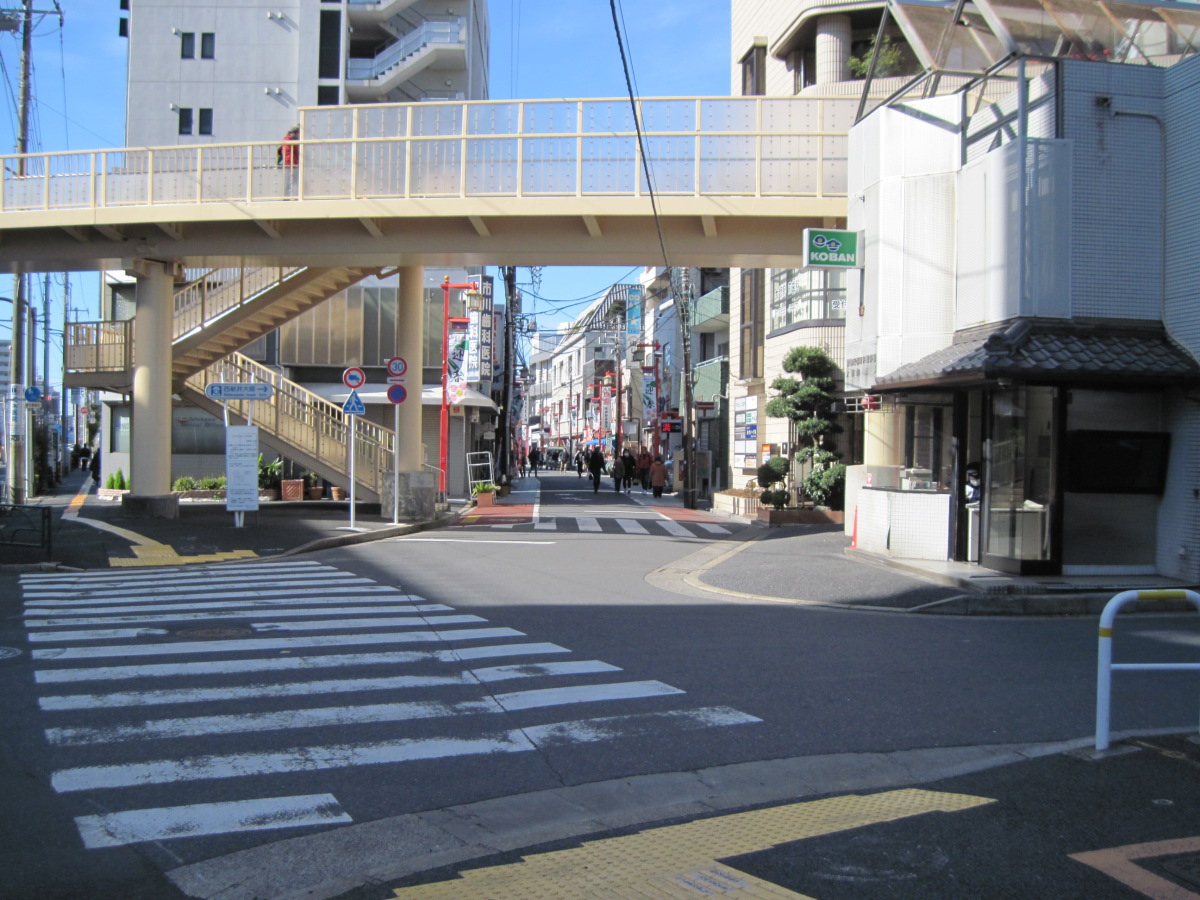
Fork in the road
I had been wanting to visit some of these places for a while, so I took a detour here to the right.
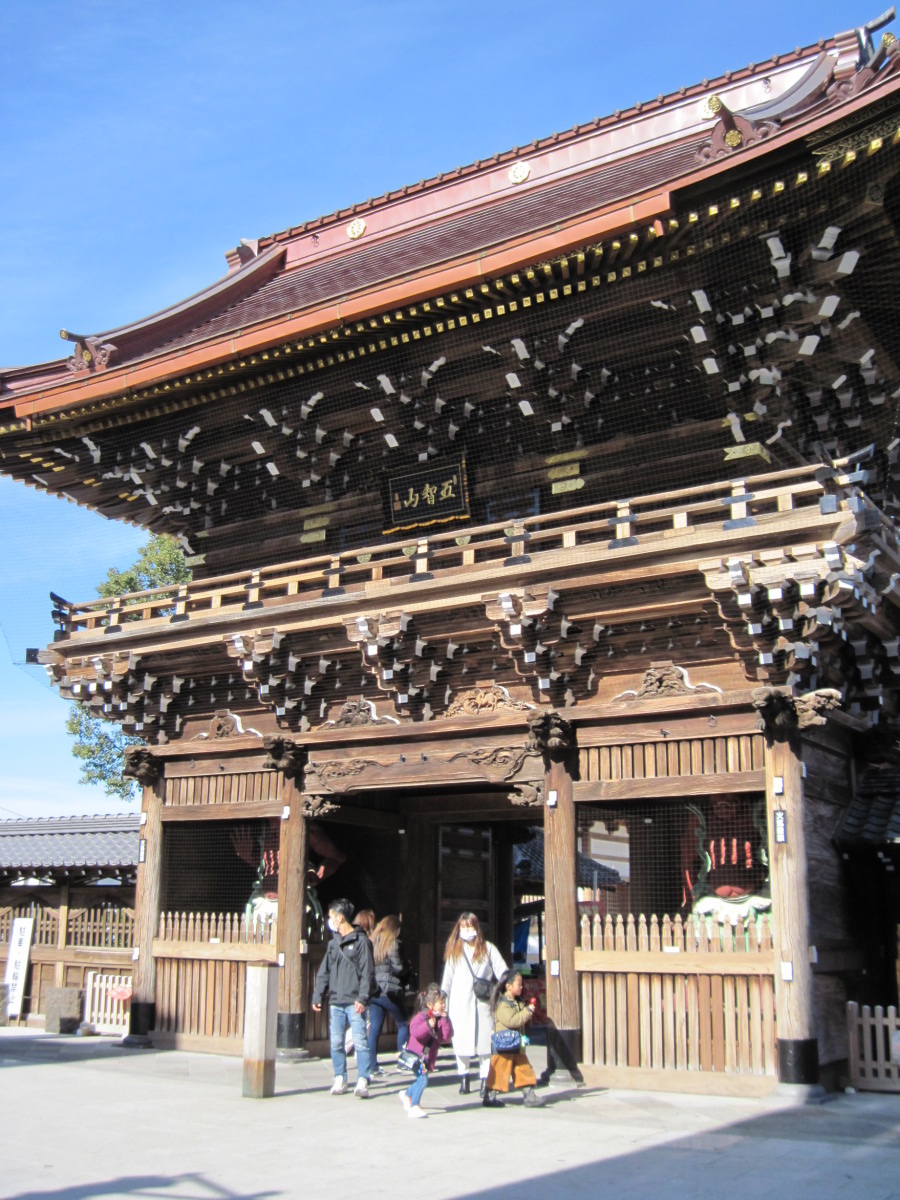
The gate of Nishiarai Daishi
The place I wanted to visit was Nishiarai Daishi. The official name is Gochizan Henshoin Sojiji Temple, and the founder is Kobo Daishi. The temple gate is intricate and magnificent.
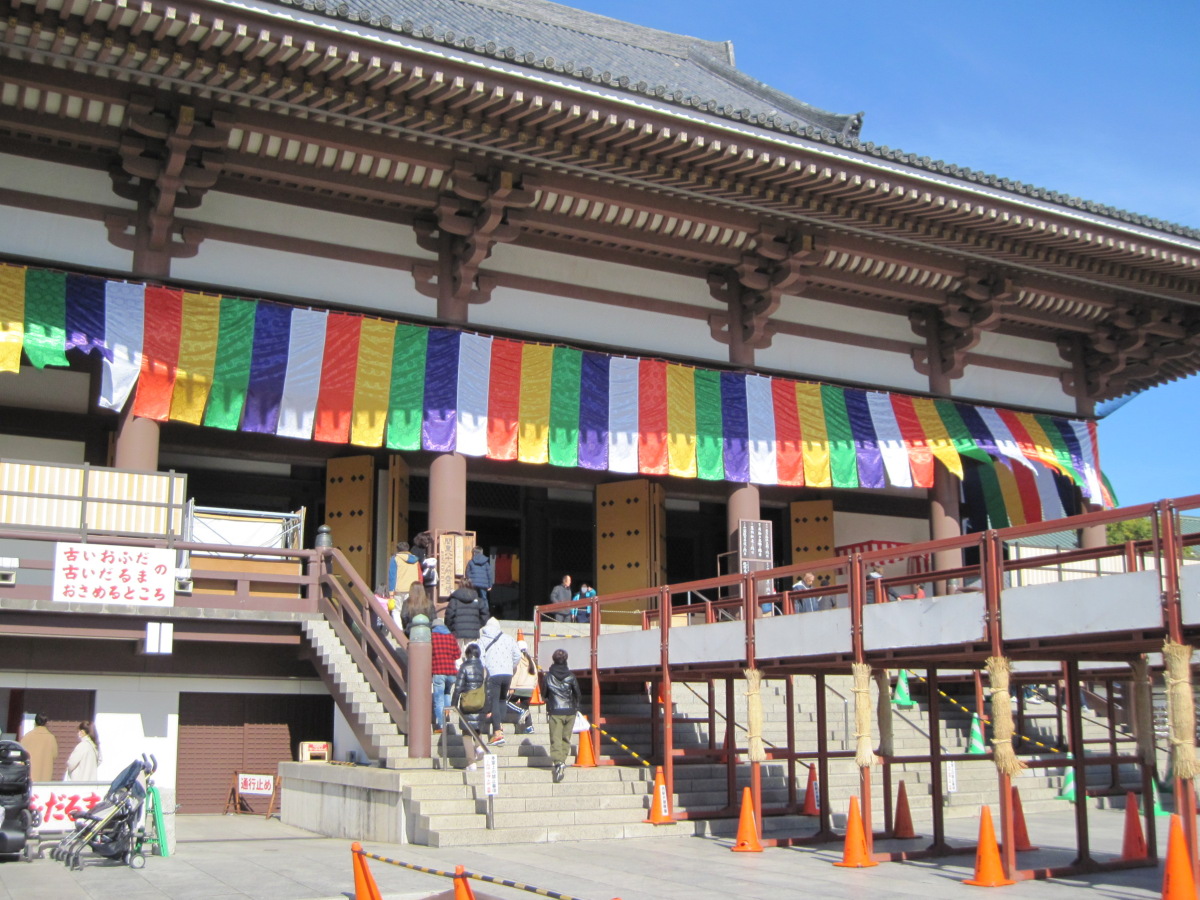
The main shrine of Nishiarai Daishi
This is the main hall.
In the lower left corner, there is a place to keep old offerings and old Daruma dolls.
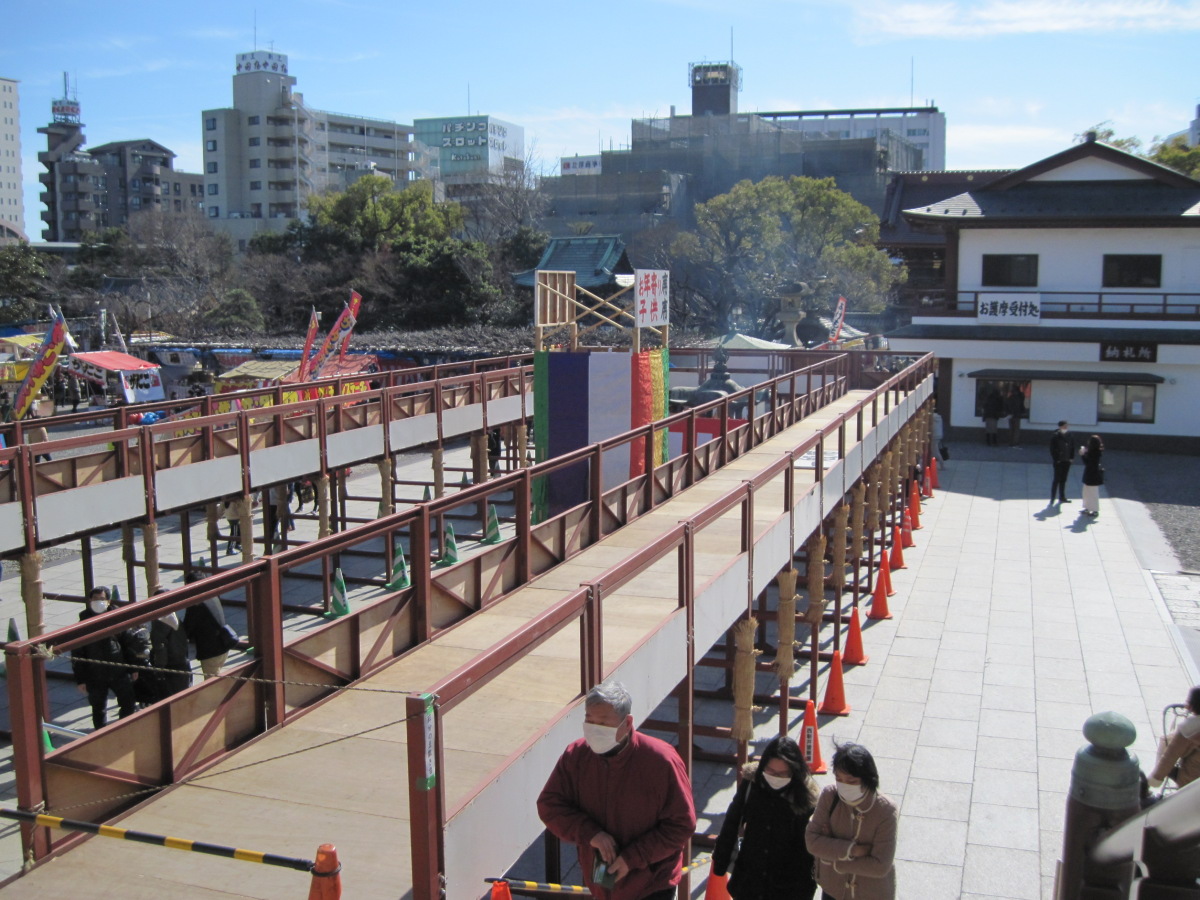
Stage for Setsubun
After paying my respects, I looked back and could see the stage for Setsubun. Tomorrow is Setsubun. I’m sure it will be crowded with many people.
By the way, if you write today’s date together, it’s 20200202, which is unusual in that it’s made up of two numbers and looks like a palindrome.
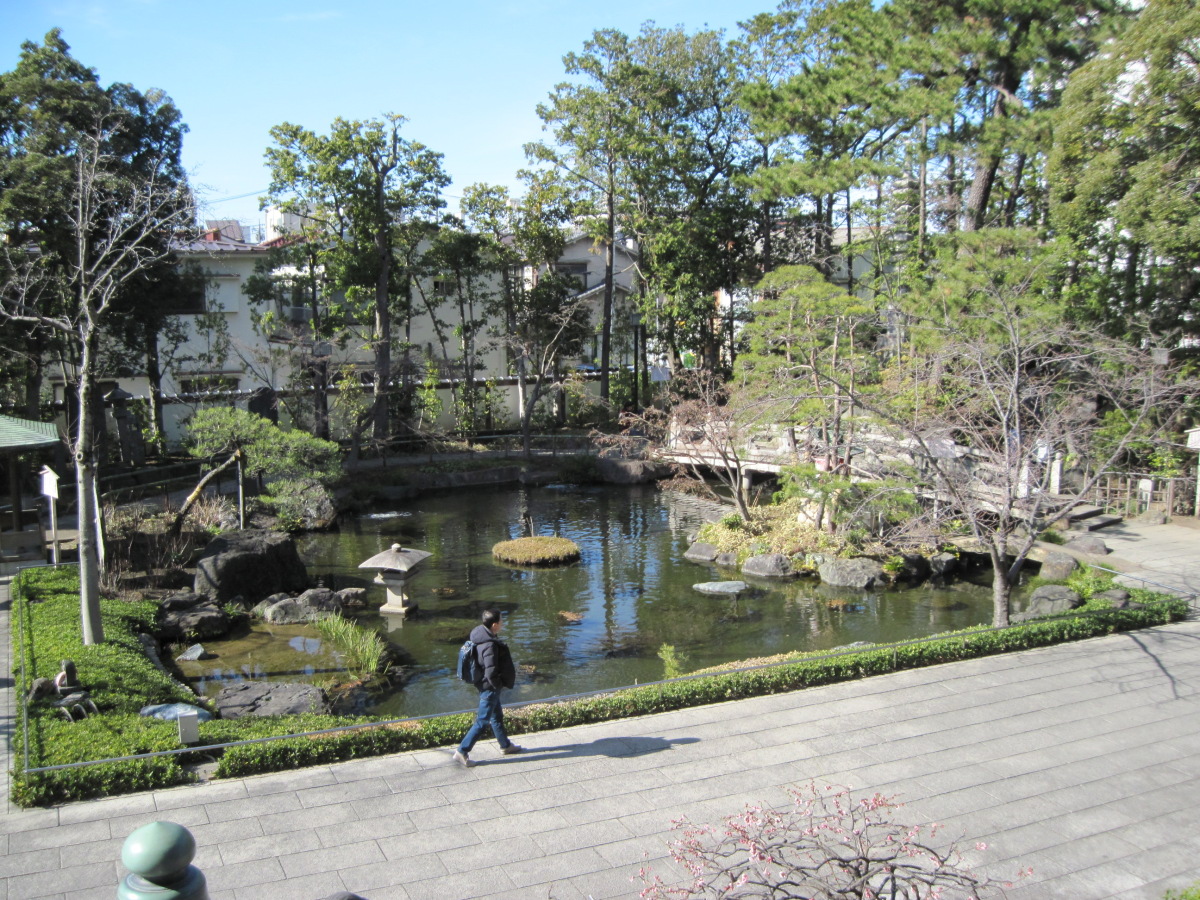
Pond on the west side of the main shrine
The name Nishiarai comes from the fact that there was a well to the west of the hall.
This pond is located to the west of the hall, so there may be a connection.
The water was clean.
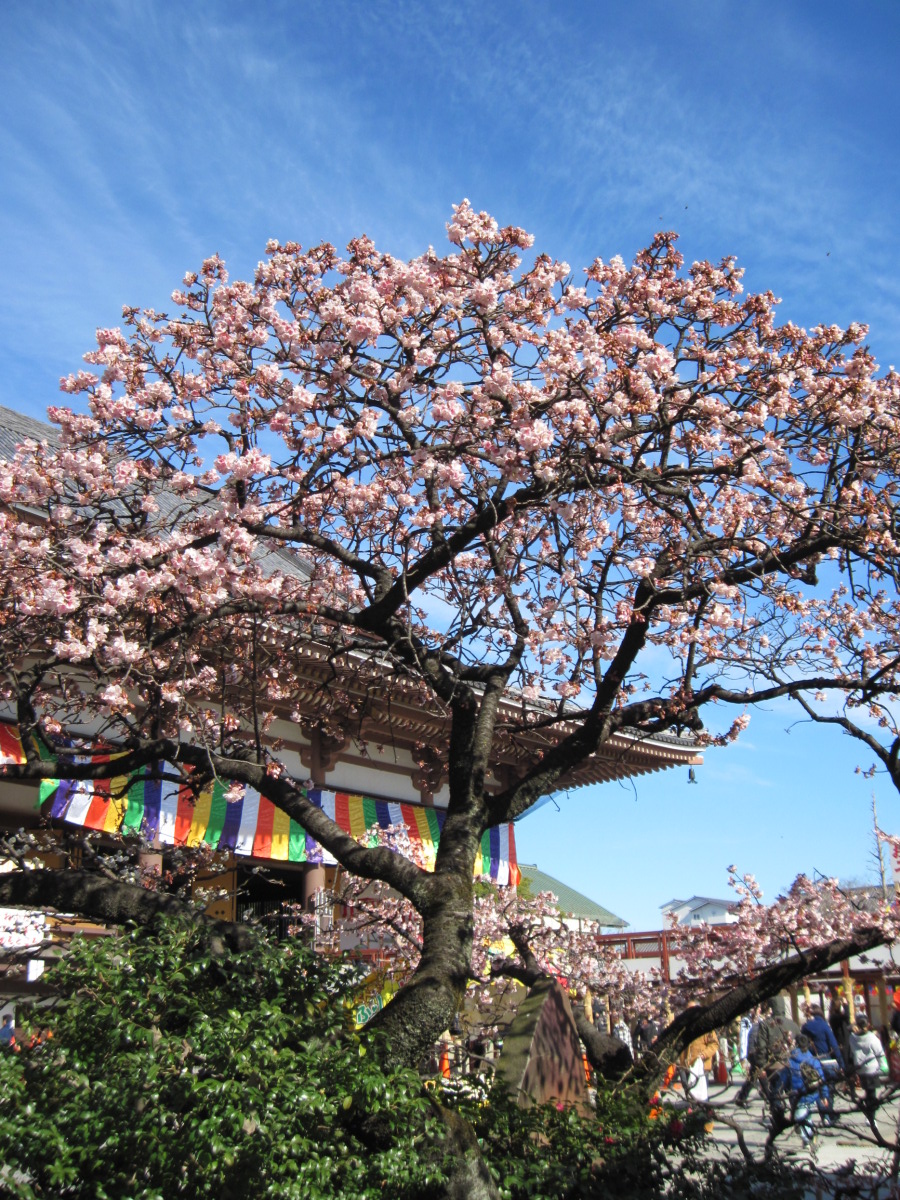
(Rare Tree) Cold Cherry Blossom
The cherry blossoms were already in bloom. The name of the tree was labeled “Cold Cherry Blossom” and there was a note beside it saying “Rare Tree”. I heard that there are not many cold cherry trees in Tokyo, but there was no need to write “rare tree”…
Kohoku Shirayuri Kindergarten

Kohoku Shirayuri Kindergarten
Back on Kannana-Dori Ave, just past the Toneri Liner, I found the Kohoku Shirayuri Kindergarten.
The kindergarten was very lively and interesting, with a dinosaur model, a children’s base, and a “mountain of adventure.” I can assure you that attending a place like this will improve your motor skills. As proof of this, trampoline player Hikaru Mori is a graduate of the 30th kindergarten. There was a banner on the wall.
Kannana-Dori Ave with many pylons
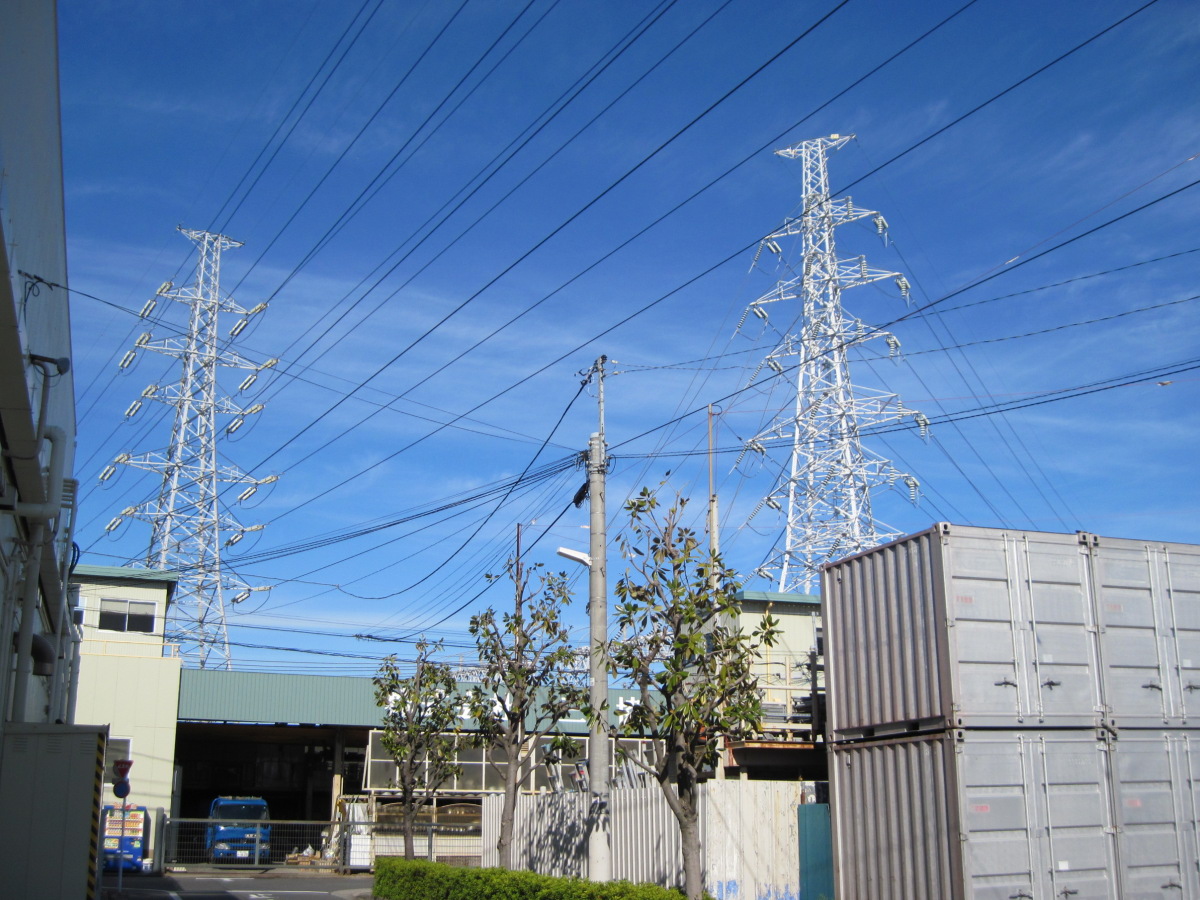
Substation?
As I had felt since my last walk, various types of pylons appear on Kannana-Dori Ave.
There seems to be a substation here, as the transmission line from the tower on the right is once down to the ground.
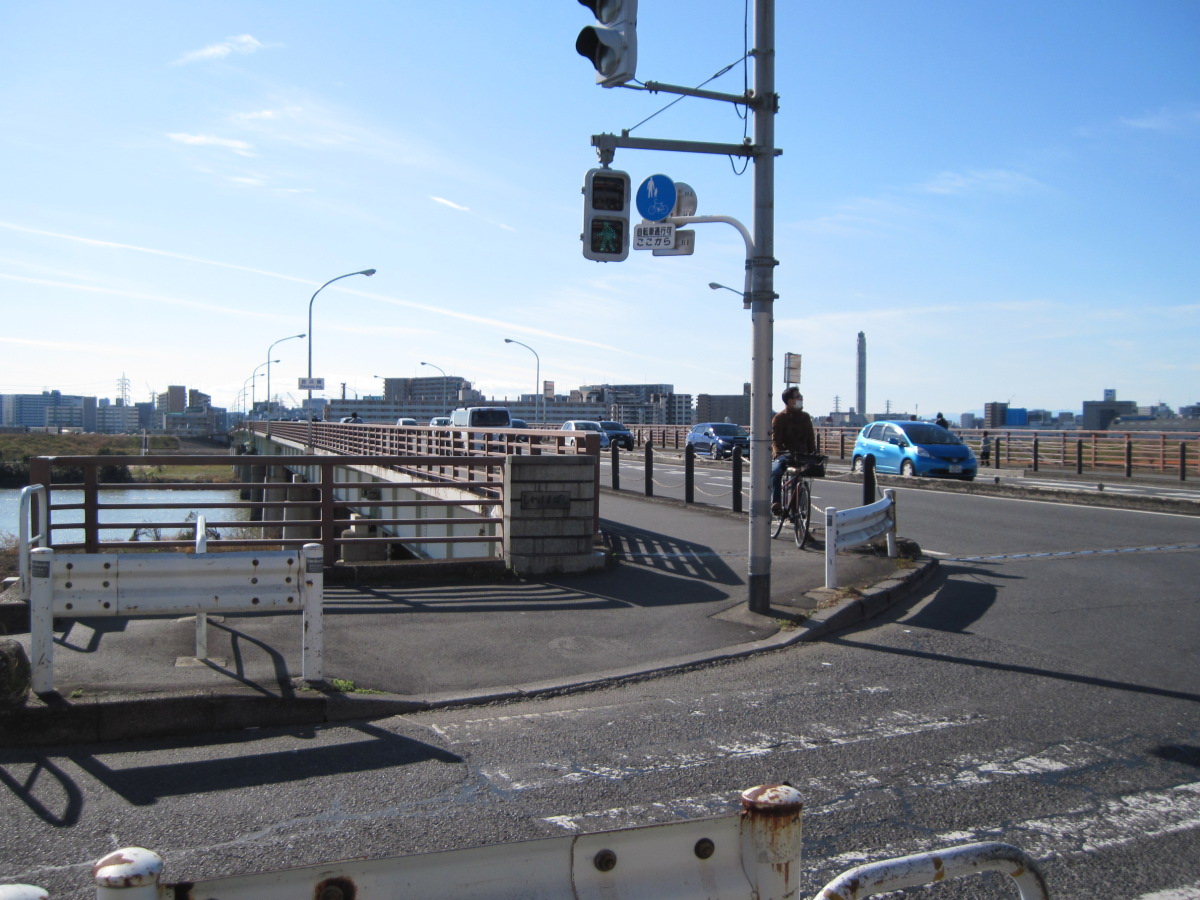
Shikahama Bridge
I cross the Arakawa River at the Shikahama Bridge.
As I had felt since my last walk, there are many place names with the character for “Shika (deer)” along Kannana-Dori Ave. Shishibone (Deer bone), Kamoto (Deer root), and Shikahama (Deer beach)… Does that mean there were deer?
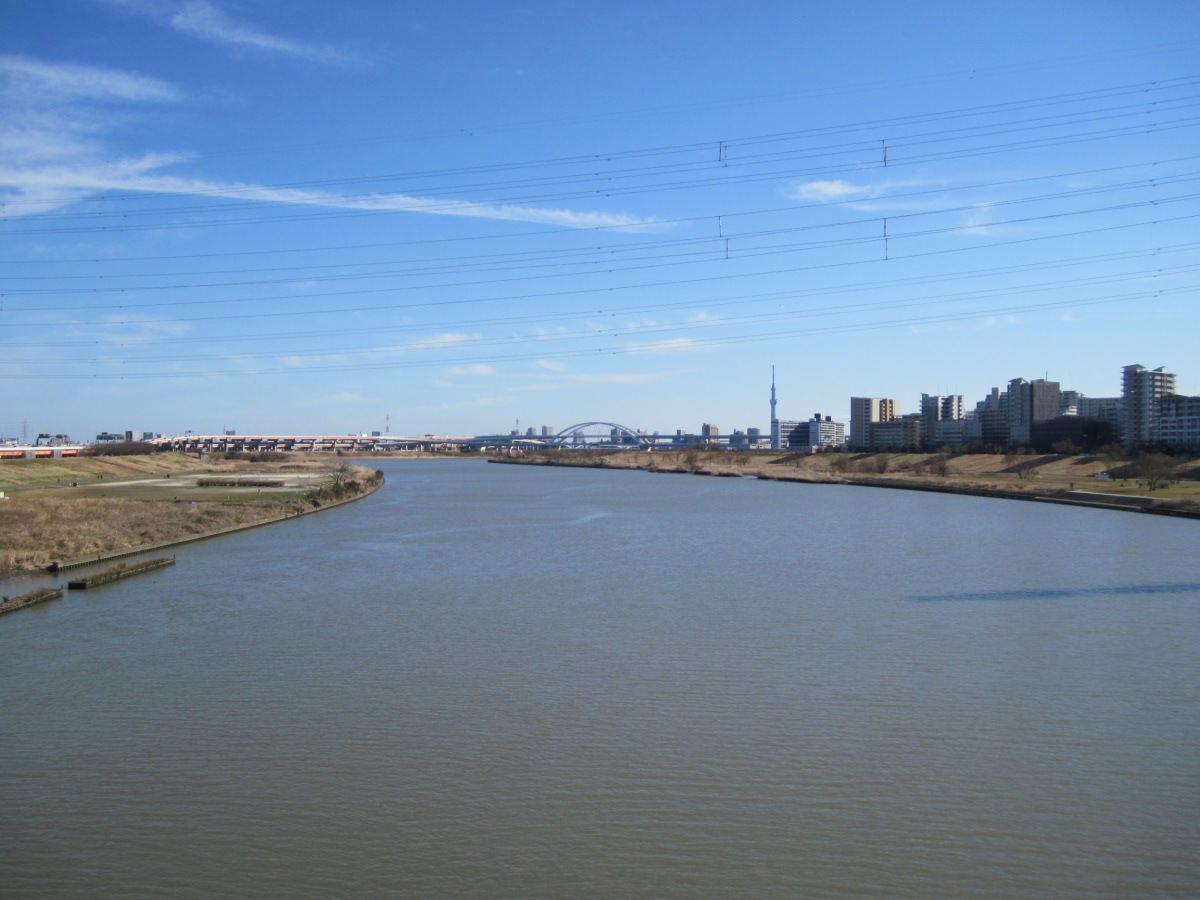
Arakawa River
When I look at the Arakawa River, I always think of how large it is, and how it is hard to believe that it is a man-made spillway. The arch bridge in the distance is probably the Goshikizakura Bridge, which is part of the Central Circular Route C2 of the Tokyo Metropolitan Expressway. You can also see the Tokyo Sky Tree.
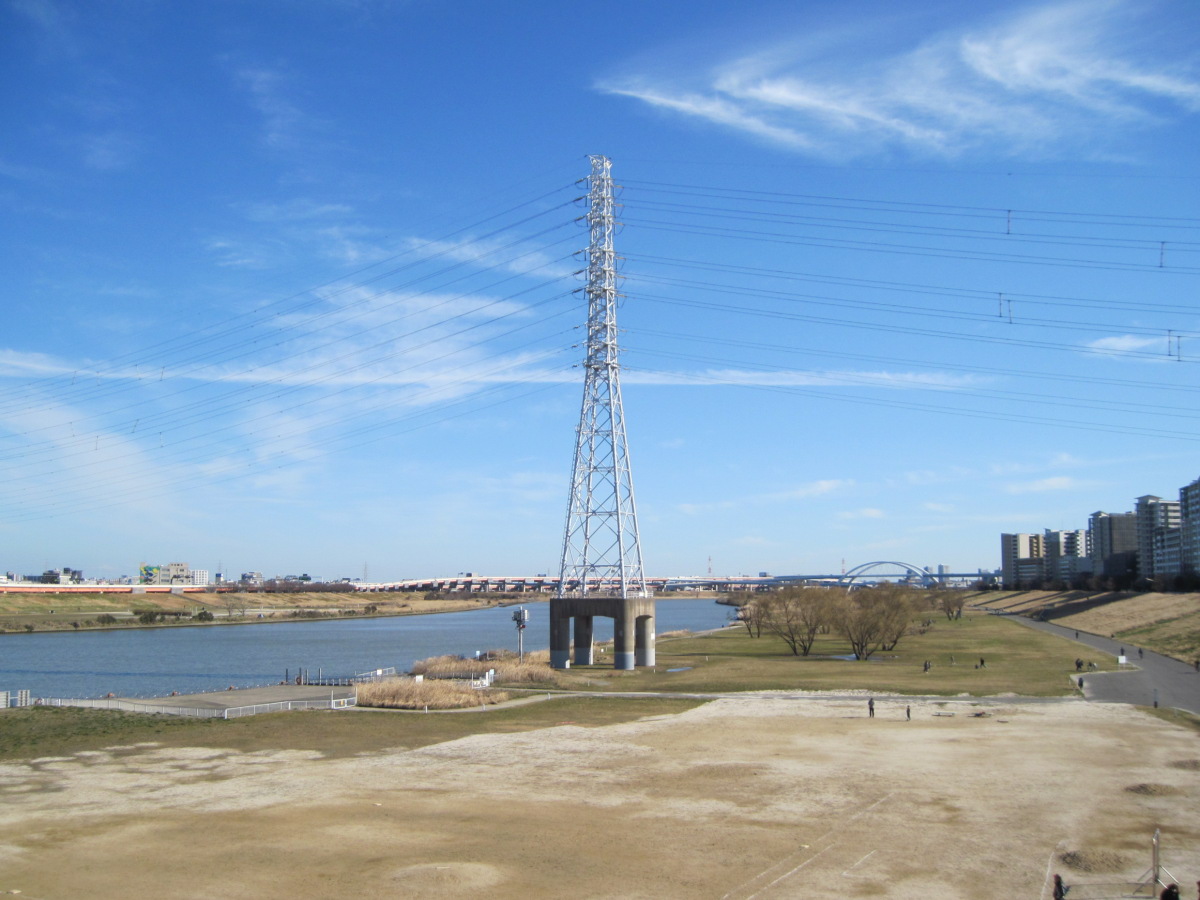
A pylon with a concrete foundation
Here it is again, a pylon.
But this one is unusual. The foundation is concrete. I’ve never seen this before.
Since there are so many power lines, is it not strong enough to put the pylons outside the embankment?
If we had no choice but to put them up on the riverbed, they would be submerged in water during a typhoon. Even if it is 20 kilometers away from the sea, the pylons will probably rust because of the tidal influence.
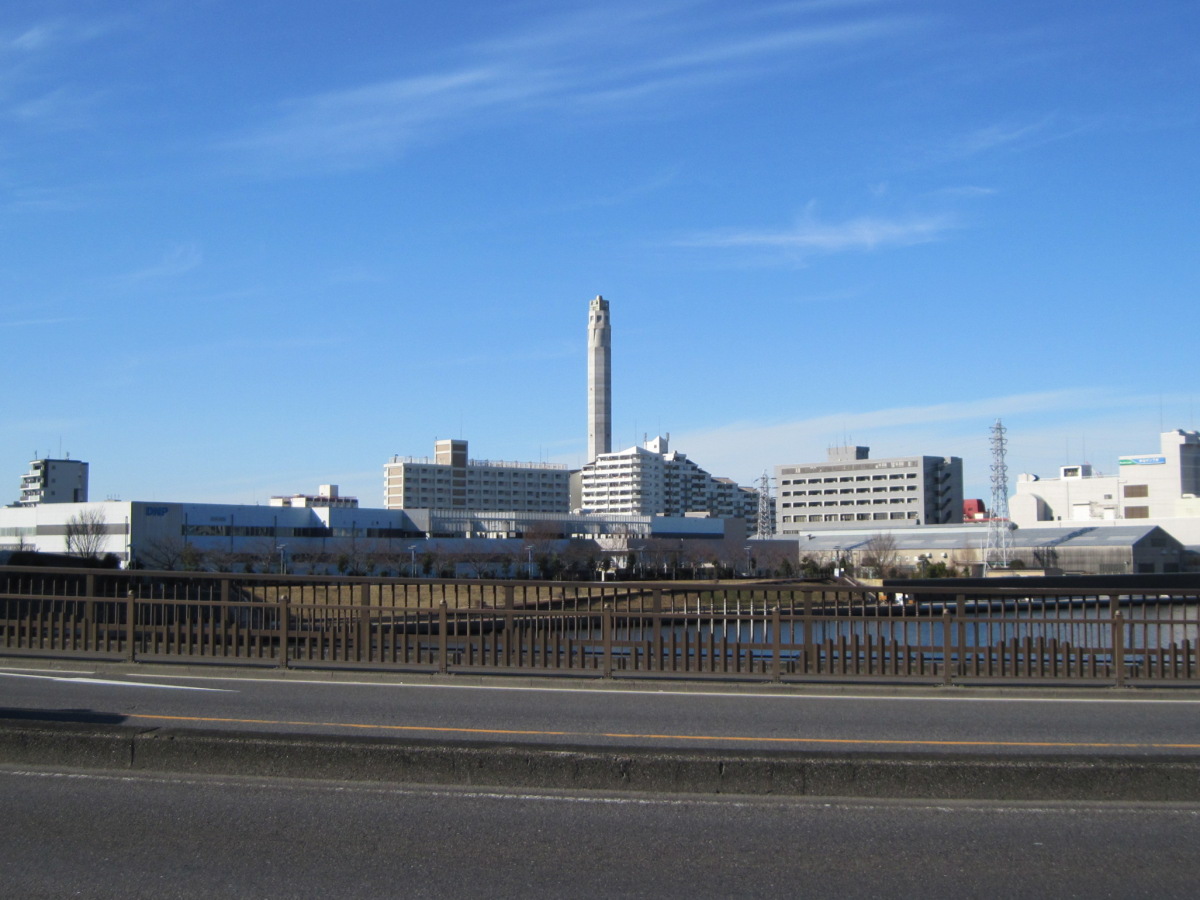
Chimney of the North Cleaning Plant
The tall tower here looks like the chimney of the North Cleaning Plant, although it has a rather stylish design. It stands out well even from a distance.
Higashijujou Station
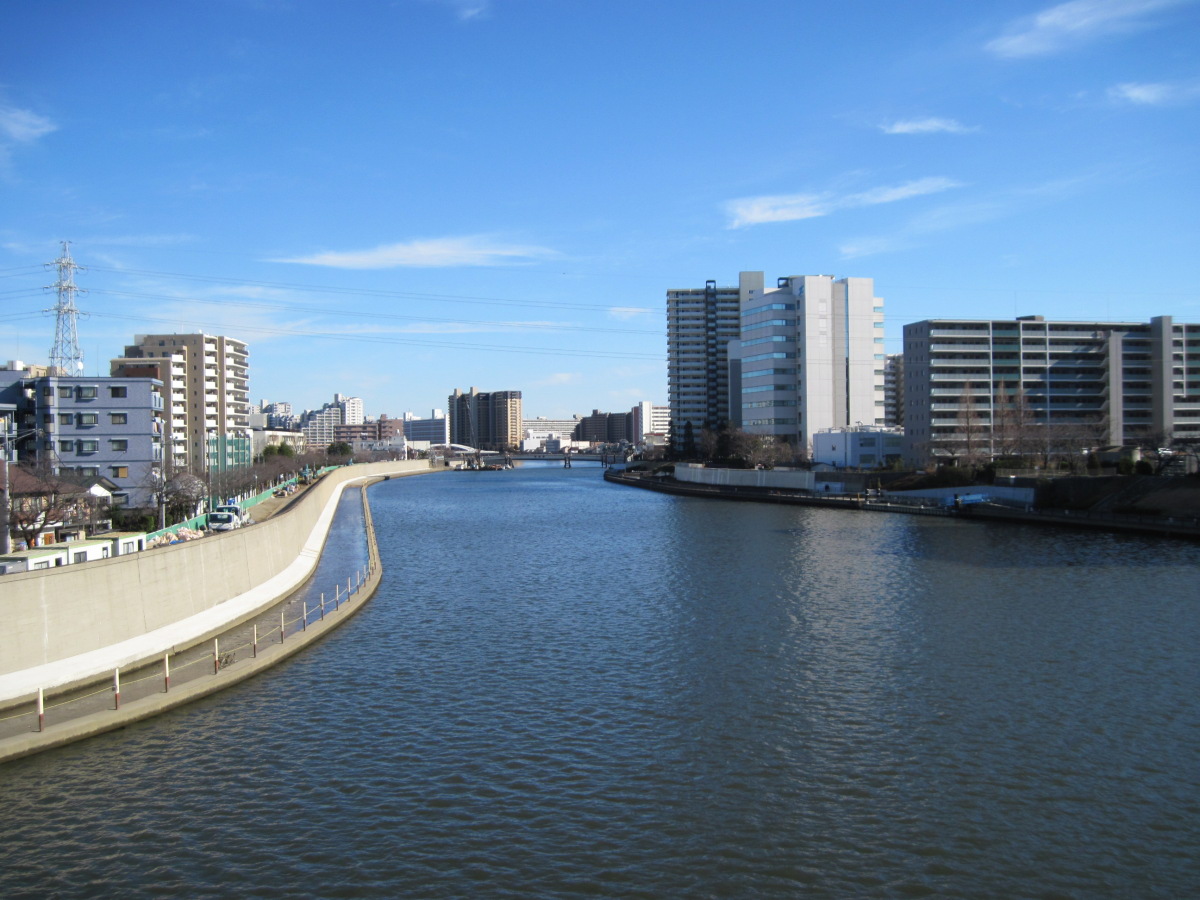
Sumida River
This is the Sumida River.
I can’t think of anything to comment on, but I am curious about the reason for the existence of the shallow strip on the left.
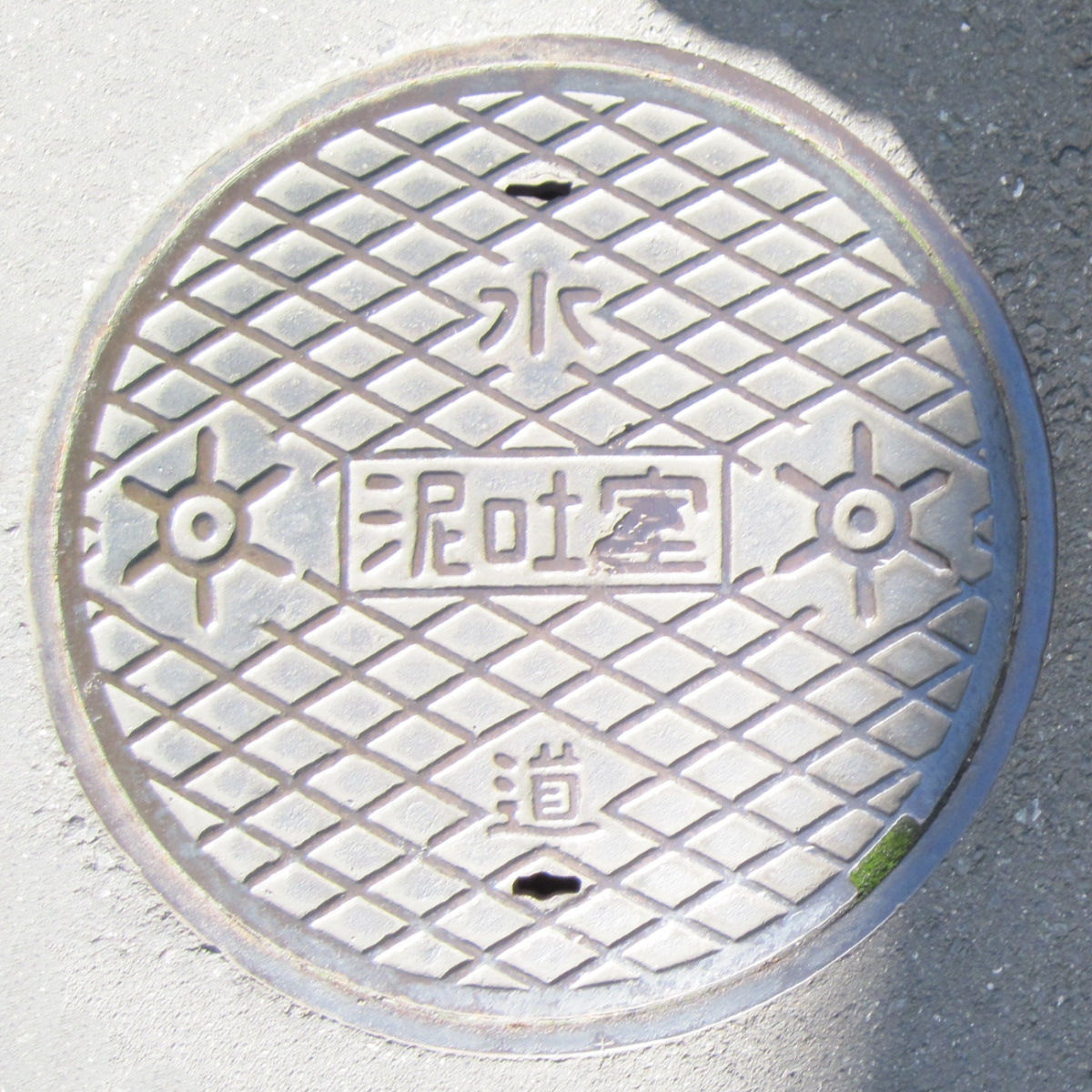
Manhole cover with “mud vomiting chamber” sign
I found an unusual manhole cover called the “Mud Vomiting Chamber.”
It simply says “water supply” on it, so is it a water supply? If so, I don’t like mud.
There are two dots on the “road” of the “waterworks”, so it seems to be an old facility.
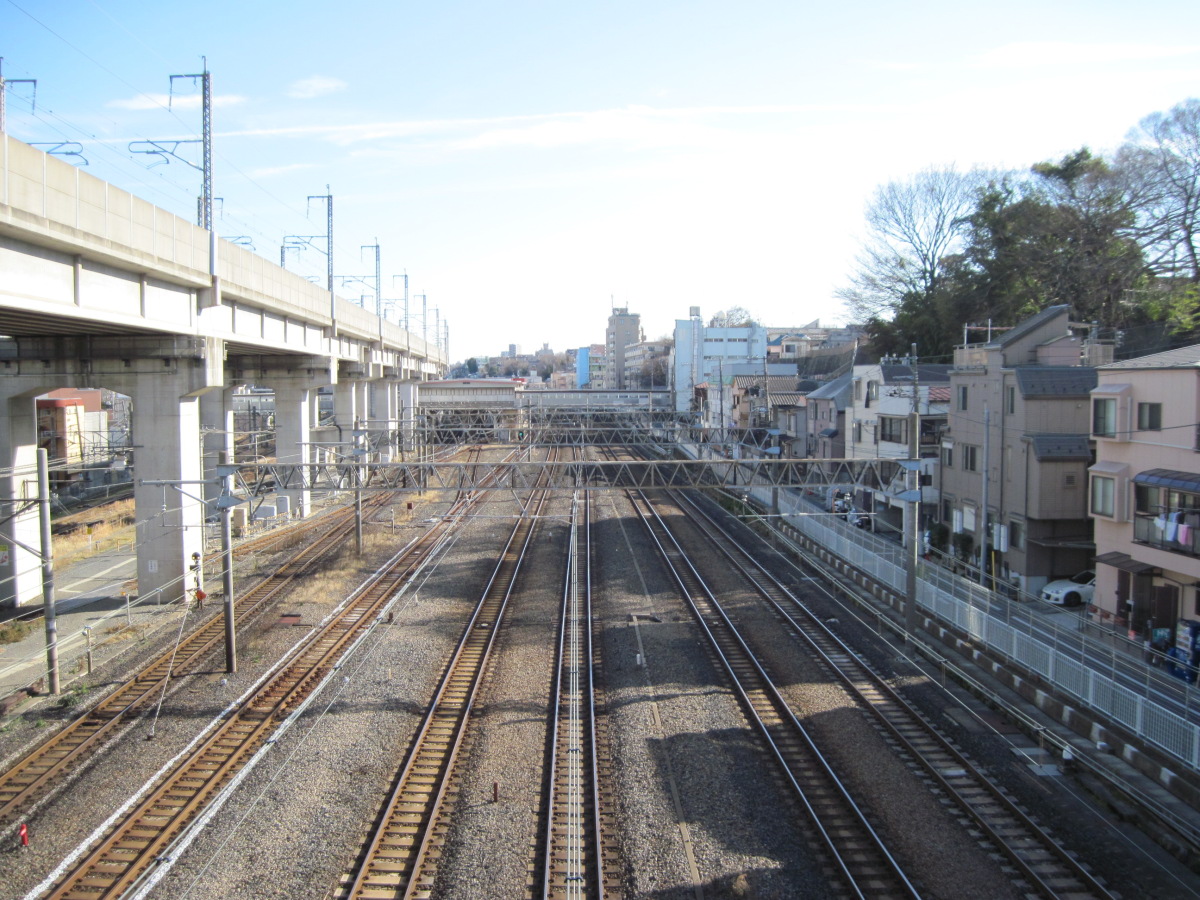
Tohoku Line
Crossing the Tohoku Line.
The passageway that straddles the tracks is Higashi Jujo Station, which is where I am headed.
The elevated platform on the left is the Tohoku Shinkansen. The elevated plateau on the right is the eastern edge of the Musashino Plateau.
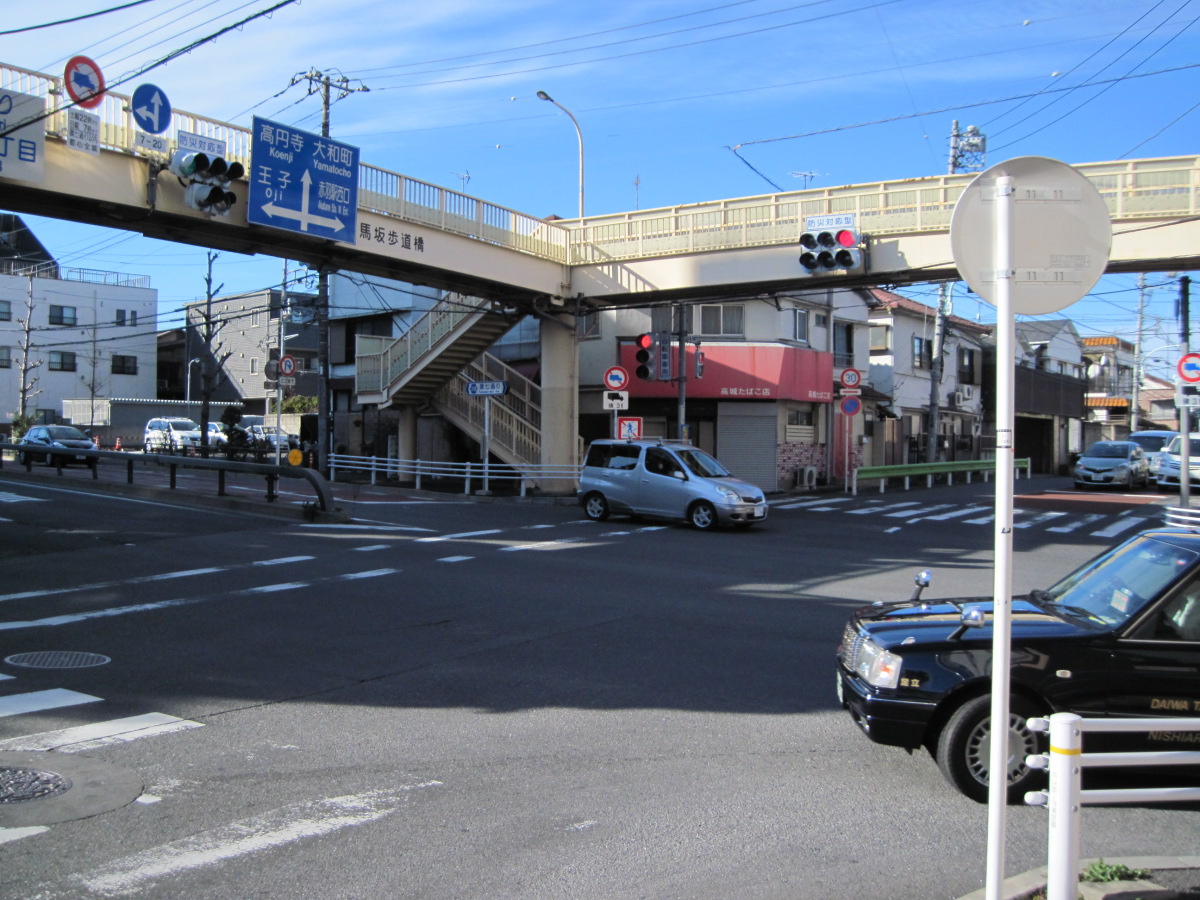
Kita-ku, Nakajo Sanchome intersection
Today’s walk took me to the Nakajujo 3-chome intersection in Kita-ku.
The name of the pedestrian bridge is “Masaka (No way) Pedestrian Bridge?”
It’s supposed to be “Umasaka (Horse slope) Pedestrian Bridge”.
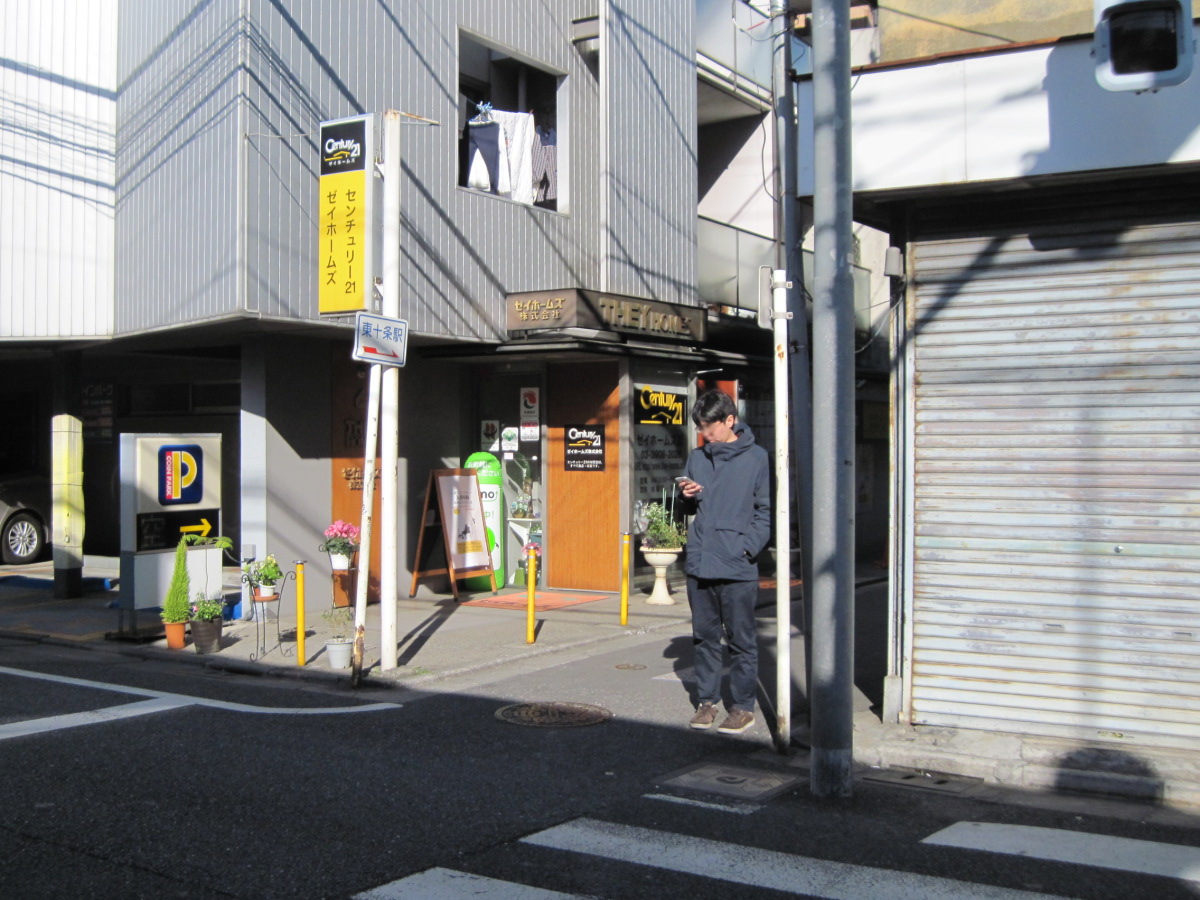
Entrance to Higashi Jujo Station
This is the entrance to Higashi Jujo Station, which I almost passed by.
There was a small shopping street.
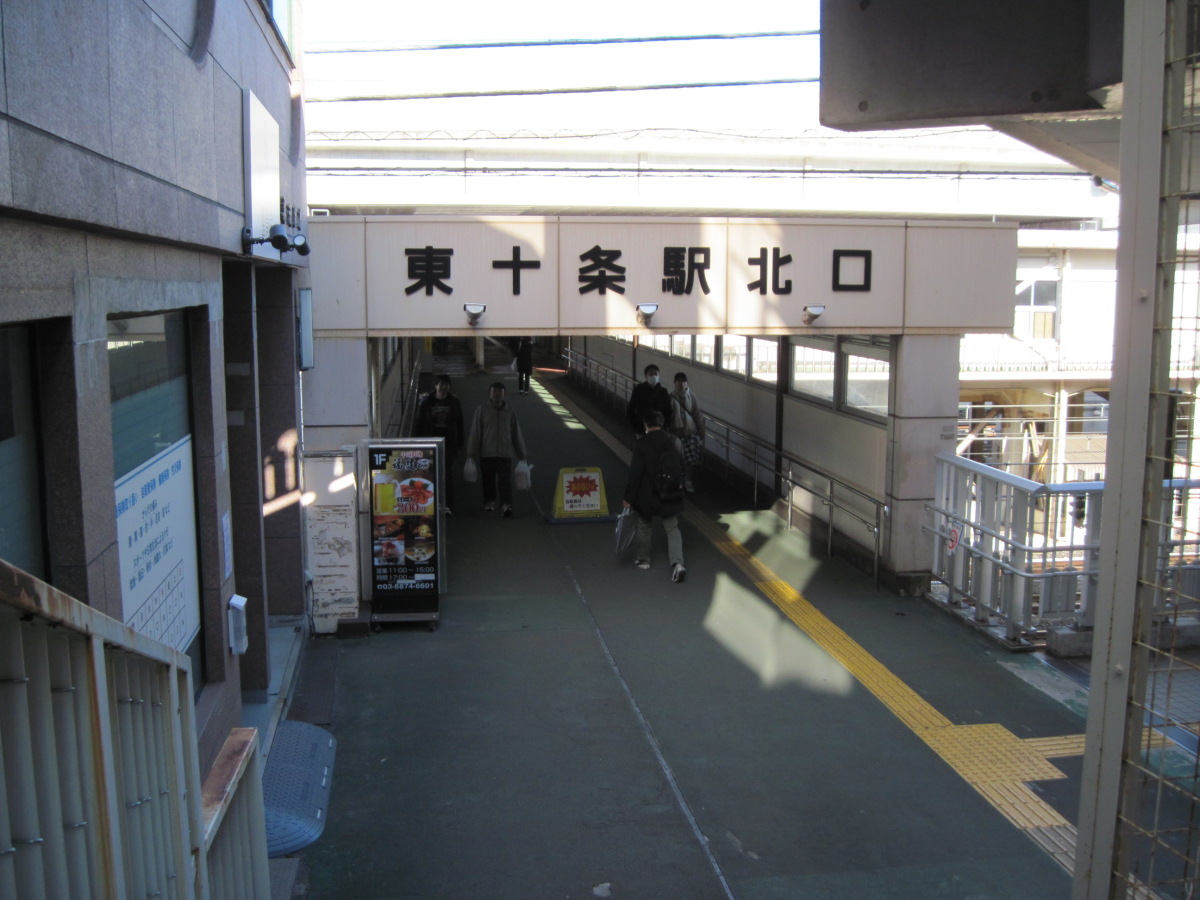
Higashi Jujo Station North Exit
This is the north exit of Higashi Jujo Station.
The station is on the border of the Musashino Plateau, which makes it look difficult to build.
Walking data
Course: Tobu Skytree Line Nishiarai Station -> Kannana-Dori Ave (Nishiarai – Kita-ku Nakajujo 3-chome) -> JR Keihin Tohoku Line Higashijujo Station
Distance: 8km
Time: 2h3m

