
Today I walked around Shibuya and found a flag tower built to commemorate the 1964 Tokyo Olympics.
Shibuya
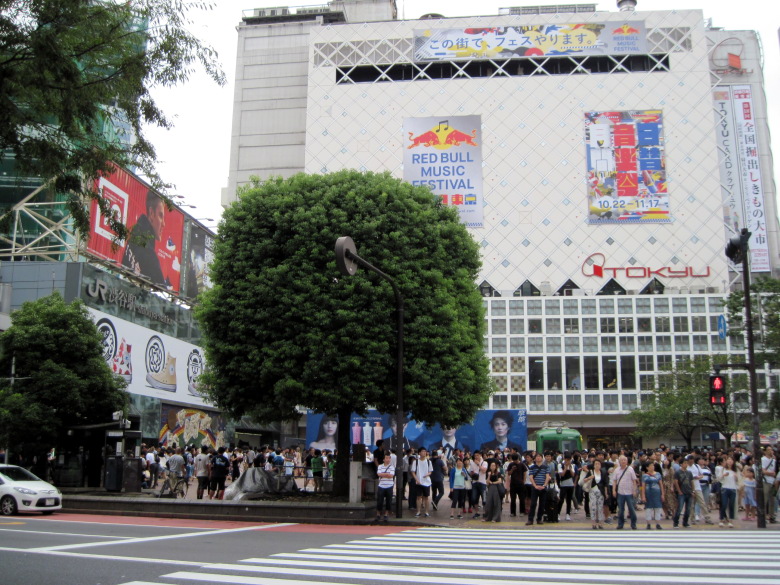
人口密度の高い渋谷駅前交差点
The area around Shibuya station is just full of people. Excluding commuter trains, it’s probably the most densely populated place in Japan.
Most of the people have their phones in their hands. With this many people, it’s no wonder that famous bloggers get access to tens of thousands of PVs.
Yes, the last time I came to Shibuya by subway, when I tried to exit at the Hachiko exit, the exit number was 8, and I was impressed by the thoughtfulness of the exit.
Former Electric Power Building
Well, one of the purposes of my walk in Shibuya was to see what this building looked like. Do you know it?
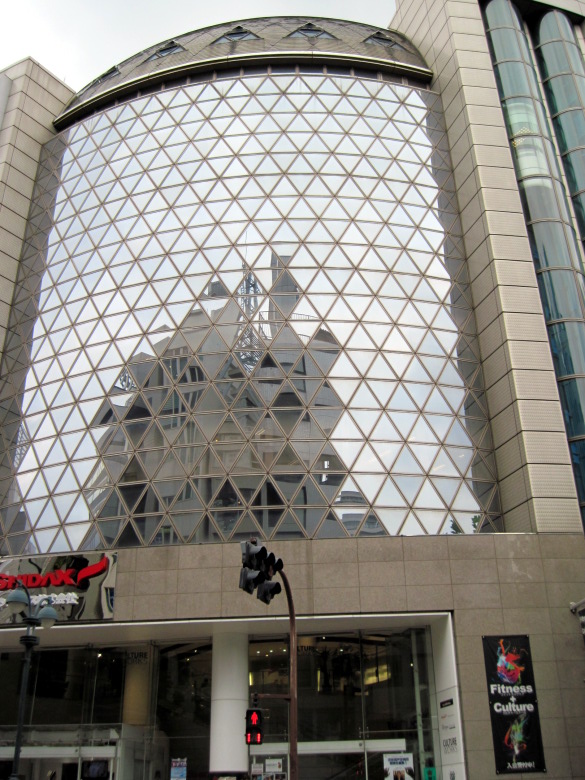
The former Electric Power Building, still intact.
This building used to be the Electric Power Building. I have been here twice when I was a student.
Although I didn’t know much about electricity at the time, I was very interested in the exhibits such as the actual waterwheel that had been removed and the distribution lines from the high-voltage lines to the households through the transformers on the poles.
I was planning to come back after gaining more knowledge, but unfortunately, the museum was closed after the earthquake.
I am aware that there are pros and cons to various methods of power generation and their management. It is true that temporary self-restraint may have been necessary. However, the fact remains that electricity is an important and useful form of energy. The Electric Power Museum was a place where visitors, whether ordinary people or experts, could learn about electricity in a variety of ways. I think it would be a great loss to Japanese technology if the building were to remain closed forever, as the knowledge transfer would be interrupted in the meantime.
However, there is an electrical substation underneath the building, which still seems to be owned by Tokyo Electric Power Company. I am hoping that the Electric Power Museum will be back in operation someday.
National Flag Tower
When you get to about Jingumae 1-chome, it becomes less popular.
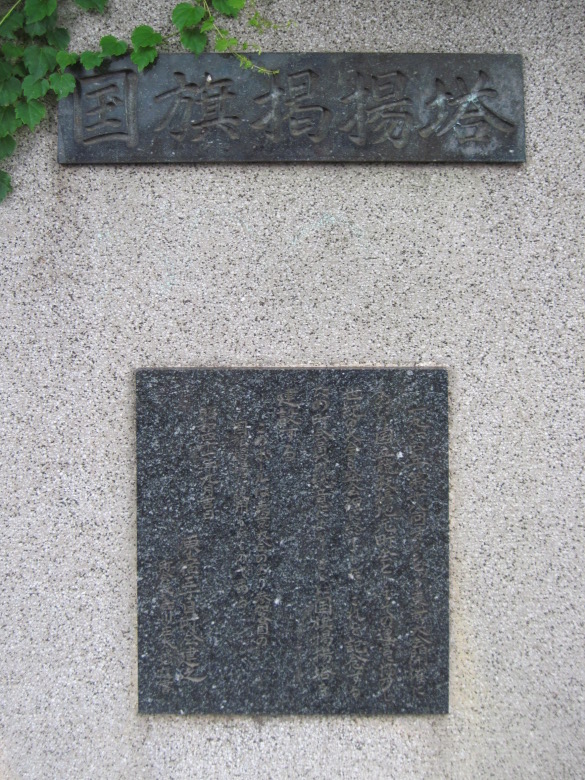
Notation and description of the flag tower
I found a “Flag Tower” by the stairs of the crosswalk bridge!
Looking up, I saw a red circle of the sun on a white background…
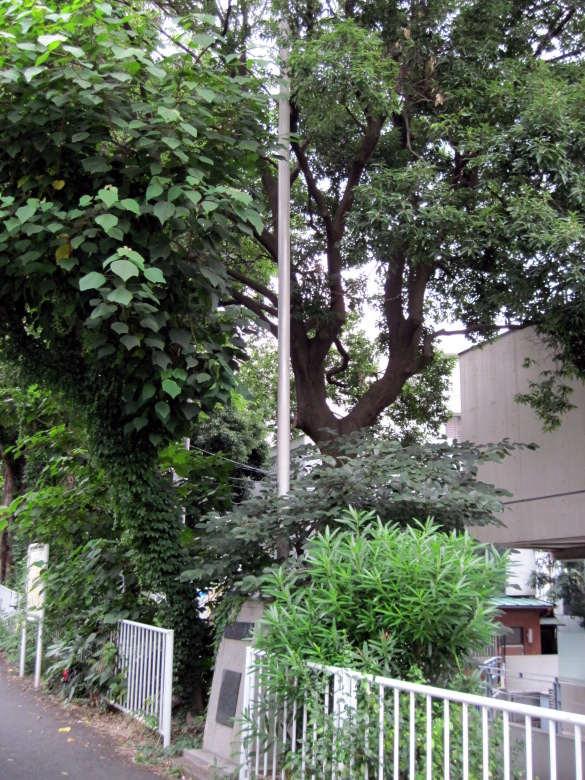
Flag tower entangled in a tree
There is none!
The tower has become entangled with large trees, and it is not in a very good condition to fly a flag.
According to the monument, it was erected by the Harajuku 3-chome Community Association, as the local community of the National Stadium, to commemorate the Tokyo Olympics. The National Stadium is about 900 meters away from here in a northeasterly direction. So Harajuku 3-chome was a relatively large area. It was a moment that made me feel that more than 50 years have passed.
Buildings with a sense of rhythm
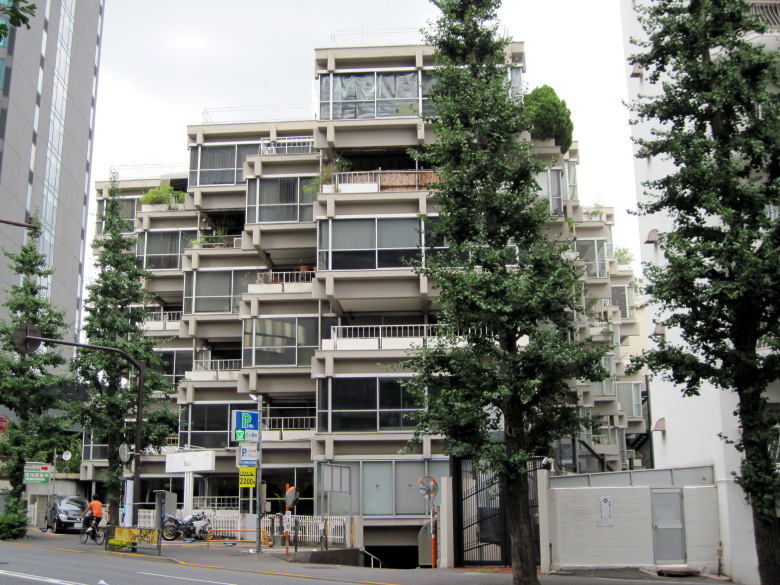
Rhythmic Apartments Part 1
From here, buildings with a sense of rhythm line the street. Is it an apartment building?
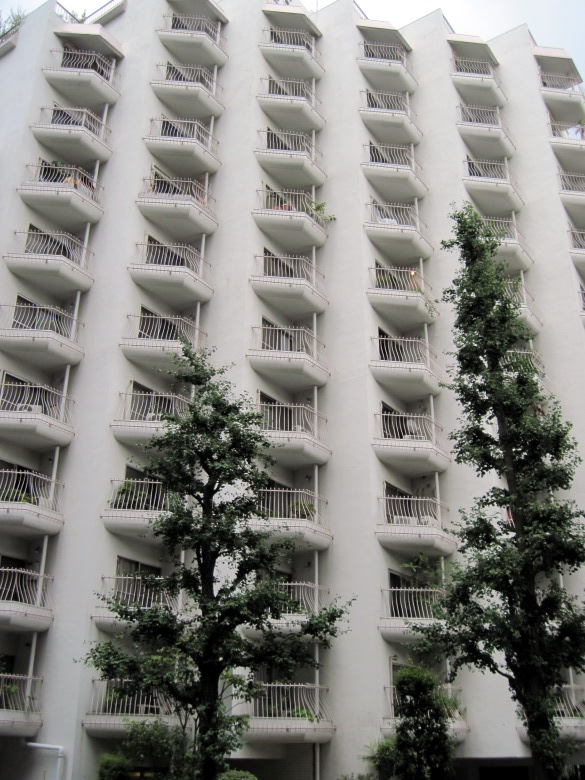
Rhythmic Apartments Part 2
I wonder what kind of things they think about while designing it.
Yoyogi Station
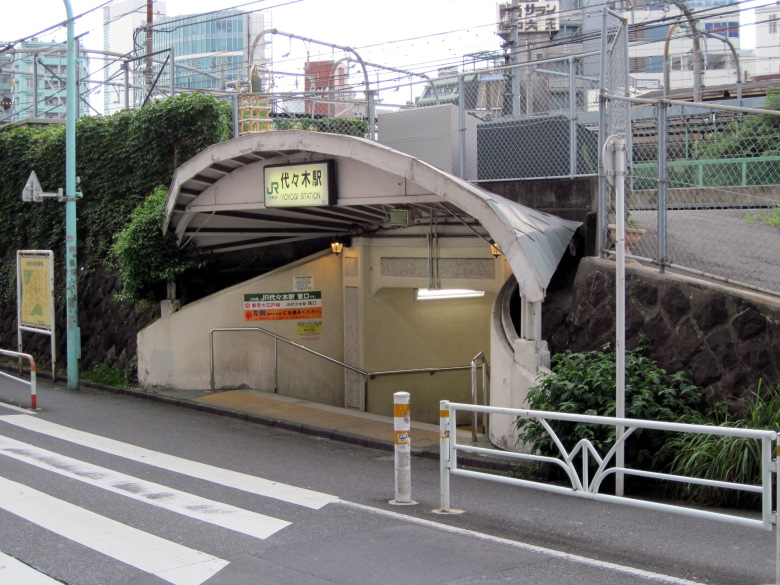
Impressive arched east exit of Yoyogi Station
I arrived at Yoyogi Station. This is the east exit, which I sometimes use. Looking at it again, it had a stylish arch shape. I wondered if it had something to do with the Olympics.
Being a perverse person, I decided to cross the railroad crossing and enter through the west exit instead of the east exit.
Just in time, the Narita Express was passing by. I decided to take a sharp and focused photo, so I focused on the slightly S-curved tube in the foreground and waited.
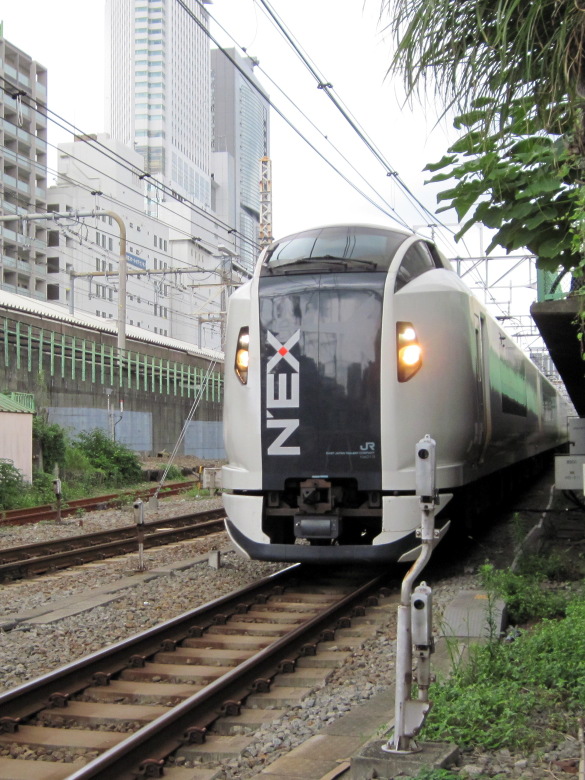
Narita Express
However, I couldn’t wait long enough to press the shutter. Ahhh, I need more training.
Walking data
Course: JR Yamanote Line Shibuya Station -> JR Chuo Line Yoyogi Station
Distance: 5.2km
Time: 1h9m


コメント