32km point
Today, I plan to walk the Tokyo Olympic course from the Otemachi intersection, the 32km point, to the finish line.
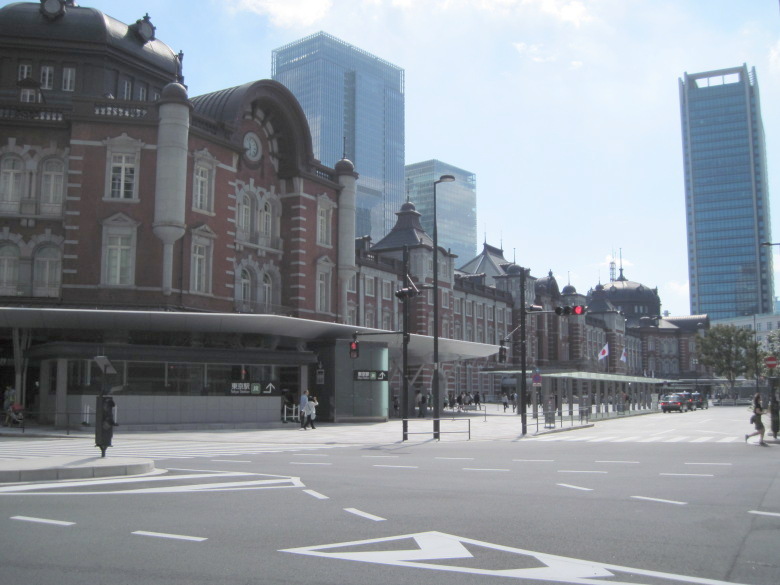
Tokyo Station Marunouchi Station Building
Perhaps because it was the middle day of a three-day weekend, the area in front of Tokyo Station seemed to be a little empty.
However, I couldn’t capture the whole station even from this diagonal position, it’s such a long building.
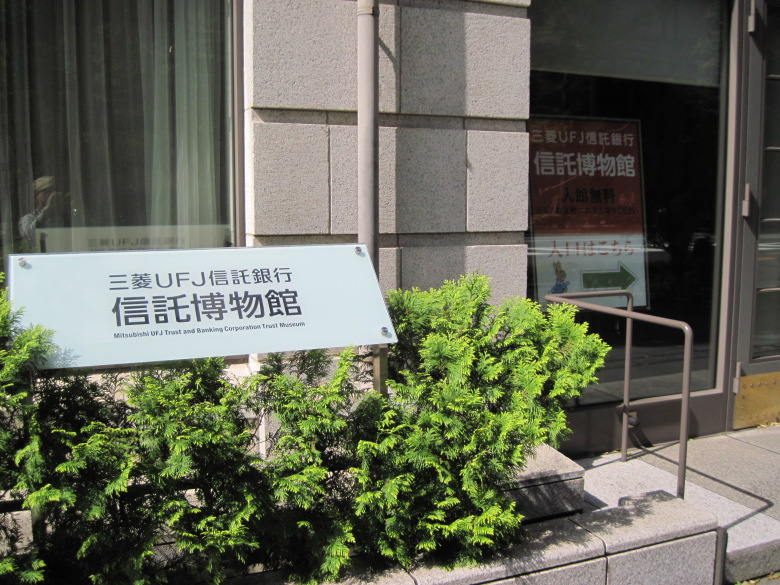
Mitsubishi UFJ Trust and Banking Corporation Head Office Building
I see that there is a trust museum in the Mitsubishi UFJ Trust and Banking Corporation main building. If I visit the museum, will I be able to learn tips on how to increase my money?
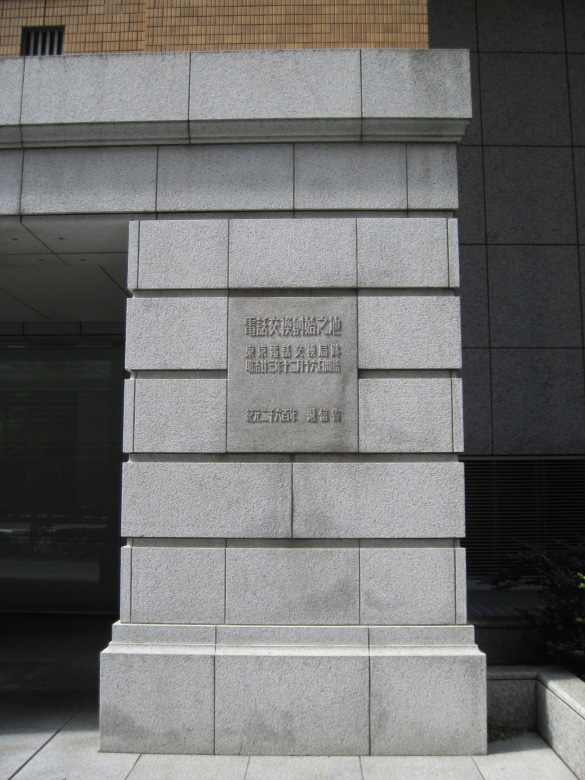
Birthplace of the Telephone Exchange
There is also a sign that says “Birthplace of the Telephone Exchange” was first established. It is said to have started on December 26, 1890.
At that time, a magnetic manual switching system was used. If you go to the NTT Technical Museum in Musashino City, you can see a dynamic display of the magnetic manual switchboard that was used in actual switching operations. The exchange procedure was so complicated that I couldn’t remember it all at once, but I could feel the desire to talk and connect with people far away.
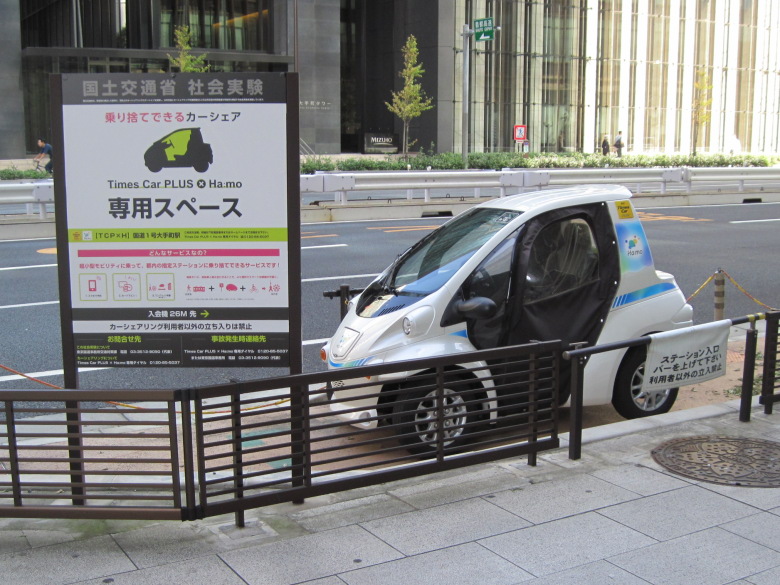
Social experiments in car sharing
As I turned left at the intersection in front of Otemachi Station and entered Eitai-dori (Route 1), the Ministry of Land, Infrastructure, Transport and Tourism was conducting a social experiment of car sharing. There is a membership machine nearby, and if you have a driver’s license, credit card, and cell phone, you can join in 10 minutes. The fee is 206 yen for 15 minutes.
I think it would be convenient to have it not in a city like this, but in the countryside where it takes an hour to walk from the station to your destination.
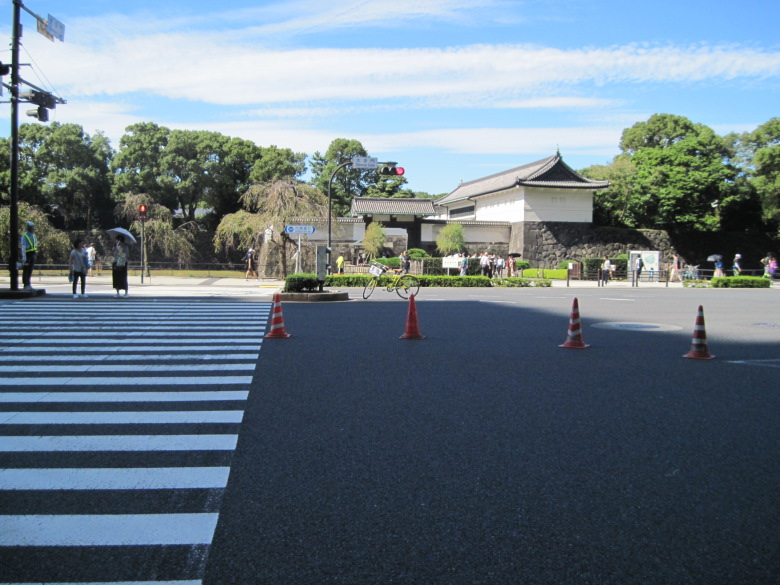
Otemon intersection
The marathon course (Uchibori-dori) starts at the intersection of the Ote-mon gate.
The stone walls and turrets are always beautiful.
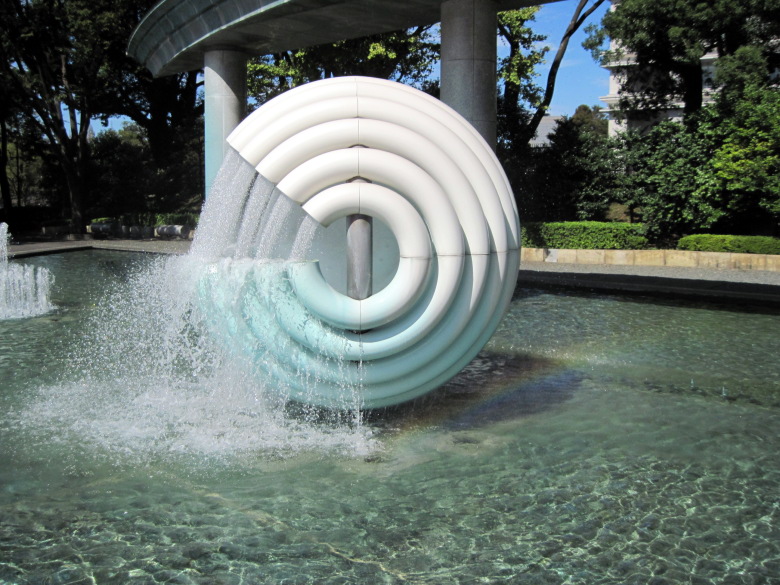
Wadakura Fountain Park
It was 32 degrees Celsius today, so I took a break at Wadakura Fountain Park. I’m not tired at all, though.
There were some unusual spherical fountains, and rainbows were floating in the spray.
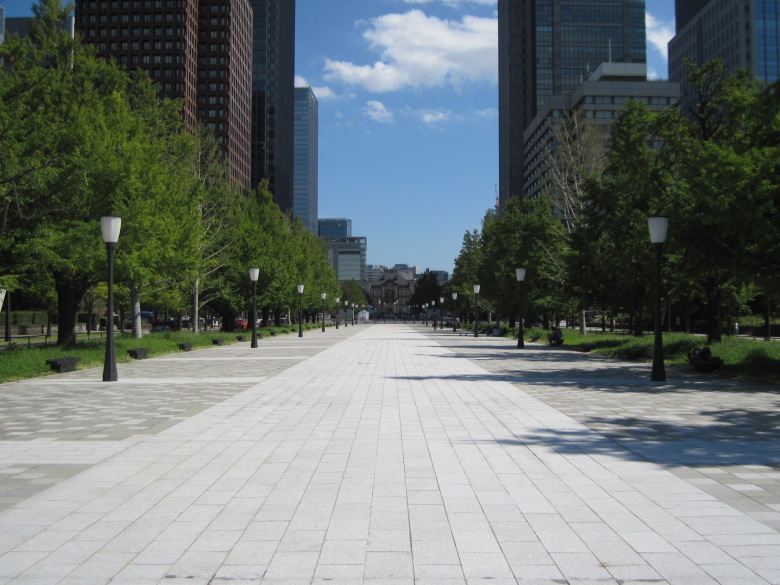
Distant view of Tokyo Station
In the distance, I could see Tokyo Station. The view is almost symmetrical and beautiful.
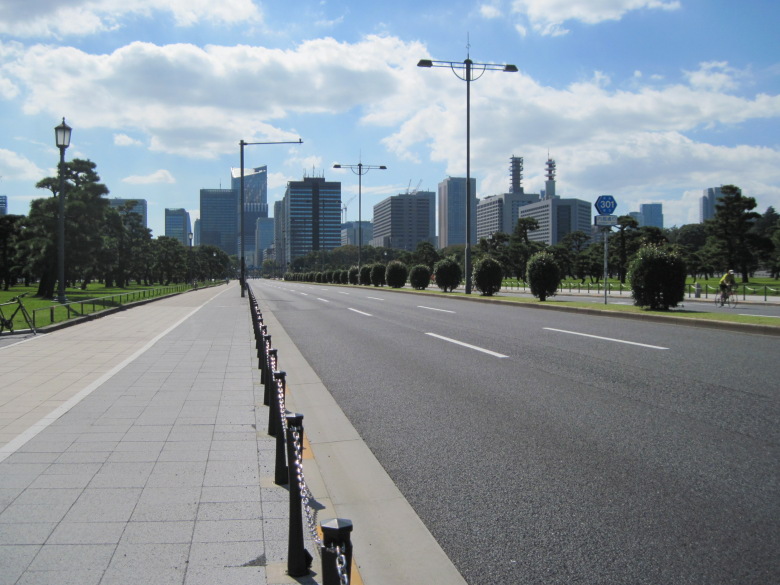
Uchibori Street
The marathon course in this area is a beautiful straight line. You can see the government district in front of you.
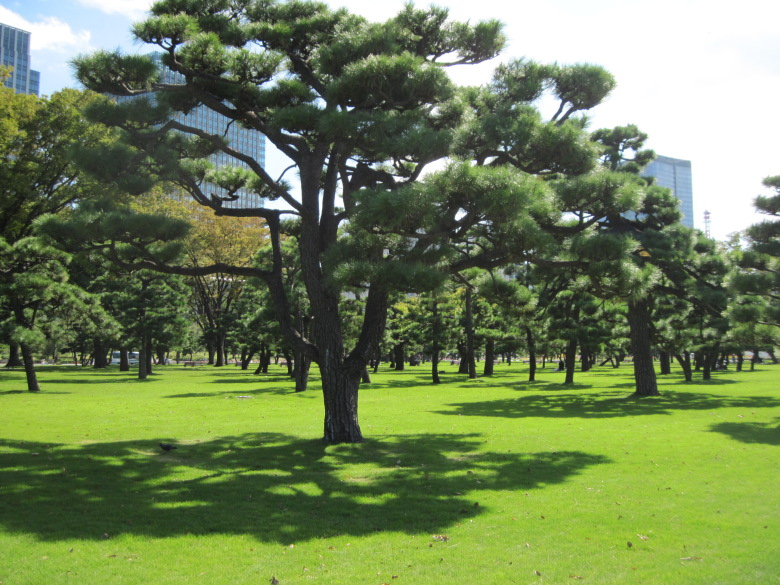
Grass in the Outer Gardens of the Imperial Palace
The lawn of the Imperial Palace Outer Gardens is open to the public on the Marunouchi side of Uchibori Street. In the shade of the pine trees, some people seemed to be taking a nice nap.
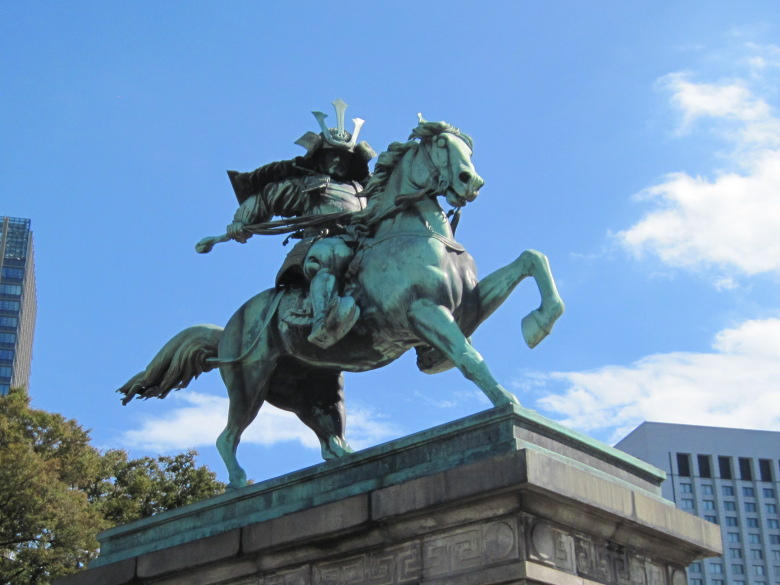
Statue of Kusunoki Masashige
I visited the statue of Kusunoki Masashige.
When I was in high school, my Japanese history teacher told us the reason why Kusunoki Masashige was located here, but as I was not interested in history, it was just a Buddha in a horse’s ear.
However, I could tell that this statue was magnificent. The dignity of Masashige in his armor and the dynamism of his horse’s muscles are beautifully expressed.
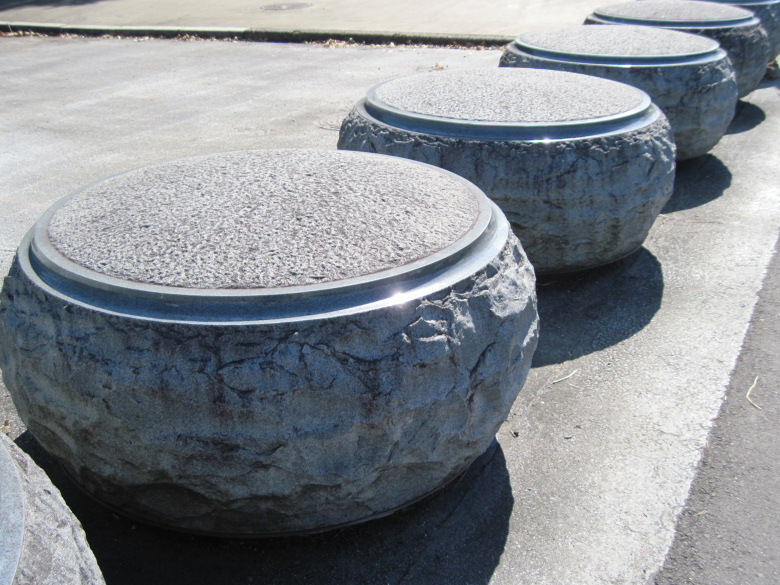
Roadblock Stone
The top of the stone is molded smooth, the edges are polished smooth, and the surrounding area is rough-hewn and elegant. But it’s too big to put in my yard.
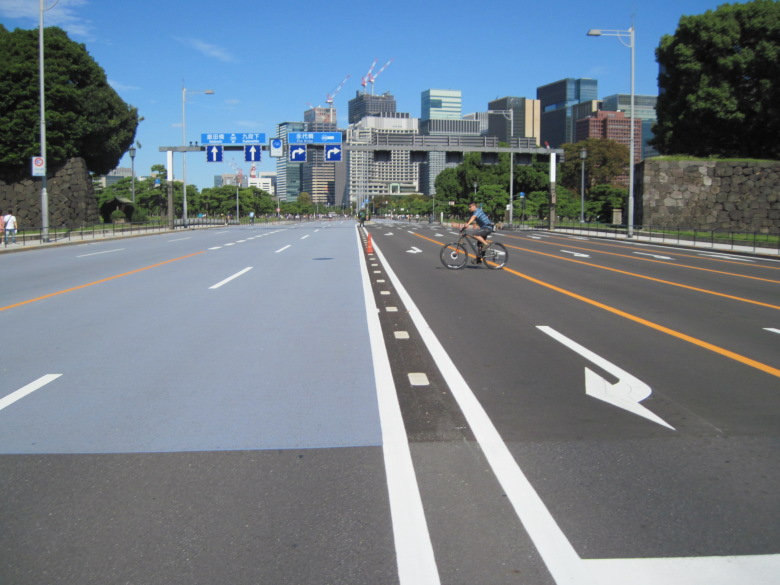
The marathon course as seen from near the Shukudabashi intersection
The intersection in front of Nijubashi Bridge seems to be the turnaround point, but I went as far as the intersection of Iwaida Bridge before turning around.
On holidays, Uchibori-dori is open as a cycling area. It is not a pedestrian paradise, so pedestrians must obey the traffic signals to cross.
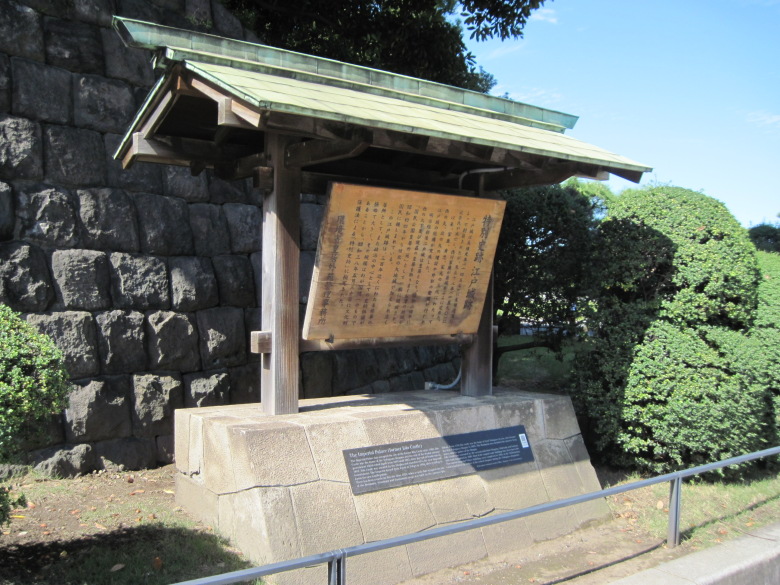
Signboard showing that Edo Castle is a special historic site
This sign said that Edo Castle became a special historic site on May 30, 1963.
Since I was planning to walk more than 10 km today, I didn’t plan to make too many side trips, but for some reason I suddenly wanted to see the Nijubashi Bridge up close, so I decided to stop by. Nijubashi Bridge is the main gate of the Imperial Palace.
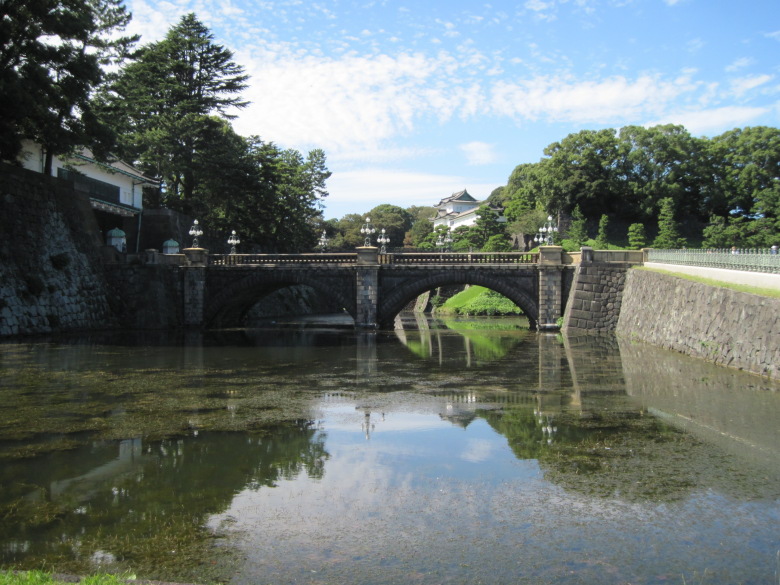
Main Gate Stone Bridge
This is the stone bridge at the main gate.
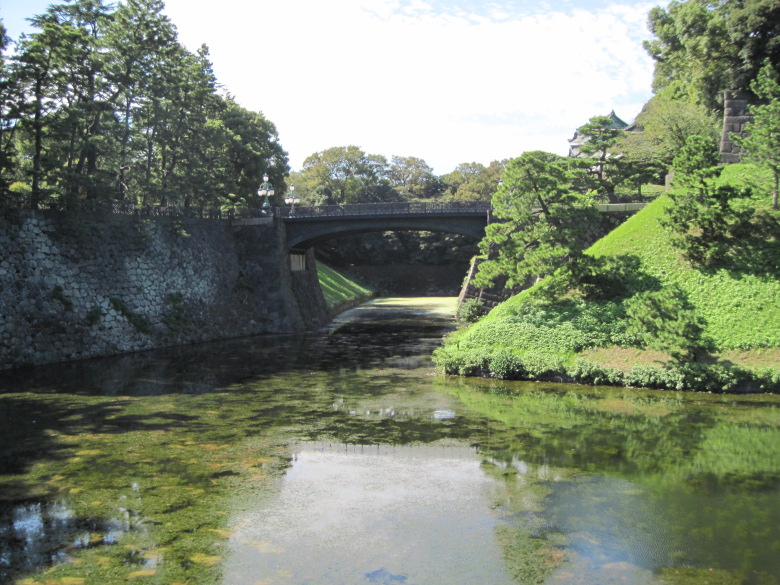
Main Gate Iron Bridge
This is the main gate iron bridge.
The Fushimi Tower can be seen behind the trees on the right side facing the main gate iron bridge. To the right is the palace.
The iron bridge is called a double bridge because it used to be a wooden bridge with a bridge underneath for support. Some people call the two bridges, the stone bridge at the main gate and the iron bridge at the main gate, collectively the double bridge.
The above is a summary of the explanatory signs.

Changing of the guard of honor ceremony
When I looked at the main gate again, I found the guard of honor! They were having a change of ceremony!
People are walking from right to left in front of the main gate. Can you see them? After this, this person turned around in the middle of the room and seemed to be giving the handover to the other person who appeared. It took about three minutes.
Speaking of the changeover ceremony, Buckingham Palace is famous for it, but I guess they do it in Japan too.
I asked a nearby policeman about the details, but he said, “I don’t know the details of the changeover intervals, etc., because they are the Imperial Palace Police and our jurisdiction is different from the Metropolitan Police Department.
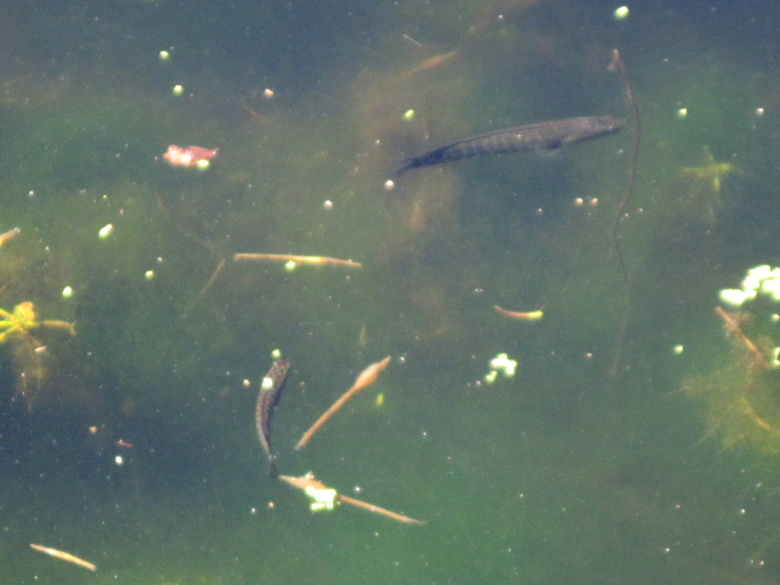
Fish swimming in the Ote moat
Returning to the marathon course and heading north, I saw fish swimming in the Ote moat. Was it a snakehead mullet? There were also carp.
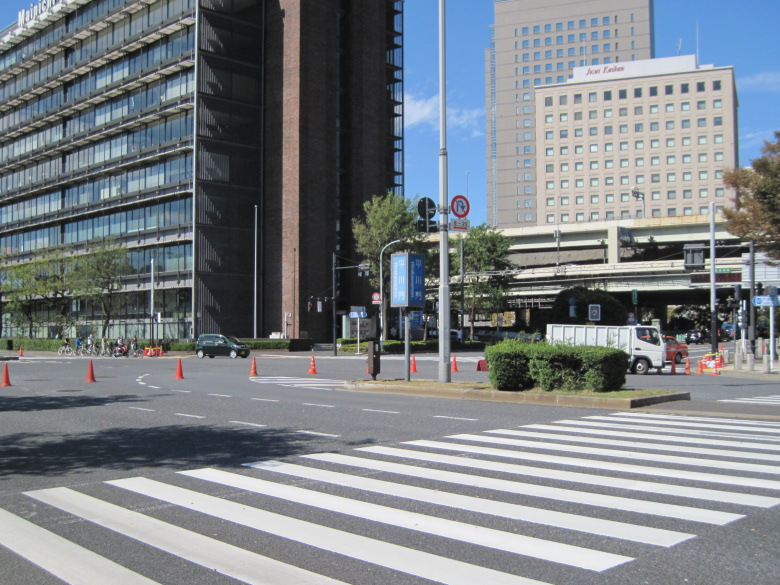
Hirakawamon intersection
At the Hirakawamon intersection, turn onto Hakusan-dori.
The building on your left is the Palaceside Building, which houses the Tokyo headquarters of the Mainichi Newspapers, and the building on your right with the horizontal letters is Josui Kaikan, which was built on the site of Hitotsubashi University.
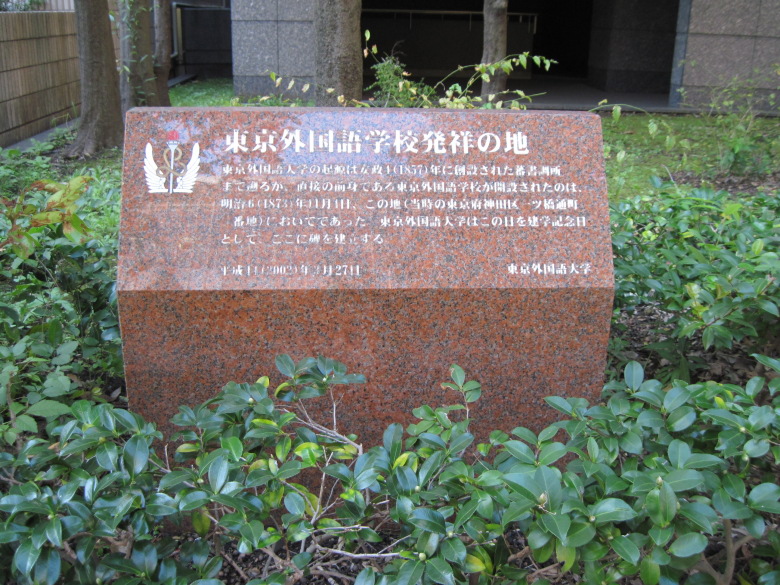
Birthplace of Tokyo School of Foreign Languages
There was a monument to the birthplace of the Tokyo School of Foreign Languages by Josui Kaikan. This is really a dense cluster of places where national universities originated.
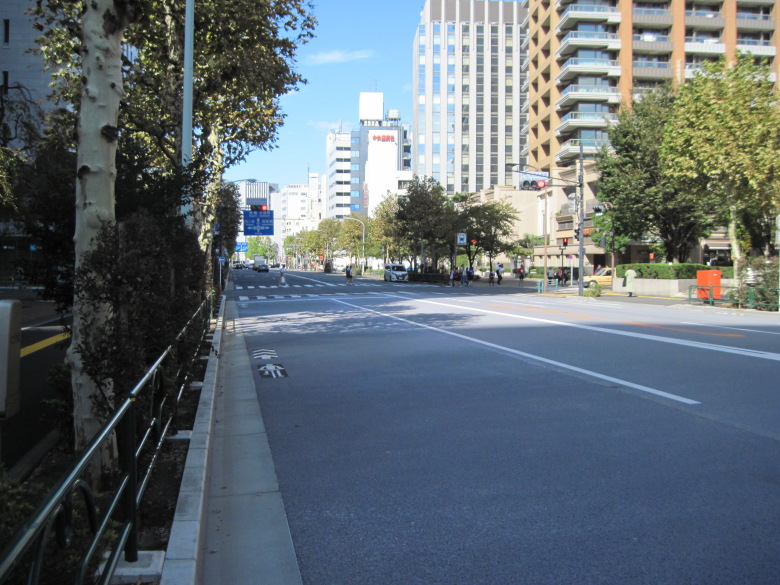
Hakusan Street
Hakusan-dori does not have many ups and downs, so it seems easy to run.
35km point
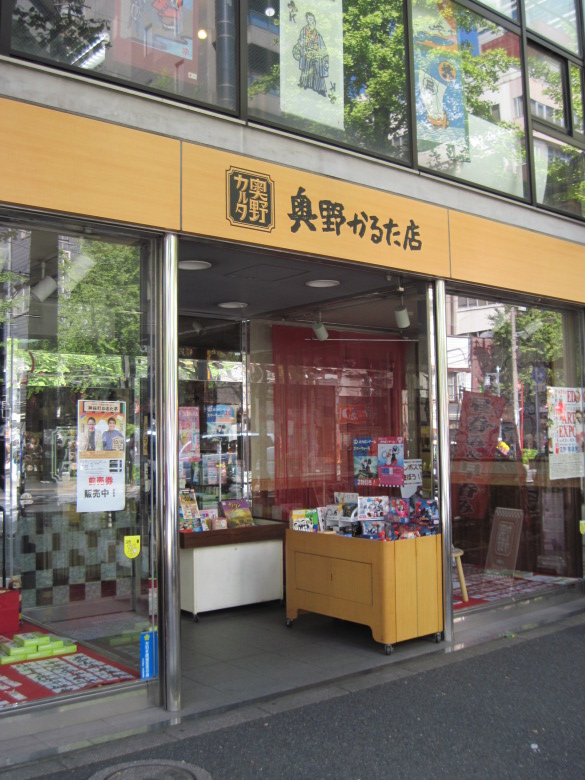
Okuno Karuta Shop
At the 35km point, straight ahead at the Jimbocho intersection, you will see the Okuno Karuta Store. It is a very fun store with a large selection of card and board games.
The founder of this store is Okuno Ikkyo, who was a Shogi pawn maker. The pieces that Ikkyo dug are works of art, and you could spend hours looking at them and never get tired of them. If you are interested in shogi or art, try searching for pictures of the pieces. I think you will want to come to this store.
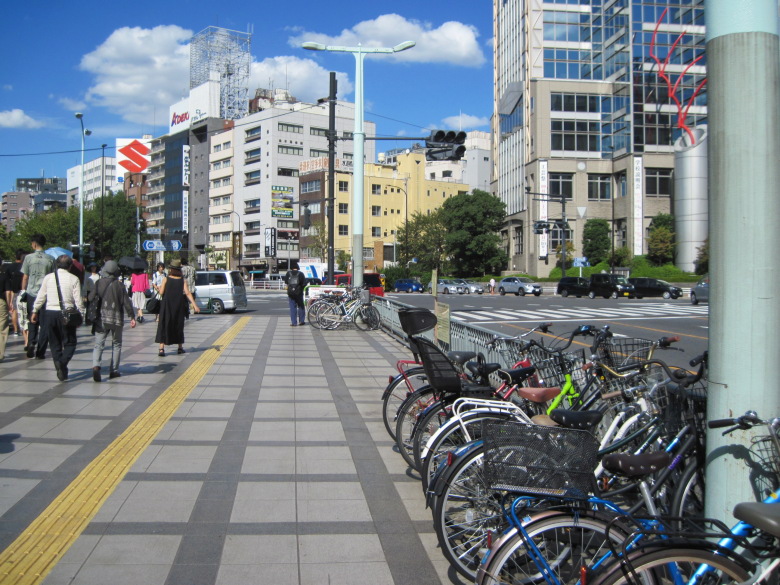
Suidobashi intersection
Turn left at the Suidobashi intersection onto Sotobori Street. It doesn’t look like the Suidobashi intersection because the Kanda River is not in the picture.
Iidabashi
Today, I was trying to find Iidabashi near Iidabashi station. This is because there are many bridges at the Iidabashi intersection and I couldn’t figure out which one was Iidabashi.
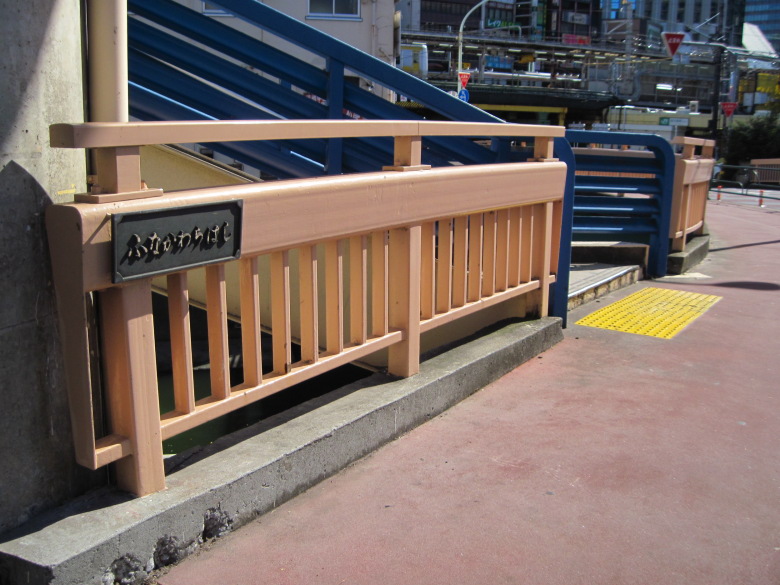
Funakawara-bashi
First of all, I found out that the name of the bridge located on the east side of Mejiro-dori, crossing over the Kanda River in the north-south direction, was Funakawara-bashi (Funakawara Bridge).
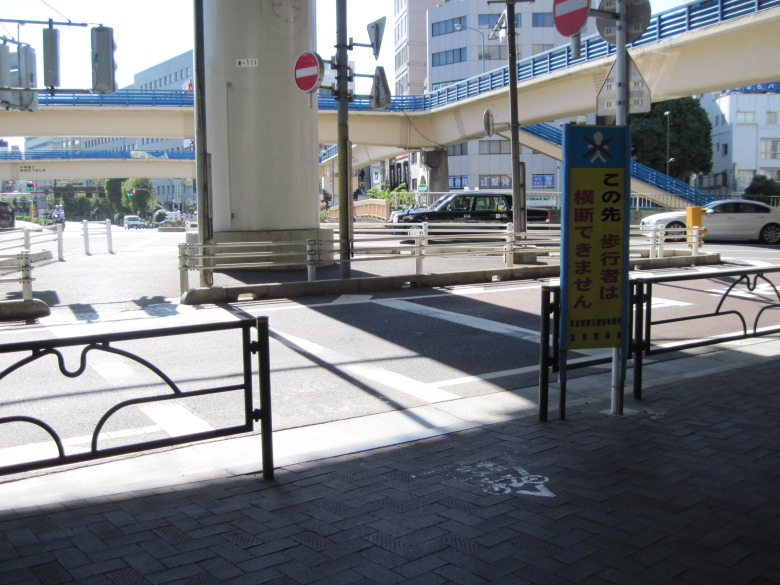
The bridge beyond the inaccessible cab is also the original Funakawara Bridge
Next, I tried to find out the name of the bridge that spans the Kanda River in an east-west direction through Sotobori-dori before turning at a right angle, but there was a sign saying “No pedestrians allowed to cross ahead” and I couldn’t go beyond it. (I later found out that this bridge was the original Funakawara Bridge. In other words, Funakawara Bridge is a generic name for two bridges.)
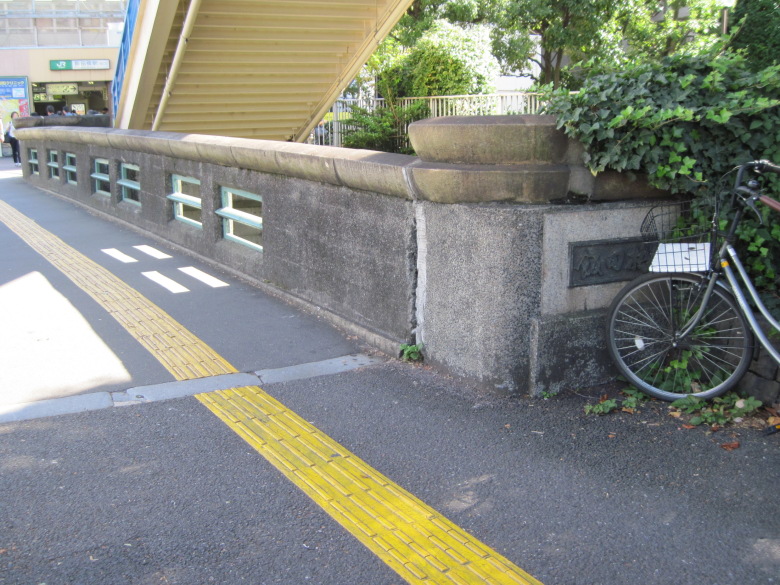
Iidabashi
I had no choice but to go to the station in front of Iidabashi Station and look up the name of the bridge that crosses over the remains of the outer moat of Edo Castle, separated from the Kanda River by Mejiro Street. To my surprise, it was “Iidabashi”. The matter was settled.
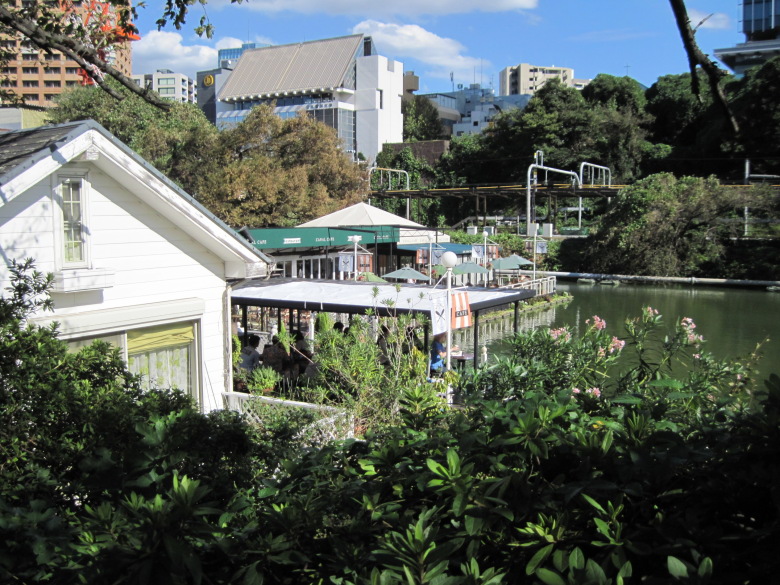
CANAL CAFE
After passing through Iidabashi, you will find CANAL CAFE. It has a stylish appearance, doesn’t it? I’ve been there once a few years ago, and it was very stylish inside.
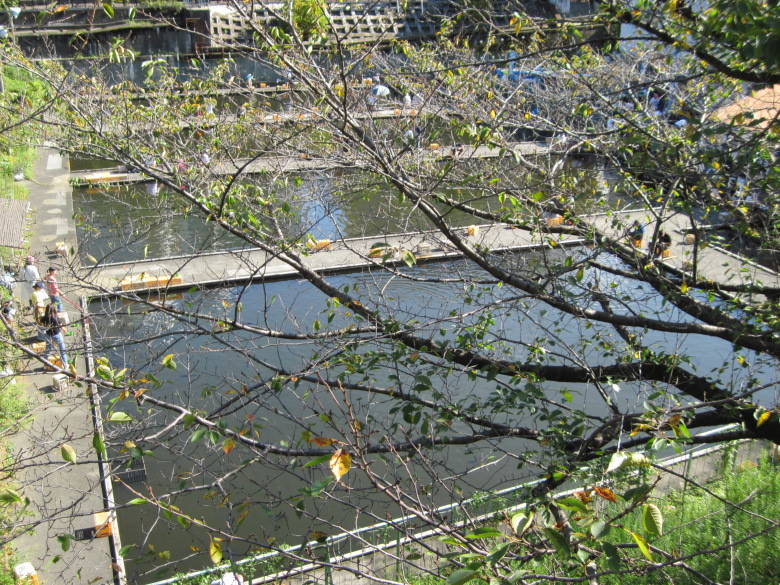
The fishpond at Ichigaya Fish Center
As you approach Ichigaya, you can see the fishpond of the Ichigaya Fish Center. I went in here only once about 20 years ago. I remember that I had a lot of trouble catching carp.
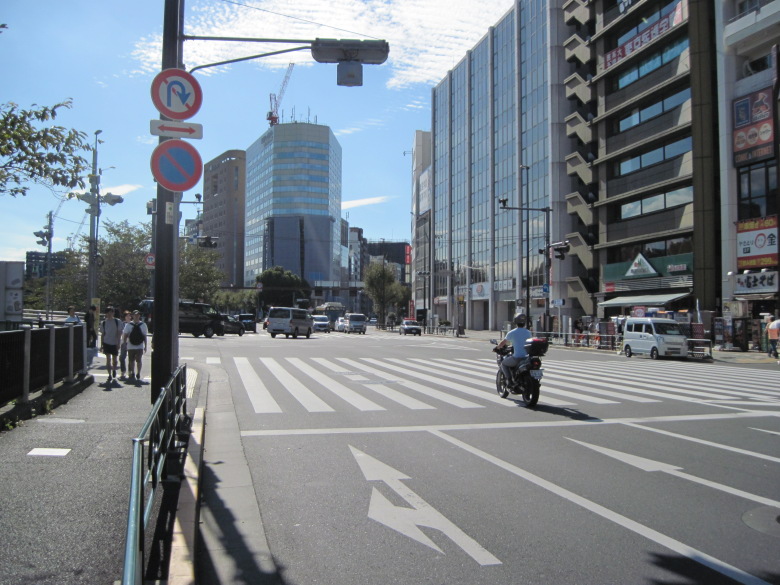
Ichigaya-Hachimancho intersection
At the Ichigaya-Hachimancho intersection, take a right onto Yasukuni Street.
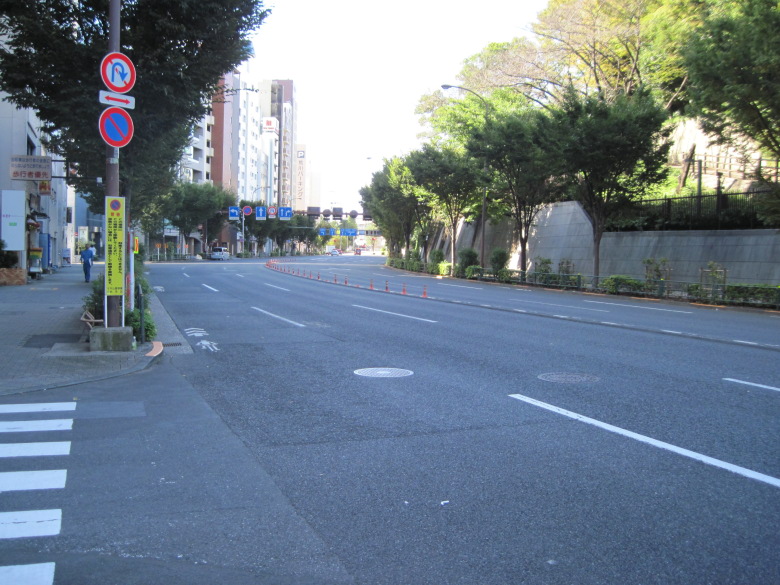
Yasukuni Avenue
Make a curve with the Defense Agency on your right.
40km point
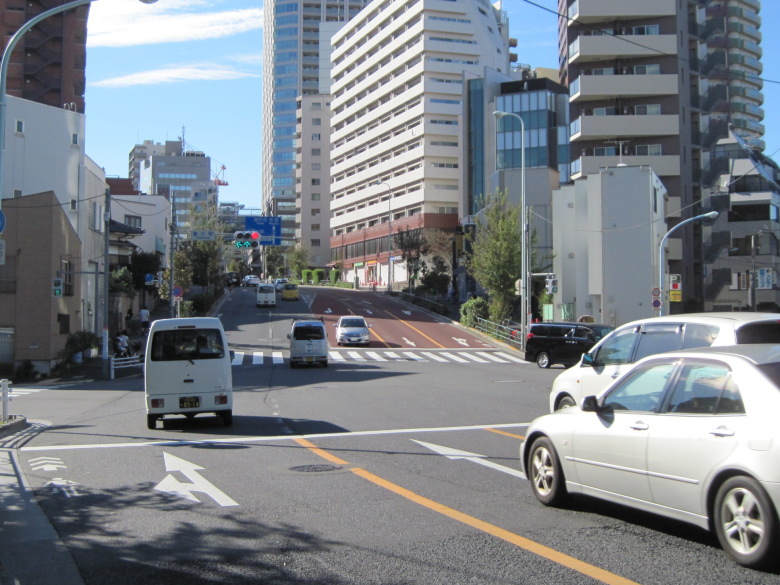
Tomihisa-cho intersection
This is the 40km point at the intersection of Tomiku-cho. The time has finally come. It’s an uphill climb. It’s about 10 meters uphill at once. I’m sure the runners are hoping for a break with only 2km to go. Even if they are still in the same group up to this point, the gap is going to be huge.
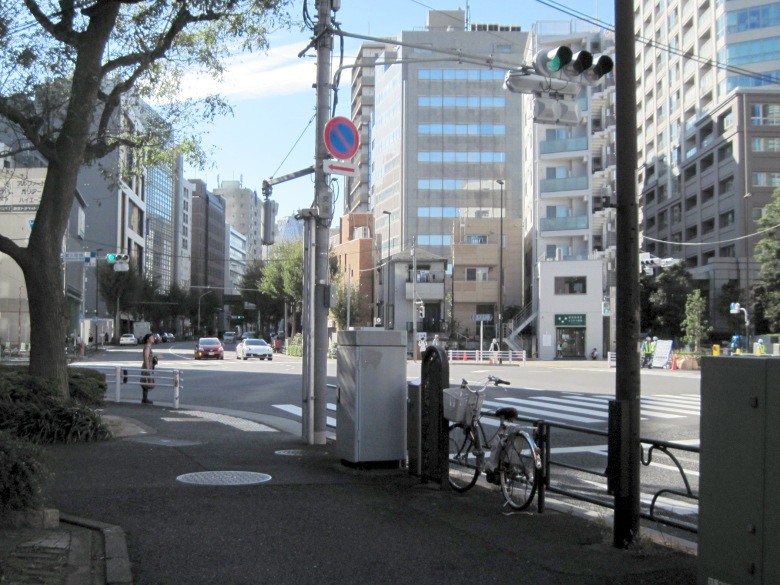
Tomikucho West Intersection
At the intersection of Tomikucho Nishi, turn left onto Gaien Nishi Dori. It is a sharp turn, so there will be some bargaining here.
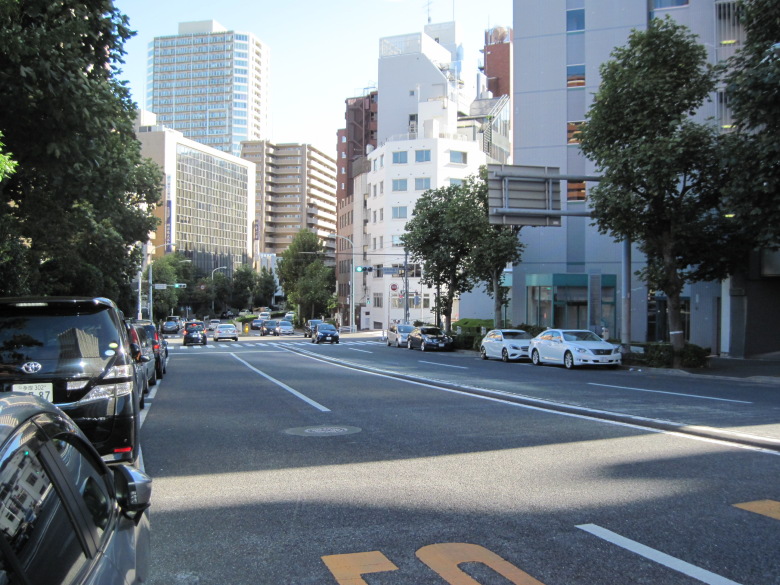
Ookido Sakashita intersection
It’s a sluggish descent towards the intersection of Ookidozakashita.
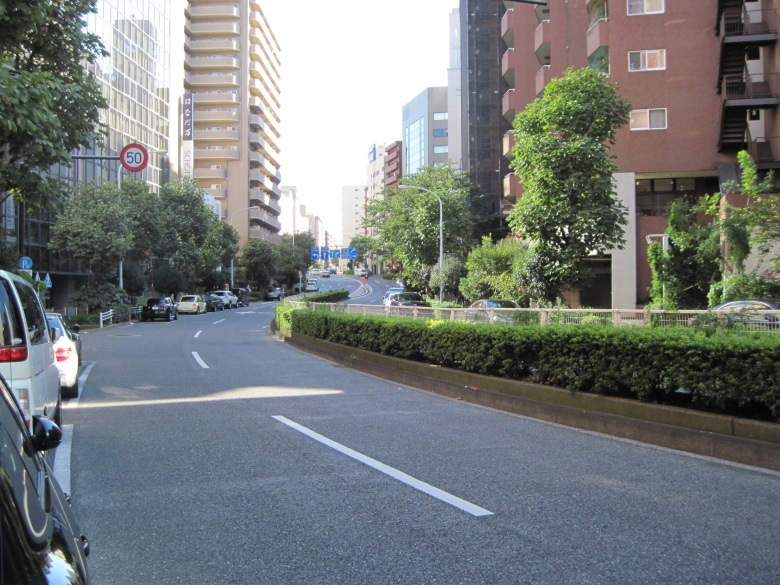
Uphill to Yotsuya 4-chome intersection
Then it was uphill again towards the Yotsuya 4-chome intersection. It must be really tough for the marathon runners to go up and down repeatedly. If you take the road west of Gaien Nishi Dori, the ups and downs will be much less strenuous. However, the road is too narrow, so I guess it was rejected.
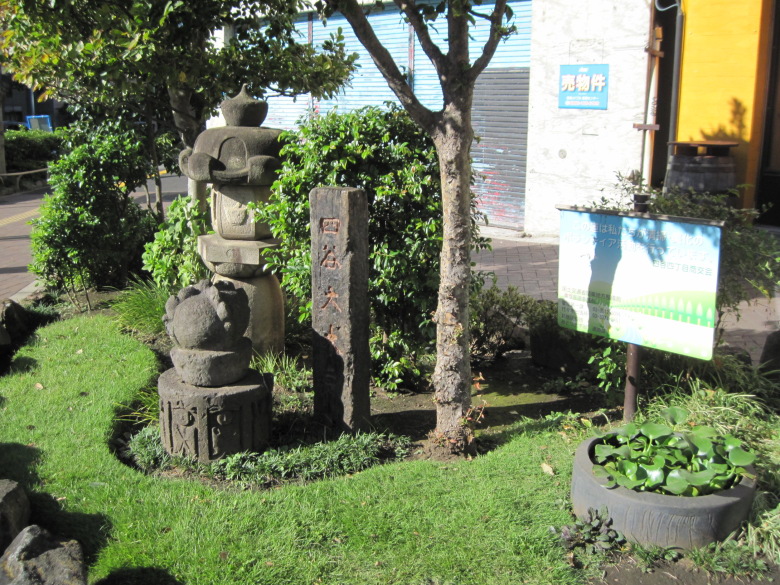
Yotsuya Ookido Ruins
As a walker, this level of ups and downs doesn’t bother me, so I visit the Yotsuya Ookido ruins at the Yotsuya 4-chome intersection.
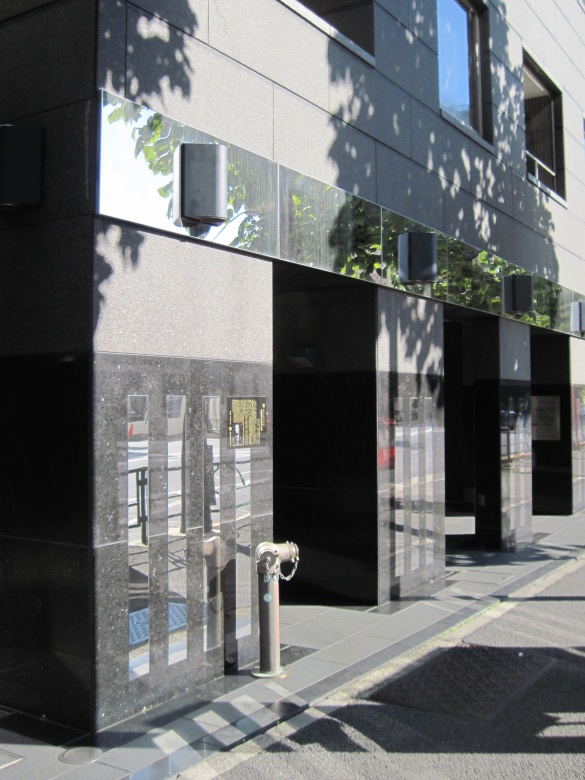
Saito Mokichi’s final resting place
After passing the Yotsuya Ookido site, I saw an explanatory board on a building. I read that it was the place of Saito Mokichi’s demise. Saito Mokichi, Mota, and Sokichi (i.e., Kita Morio) used to live here.
The New National Stadium
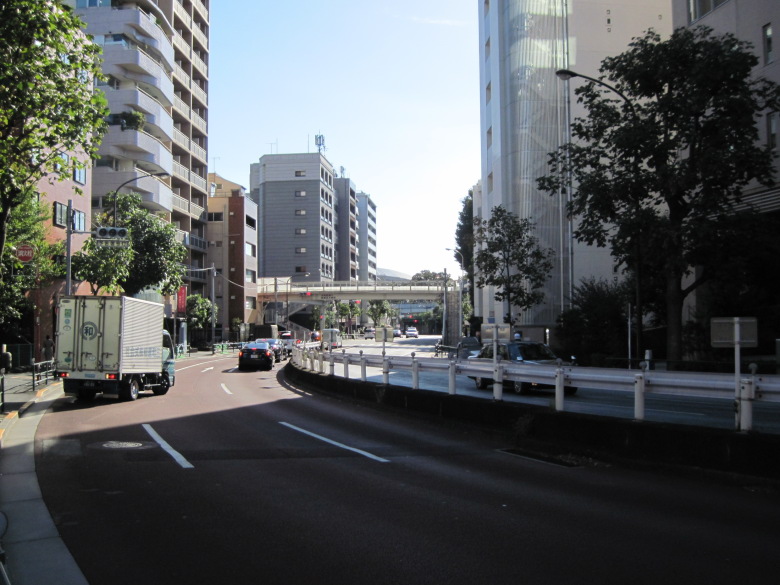
View of the New National Stadium from near the intersection in front of Daikyocho Police Station
I caught a glimpse of the new national stadium from the intersection in front of the Daikyocho police station.
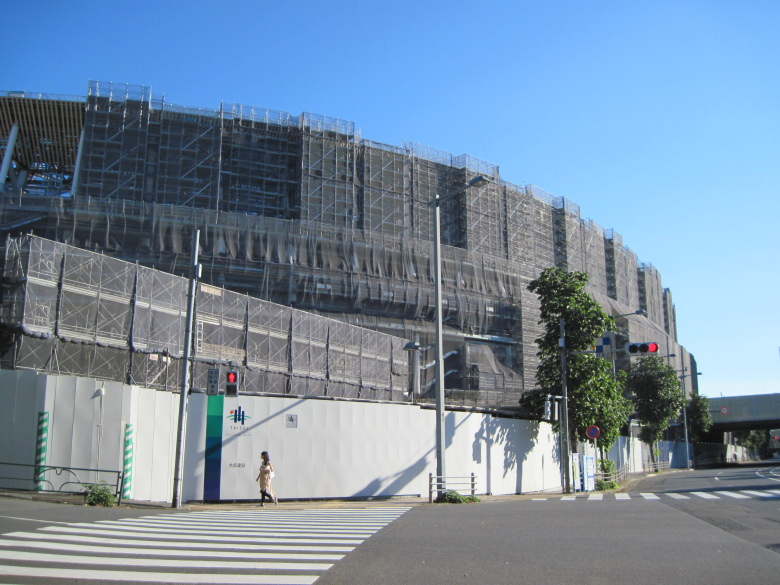
The New National Stadium
As we came to the Gaienbashi intersection, I could see the entire stadium.
Compared to July 7, when I started walking the course, the crane had been removed and a curing net had been installed.
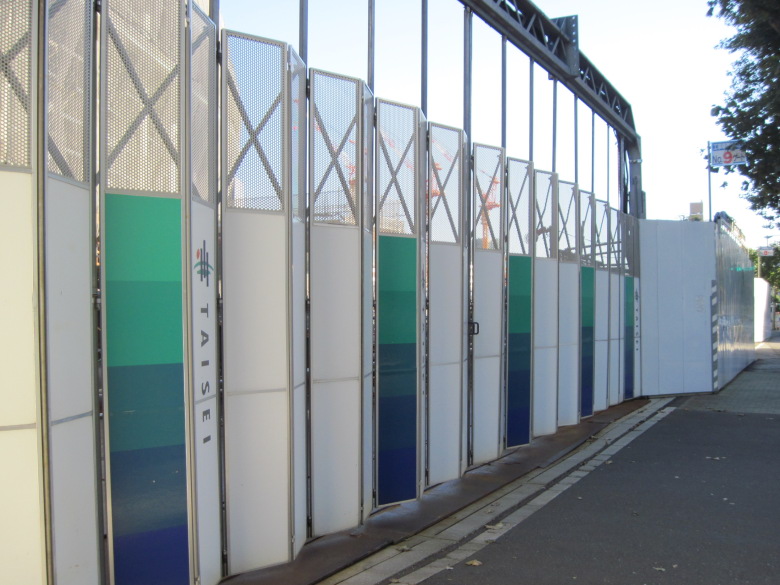
Gates that the marathoners might pass through
The athletes will probably enter the new national stadium through the gates around here.
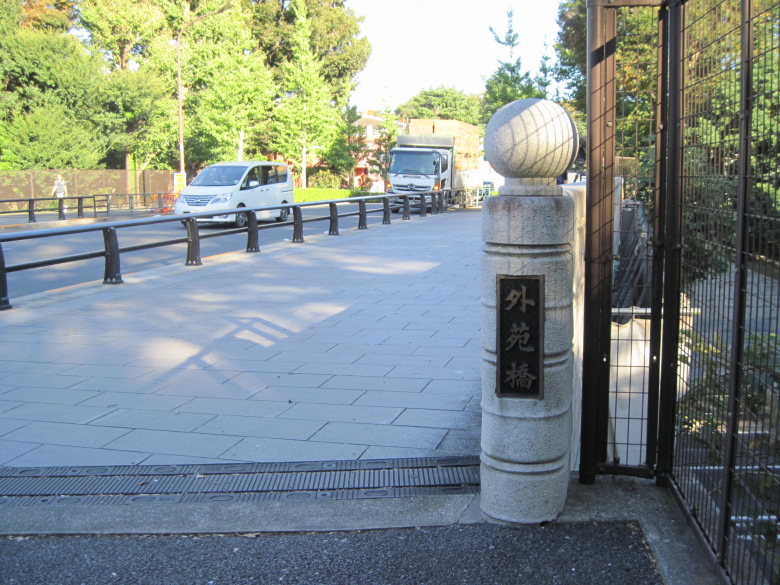
Gaien Bridge
After circling counterclockwise around the outside of the stadium, mimicking the way the athletes circled the field, I came to the top of the Gaien Bridge. On the day of the event, you may be able to see the athletes passing underneath from here, but I think it will be very crowded.
Thoughts on the marathon course
I think the final climb is the critical point for the athletes. The middle part of the course is flat and the scenery changes, so I think the run will not be boring. There is very little shade, so I worry about the heat.
I think the best place for cheering runners is around Nihonbashi, where the sidewalks are wide and the runners pass by many times.
There were many tourist attractions around the marathon course. After cheering on the runners, you can go sightseeing, so I thought the course would be appreciated by people coming from distant parts of Japan and overseas.
Walking data
Course: JR Tokaido Line Tokyo Station -> 32km point -> New National Stadium -> JR Chuo Line Sendagaya Station
Distance: 16.3km
Time: 4h7m

