The Tokaido Highway runs along the south side of Mt. Fuji. It is usually seen on the right when traveling from Edo to Kyoto. However, depending on the direction of travel, there are places where it appears on the left. Fuji in the vicinity of Chigasaki Station, and Left Fuji in Yoshiwara are particularly famous, according to Hiroshige’s ukiyoe. When I passed by the point of Left Fuji of Lake Minami, it was too cloudy to see it, but Left Fuji of Yoshiwara was clearly visible.
Yoshiwara-juku
I left the “Business Hotel Okamura” a little after 5:00.
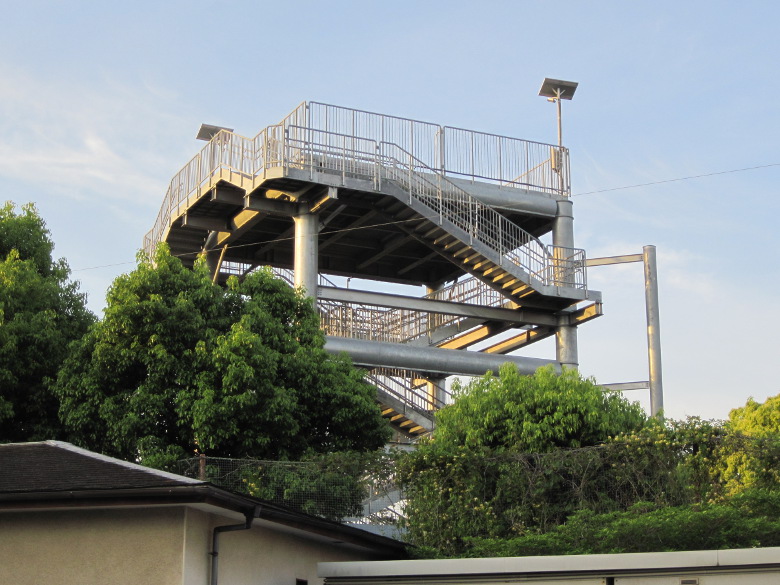
Tsunami evacuation tower at Suzukawa Port Park
As I was leaving, I discovered that there was a tsunami evacuation tower right in front of the hotel!
With the recent Great East Japan Earthquake still fresh in our minds, we are worried about tsunamis near the ocean. When I went out to buy dinner last night, I was looking for a high place, but somehow I didn’t see it.
Around the time I was walking in Hakone, I started getting blisters on both feet. The blister on my left foot was not torn, but the one on my right was. I put an adhesive bandage on each blister, but the pain was noticeably different on the left and right. My left leg is no longer bothering me, but my right leg is still painful. I knew in my head that I should put the bandage on the blister before I crush it, but now I’ve learned firsthand.
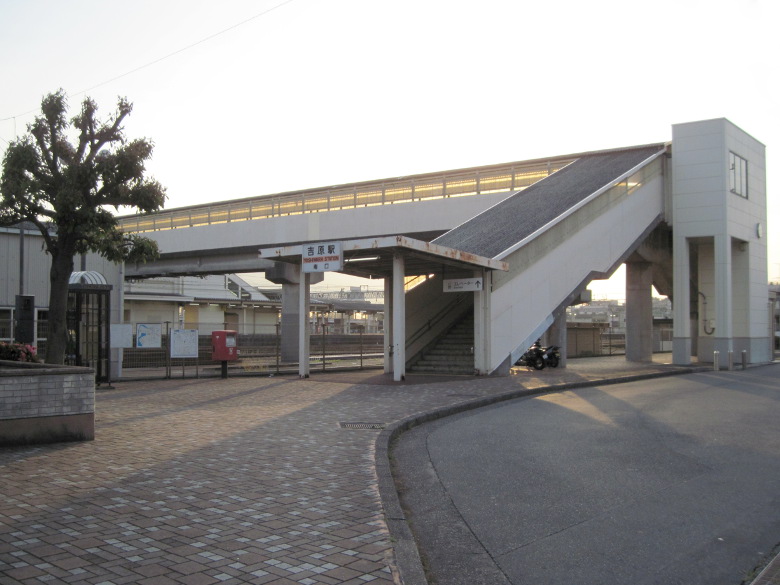
Yoshiwara Station
Go through Yoshiwara Station and exit on the opposite side of the Tokaido Line.

Left Fuji of Yoshiwara
The famous left Fuji. I could see it clearly. I took this picture with almost the same composition as Hiroshige’s ukiyoe.
Since it’s such a scenic spot, wouldn’t it be better to bury the power lines underground to attract more tourists?
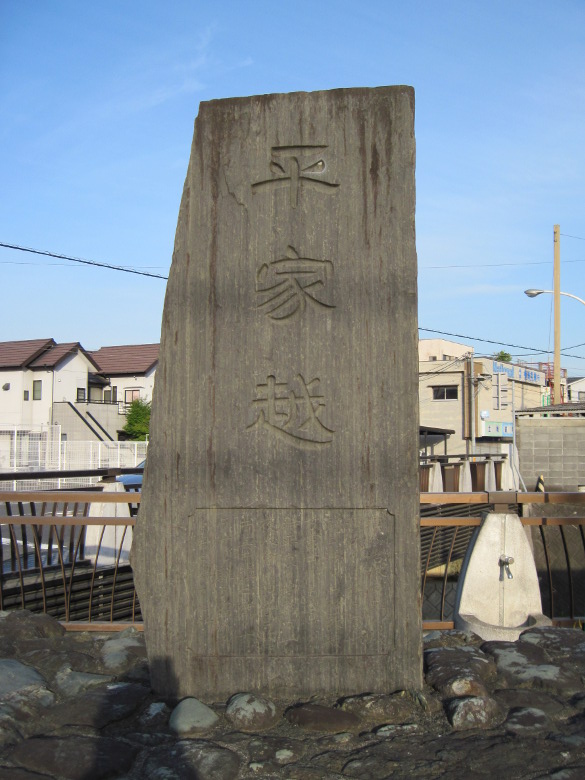
Monument to the Heike Goe
Heike Goe is near where the Hei clan fled when they were startled by the sound of waterfowl during the Genpei War of 1180.
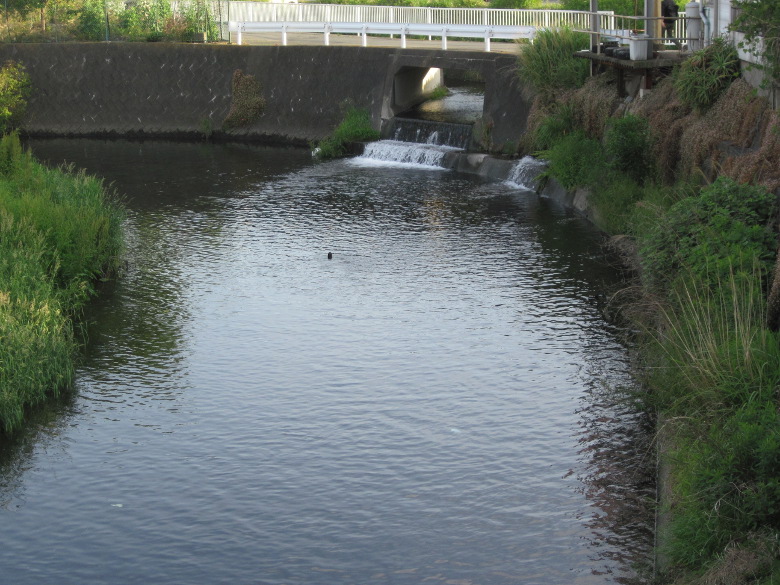
Around the place where the Hei clan was startled by the sound of waterfowl
I thought it would be a bit wider, but I was surprised to see that the river was not that wide.
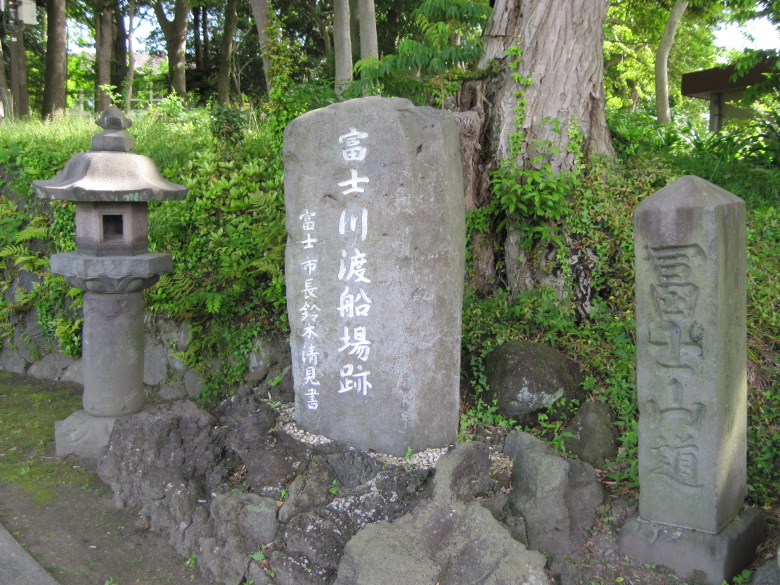
Ruins of the Fujikawa ferry landing and a signpost on the road to Mt. Fuji
This is the site of the Fuji River ferry landing, located within the Matsuoka Water Shrine. The Fuji Trail sign next to it marks the base of the Mt. Fuji.
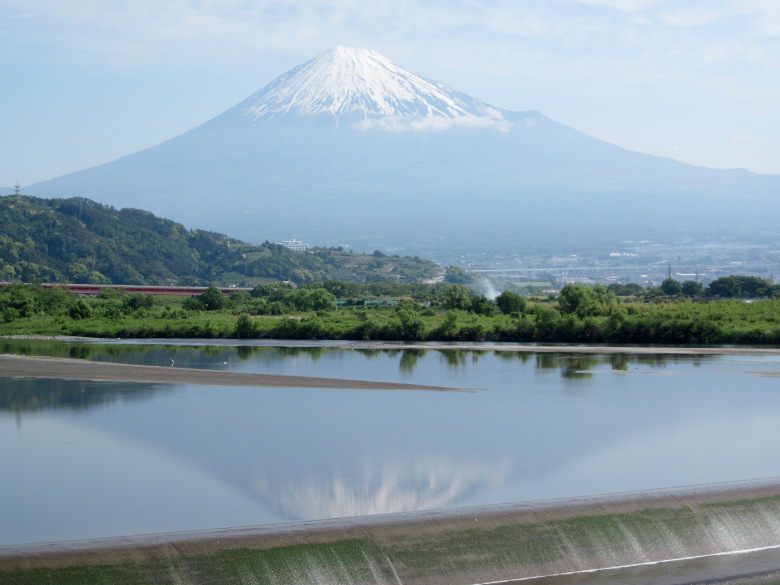
Mt. Fuji as seen from the Fujikawa Bridge
Crossing the Fujikawa Bridge. Mt. Fuji is beautiful! Fuji is also reflected in the Fuji River, making it look like an upside-down Fuji.
I used to think that the crater of Mount Hōei opened only at the slightly raised area in the middle of the ridge on the right. But in fact, the crater was between that point and the slightly raised area at the foot of the mountain. This is where it erupted in the Edo period, right? That’s a huge explosion. I thought to myself, “That’s right, volcanic ash must have fallen on Tokyo. I thought to myself.
Kanbara-juku
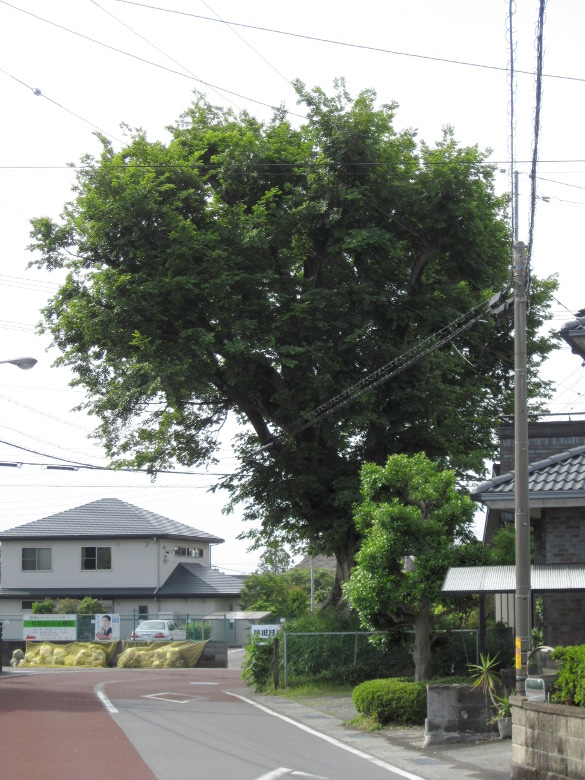
Iwabuchi Ichirizuka
A little after 8:30, I passed the Ichirizuka (37 ri) in Iwafuchi. It is a well-preserved and magnificent mound.
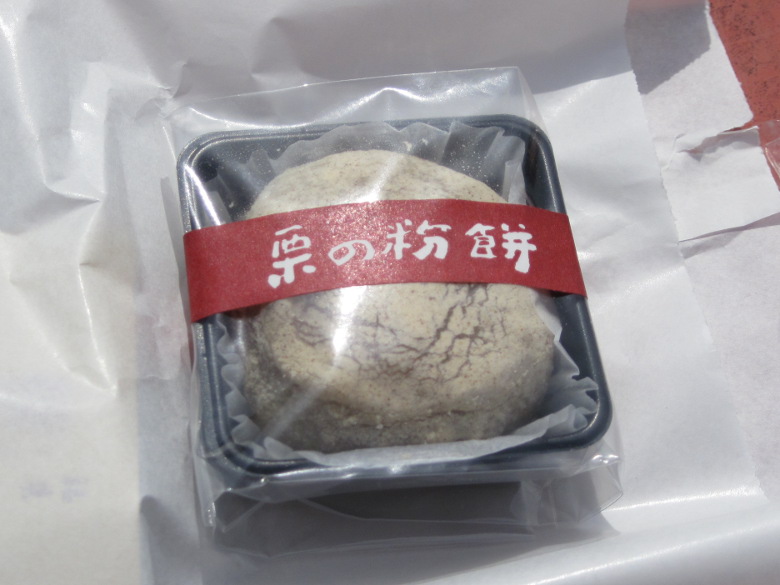
Chestnut flour mochi
I bought this at a store called Tsuruya, because I heard that the chestnut powder cake in Fujikawa is a famous snack. Chestnut powder cake is made with chestnuts and bean jam inside a gyuhi, with chestnut powder around it. The gyuhi was so soft that it made my hands sticky.
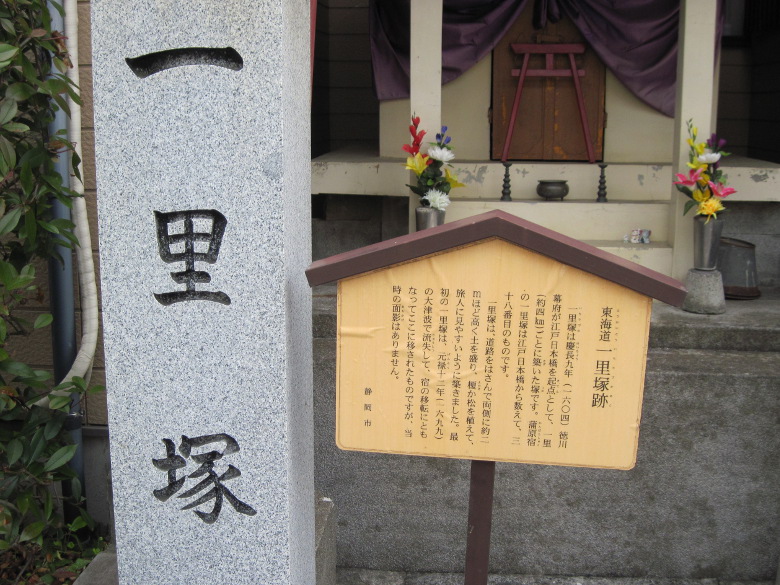
Site of Kambara Ichirizuka
Passed the Ichirizuka site (38 ri) in Kambara.
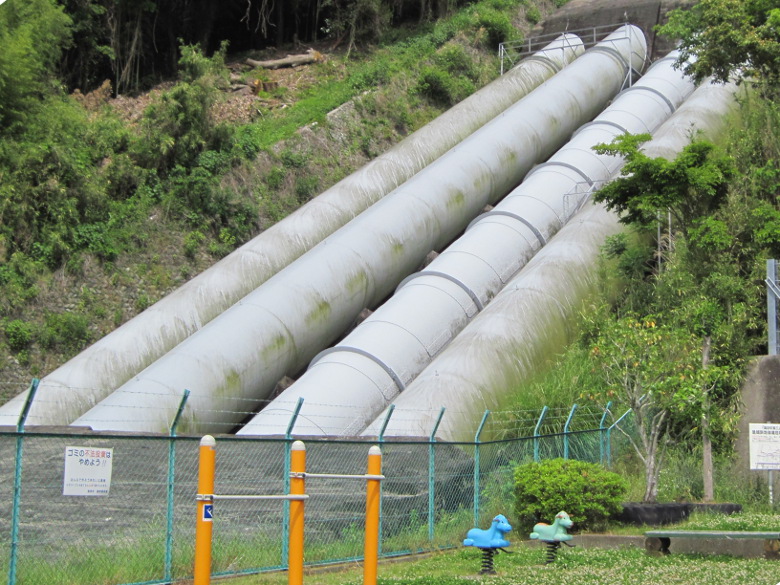
Pipes for hydroelectric power generation at Kambara Complex, Nippon Light Metal Company, Ltd
A pipe for hydroelectric power generation suddenly appeared at the Kambara Complex of Nippon Light Metal Company, Ltd. This is a private power generation facility for refining aluminum. However, at the end of March this year (2014), they stopped smelting aluminum due to its aging. It’s a shame that there are no more facilities for smelting aluminum in Japan.
At Kambara-juku, I passed by a former inn called Izumi-ya, and the proprietress asked me to take a look inside. The proprietor, a talkative man, came out from the back and told us about old photos and how the TV station had interviewed him. It seems that Hiroshige’s sketching point was closer to Tokyo than this Izumi-ya.
Yui-juku
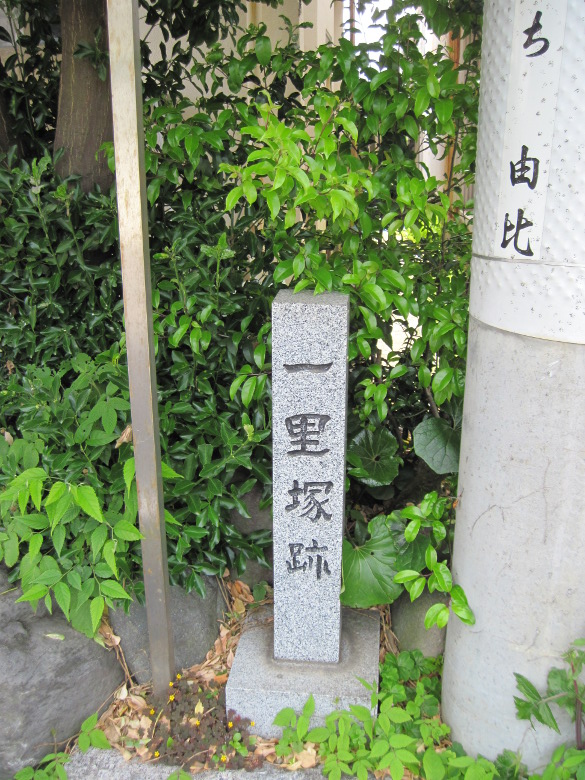
Ruins of Yui Ichirizuka
After 11:00, I passed through Yui Ichirizuka (39 ri).
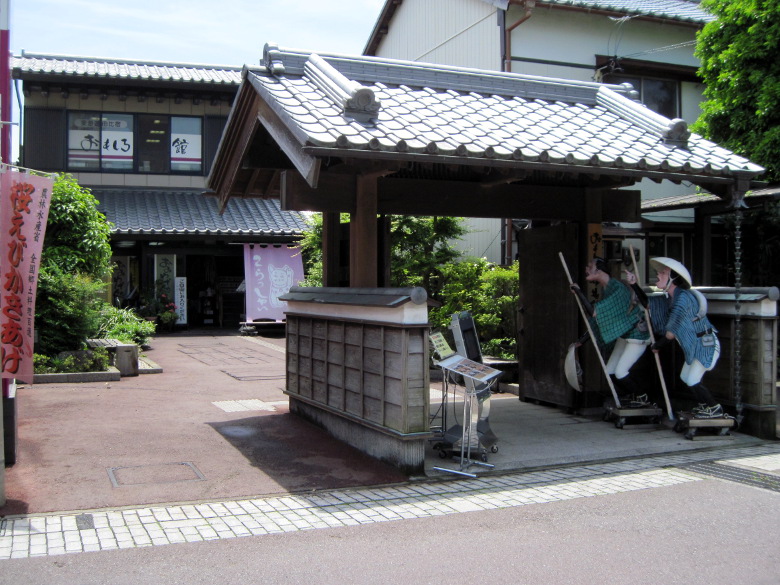
Omoshiro Shukubakan
I pass by the doll in the Omoshiro Shukubakan (interesting lodging house). Hmmm, I wonder why they are leaning forward with their knees bent. I’m sure we’ ll hurt our backs if we look like this.
By the way, the only stores I see in Yui are those selling sakuraebi (small shrimps). I’d say there are about 50 of them. I guess it’s more profitable than selling other things because the demand is greater than the supply.
I don’t like shrimps, so I couldn’t have lunch there. If there was a regular soba or set meal restaurant, I would have gone there.
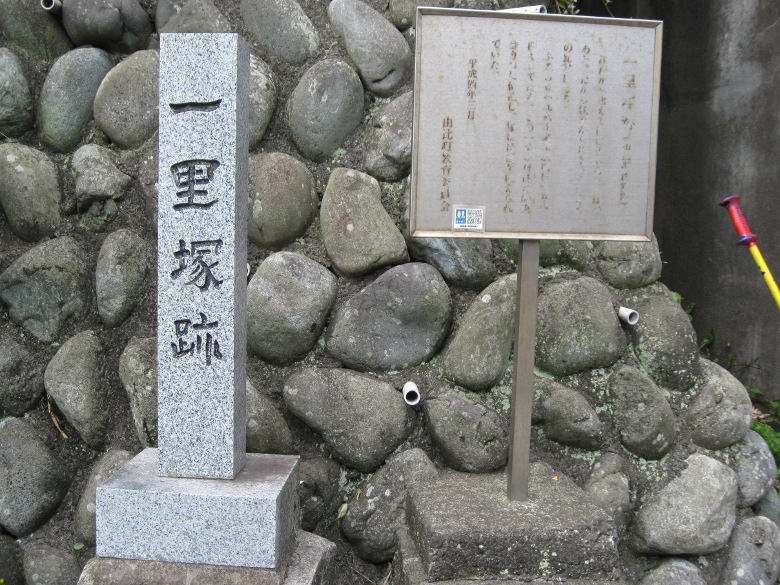
Site of Ichirizuka, Nishikurazawa
Passing through Ichirizuka, Nishikurazawa (40 Ri).
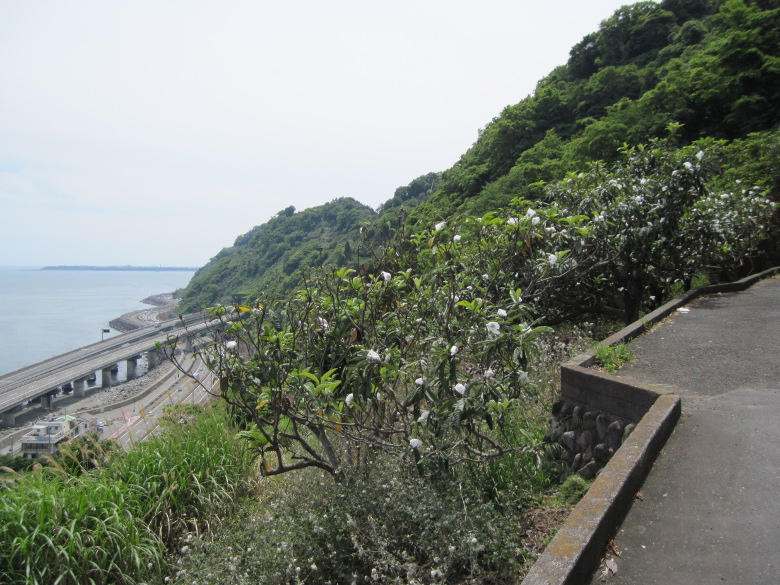
Ascent to Satta Pass
A little after 12:30, I started to climb up the slope to Sattatoge, where I found a lot of sweet Watson pomelo and Kiyomi for sale at an unmanned shop. It was cheap. This is my lunch for today.
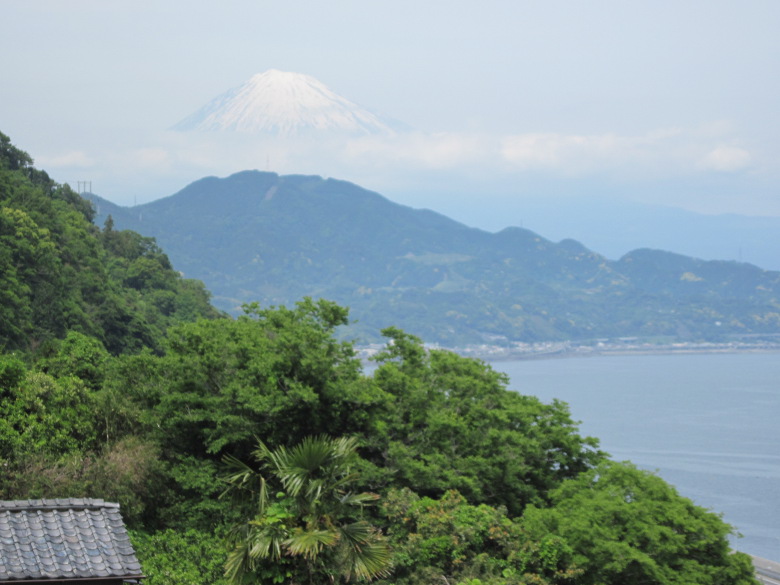
View from Satta Pass
I reached Satta Pass in less than half an hour from the beginning of the climb. I could see Mt. Fuji above the clouds. I see, it’s a spectacular view.
I was surprised to see a snake (Japanese rat snake?) at the beginning of the descent. In Hiroshige’s painting “Yui,” there is a traveler who looks like he is hunched over, and I think he was also surprised by the snake.
Okitsu-juku
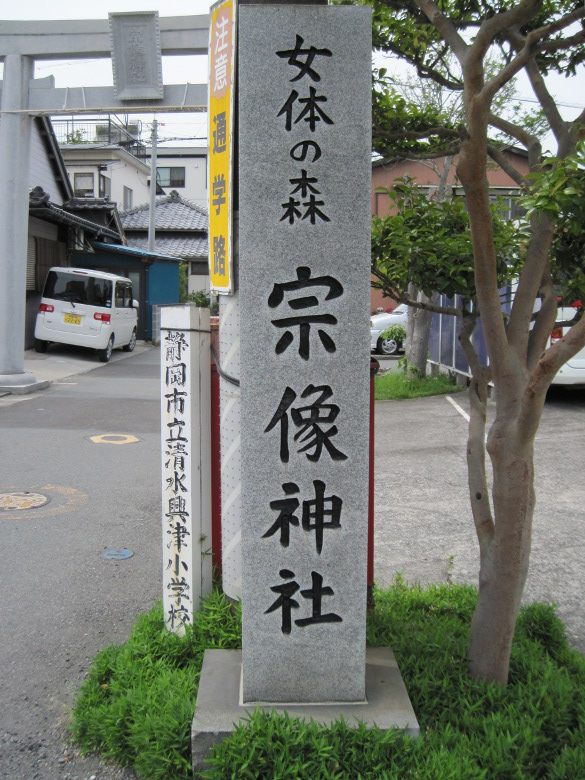
Torii gate and meaningful stone monument at Munakata Shrine
After two o’clock, we found the torii gate of Munakata Shrine and a meaningful stone monument. It is said to be the guardian deity of fishermen. There was a large tree in the precincts about 200 meters away from this torii, and it was said to have served as a lighthouse-like landmark. The altitude of the shrine is a few meters at most, not very high.
Ejiri-juku
I arrived at the site of Ichirizuka (42 ri) at Ejiri Tsuji just before four o’clock. That’s it for today.
I went to the tourist information center at Shimizu station to ask for an introduction to an inn. I was told that inns cost 4,000 yen and business hotels almost 6,000 yen, so I was introduced to the Shinobu Ryokan, which cost 4,000 yen. However, the innkeeper had gone to Kakegawa and wouldn’t be back until 19:00, so I decided to go to “Kashi-no-ichi” for dinner first.
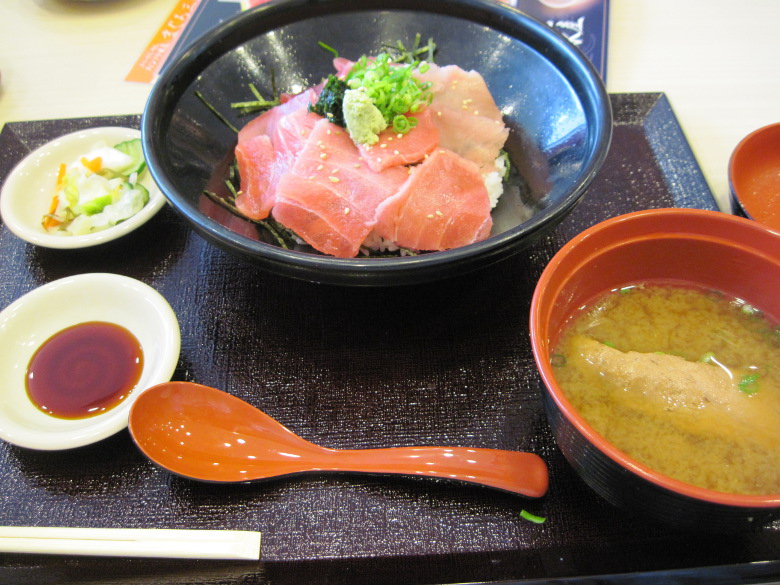
Tricolor tuna rice bowl
I entered the “Tuna Pavilion” at Kashi-no-ichi. There were many cafeterias lined up. I tried to avoid raw food because I didn’t want to ruin my stomach, but all the restaurants had only sashimi on their menus. I had no choice but to order a tricolor tuna rice bowl.
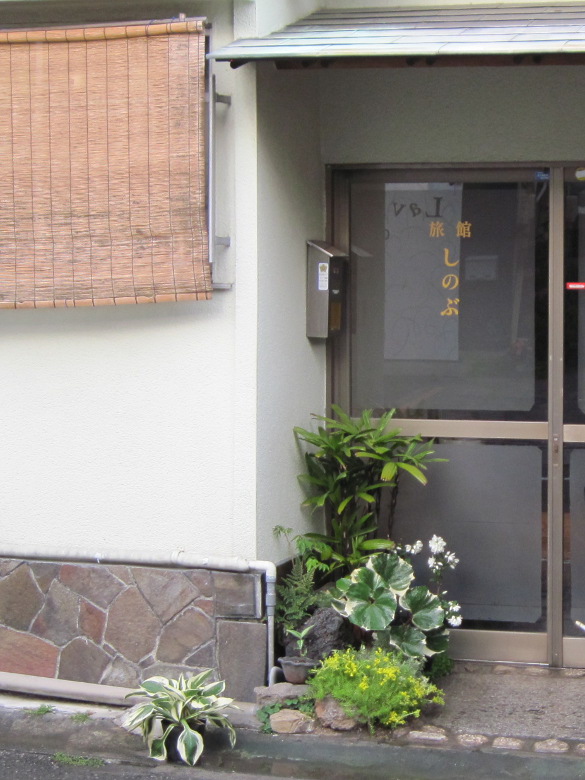
Shinobu Ryokan
When I arrived at the Shinobu Ryokan and was relaxing, I could hear the people in the next room and the ryokan staff talking. Apparently, the person next to me was also a Tokaido walker.
Walking data
Course: Yoshiwara-juku -> Kambara-juku -> Yui-juku -> Okitsu-juku -> Ejiri-juku
Distance: 39.1km
Time: 12h31m


コメント