
The cherry blossoms were declared in bloom on March 21. Although the Someiyoshino cherry trees were not yet at their best, the flowers were in full bloom along the greenway.
Meguro River Greenway
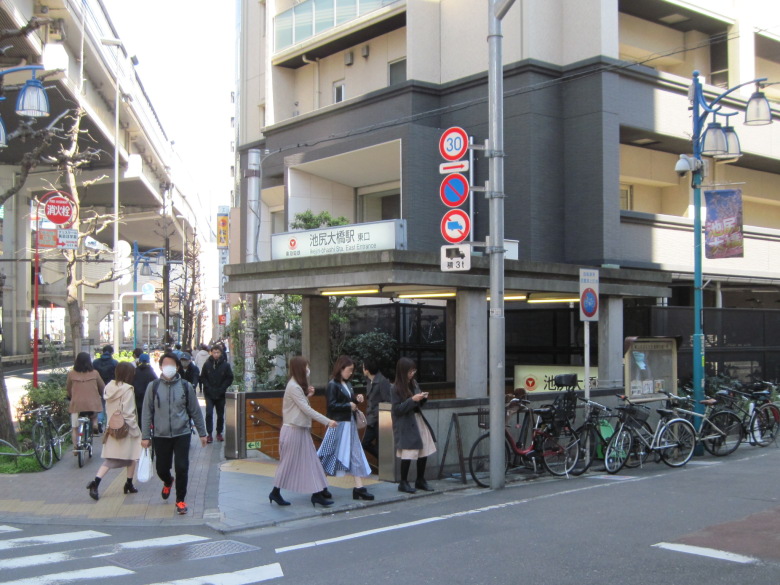
Ikejiri-Ohashi Station
Continuing from last week, I came to Ikejiri-Ohashi station. There seemed to be more people than last week. It seems as if everyone has come to see the cherry blossoms.
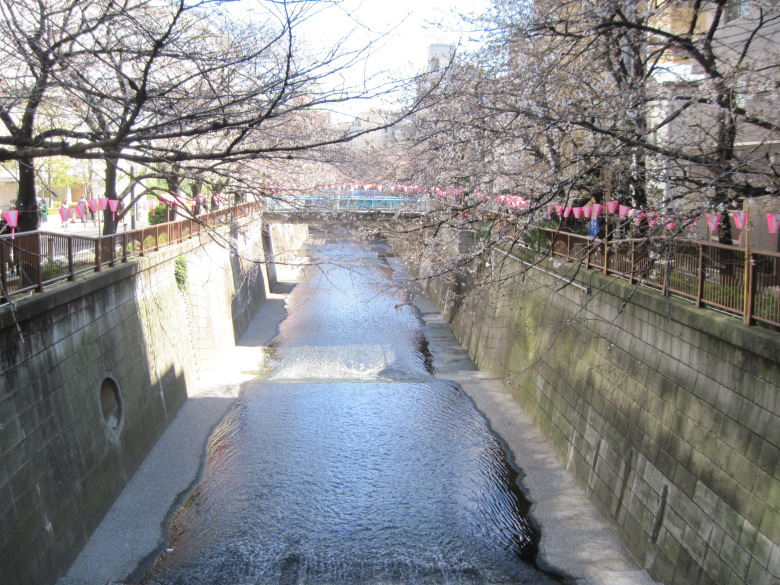
Cherry blossoms in Meguro River as seen from Ohashi Bridge
A shot of the downstream side of the Meguro River from the top of the Ohashi Bridge.
The Someiyoshino trees are in bloom, but only about 30% of them are in bloom.
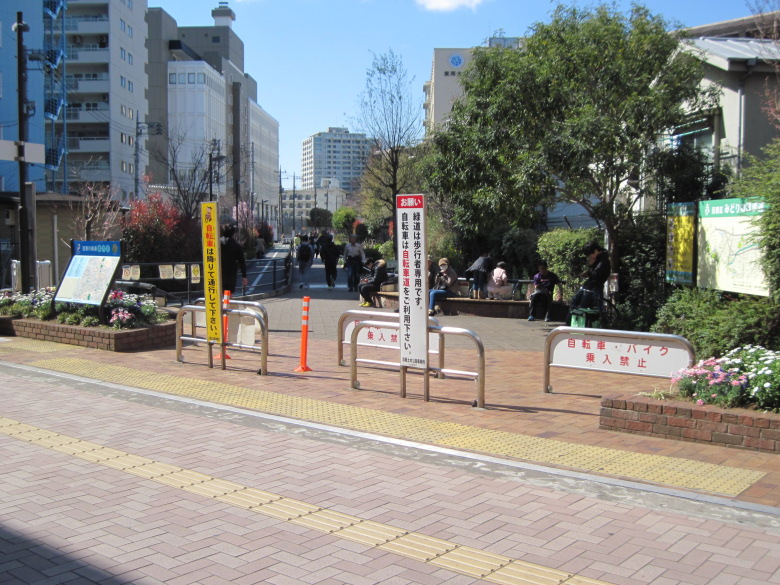
Entrance to the Meguro River Greenway
The upstream side beyond Route 246 seems to be a culvert, and the top of it is maintained as the Meguro River Greenway.
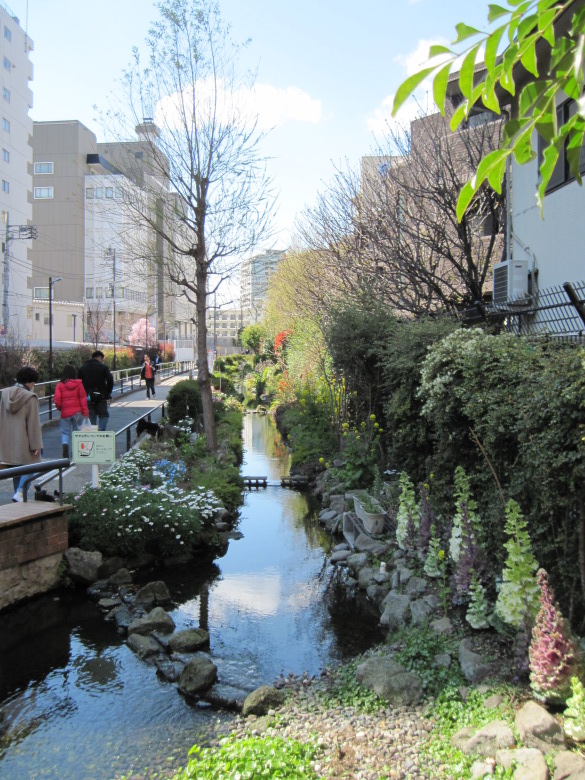
Recycled water cleaned at the Ochiai Water Reclamation Center flowing through the Meguro River Greenway
The water is clean and odorless because it is reclaimed water cleaned at the Ochiai Water Reclamation Center.
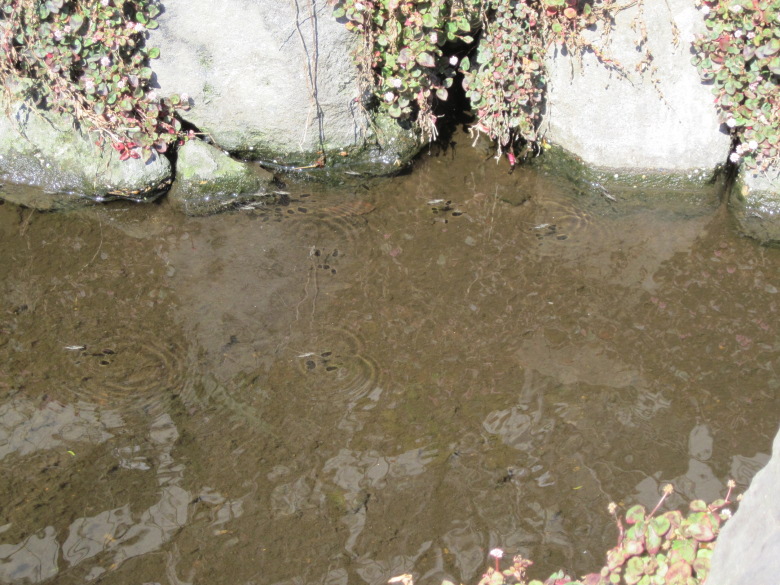
Water striders
There was also a water strider. It was interesting to see the six shadows of its legs.
But water striders are interesting in many ways, aren’t they?
First of all, how can they move on the water as they wish? If there is no friction on the surface of the water, they can’t move from the spot, so they must be doing something clever to create friction. The fact that the shadow area of the forefoot is small and the shadow area of the middle and hind feet is large may be a clue to the question.
Secondly, its instantaneous power. Are you doing anaerobic exercise?
If you chase it around all the time, will it eventually get tired and not be able to move at all?
Finally, there’s the name. It smells as sweet as candy, and its body is thin like a stick, hence the origin of the word “amen-bou (stick of candy).” However, I know that water striders are in the order of stink bugs, so it takes courage to smell them.
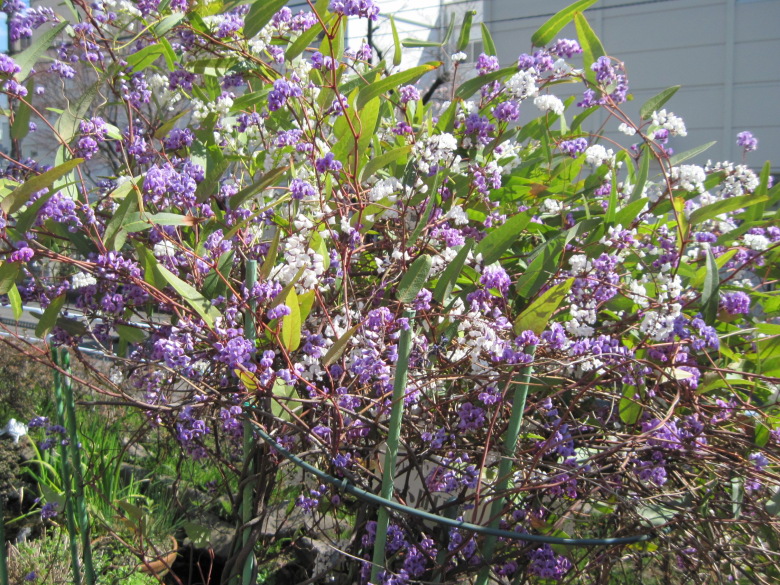
Hardenbergia (Komachi wisteria)
There are so many different flowers in bloom this season. This one is Hardenbergia (Komachi wisteria).
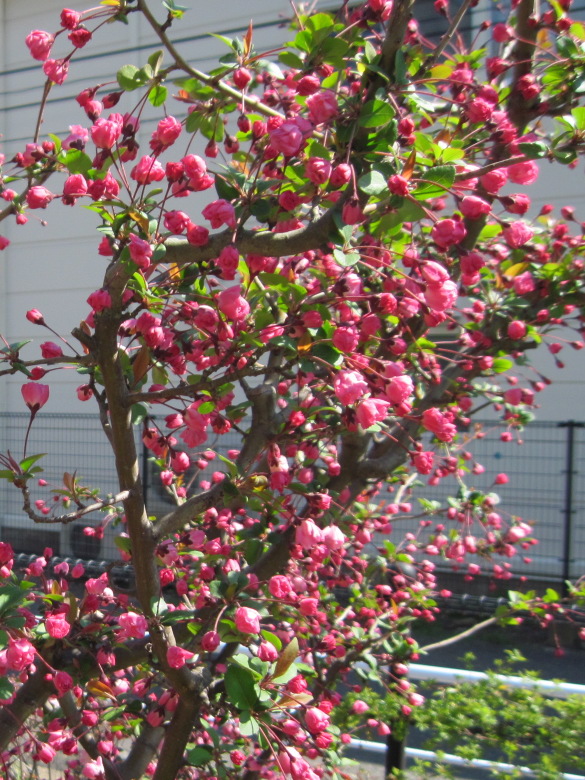
Malus halliana (Hanakaidou)
Malus halliana is a genus of apple.
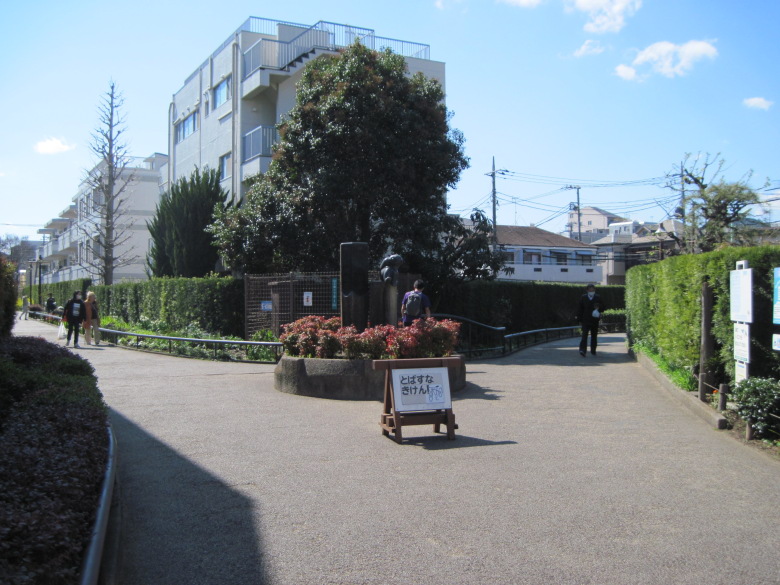
Meguro River starting point
I found the starting point of the Meguro River!
Here, the Kitazawa River coming from the right and the Karasuyama River coming from the left join to form the Meguro River.
Both rivers are culverted, and there is a greenway above them.
As far as I can see from here, the Karasuyama River Greenway seems to have more varieties of flowers. But I dared to head for the Kitazawa River Greenway.
Kitazawa River Greenway
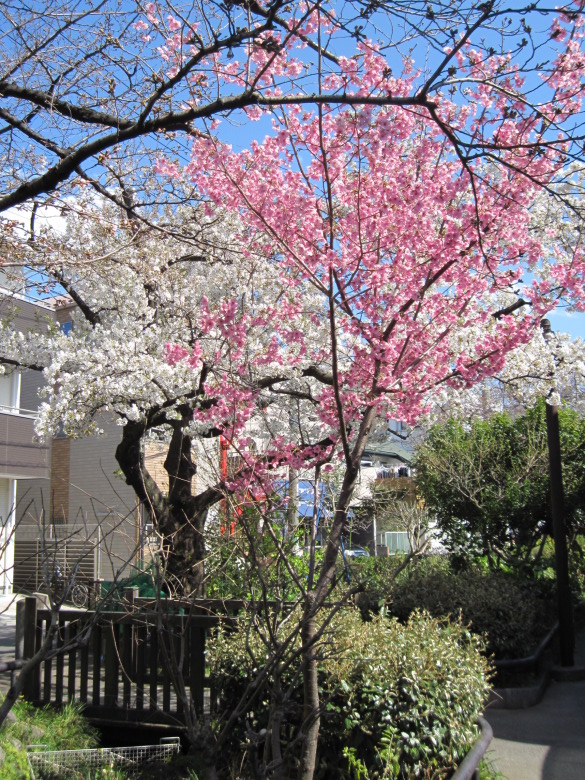
Early blooming red and white cherry blossoms
There were some early red and white cherry blossoms that were nearly in full bloom. Everyone was so eager to take pictures that it was hard to keep people out of the picture.
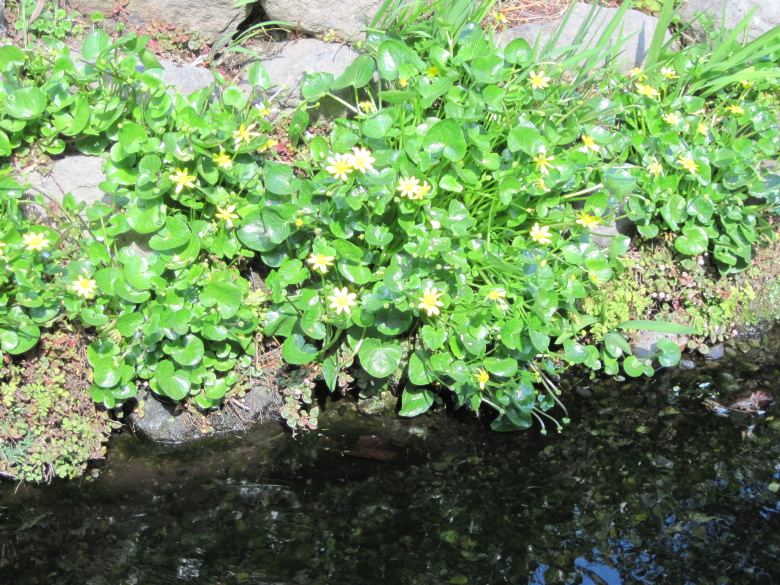
marsh marigold (Ryuukinka)
This is marsh marigold (Ryuukinka). The leaves were shiny as if they were wet with water.
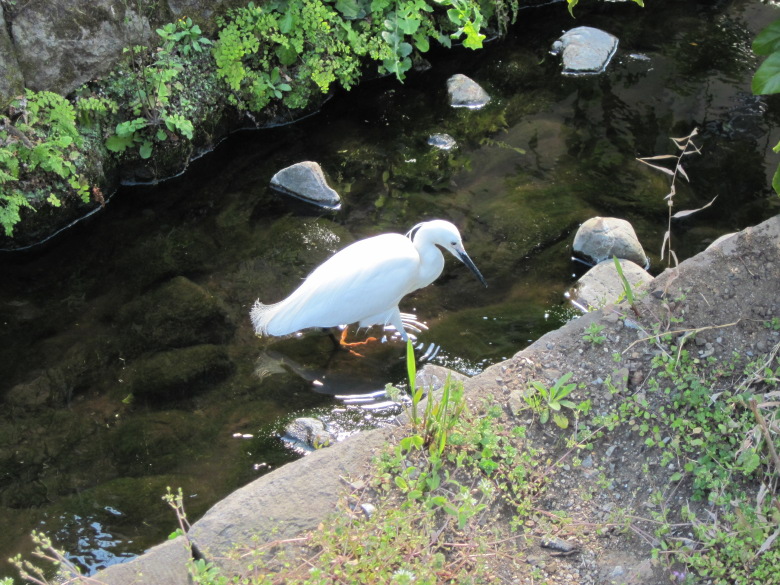
Egretta garzetta (Kosagi)
The most amazing thing I saw today was this Egretta garzetta (Kosagi). It was so close that I could reach out and touch it. What is it that they are after?
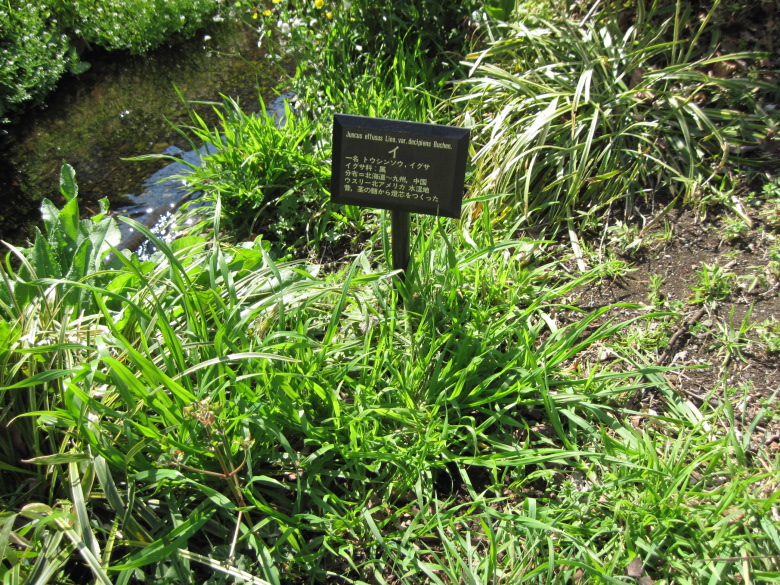
Rush (i)
It says “i” on it. It should be the so-called “igusa (rush), but really? You wouldn’t think of making tatami with this, would you? Igusa is the seasonal word for summer, so I have a strong feeling that I photographed a different grass.
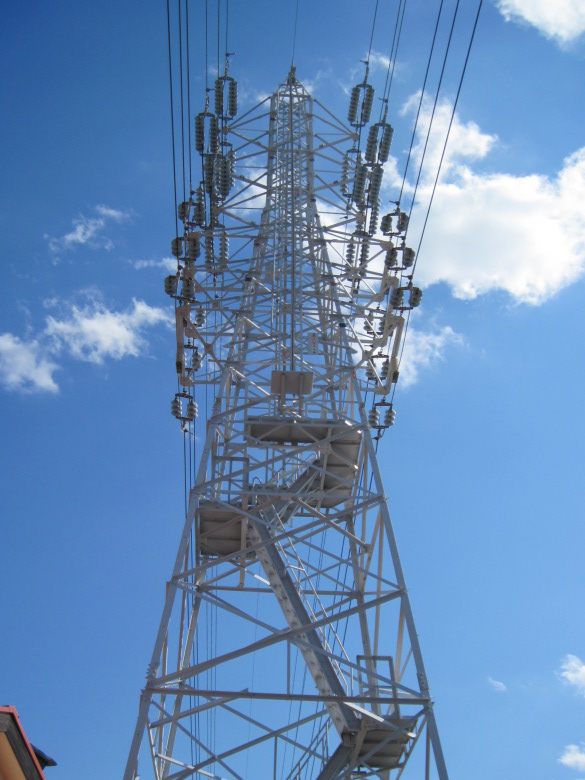
Steel Tower No. 61 on Yoda Hill
This is a picture of a steel tower out of the blue. Why?
Actually, there have been many literary figures living along the Meguro River, and the poet Sakutaro Hagiwara used to live just below the No. 61 steel tower on Yoda Hill. I have seen some nameplates in the vicinity, but it seems that no descendants live there.
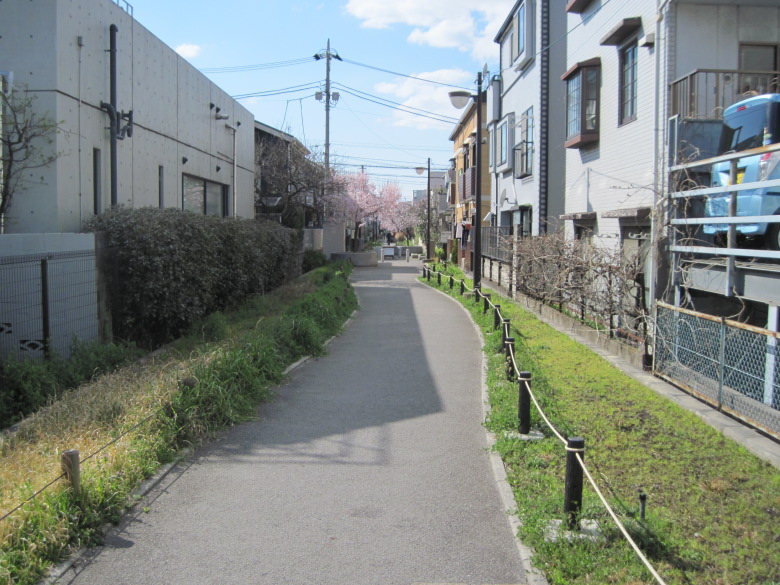
The Kitazawa River Greenway, now less crowded
As I crossed the Miyamae Bridge on Kannana Street, the number of people suddenly decreased.
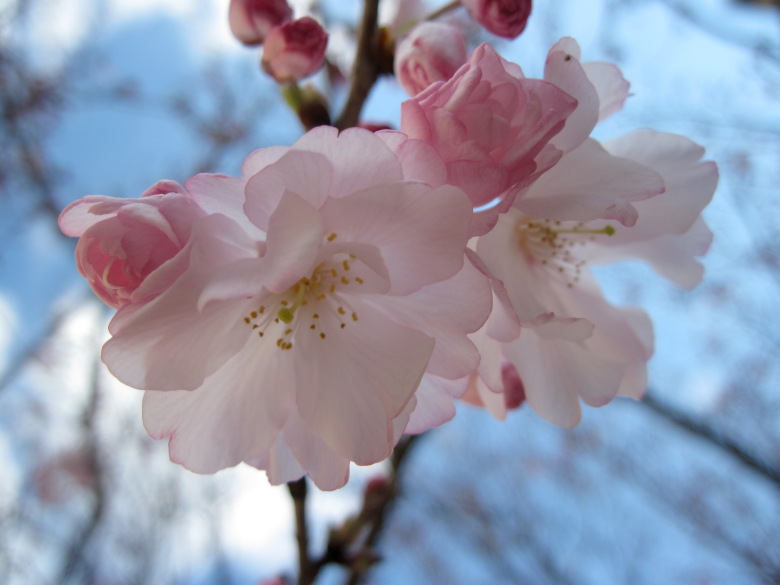
Cerasus subhirtella (Kohiganzakura)
But the Cerasus subhirtella (Kohiganzakura) was blooming beautifully.
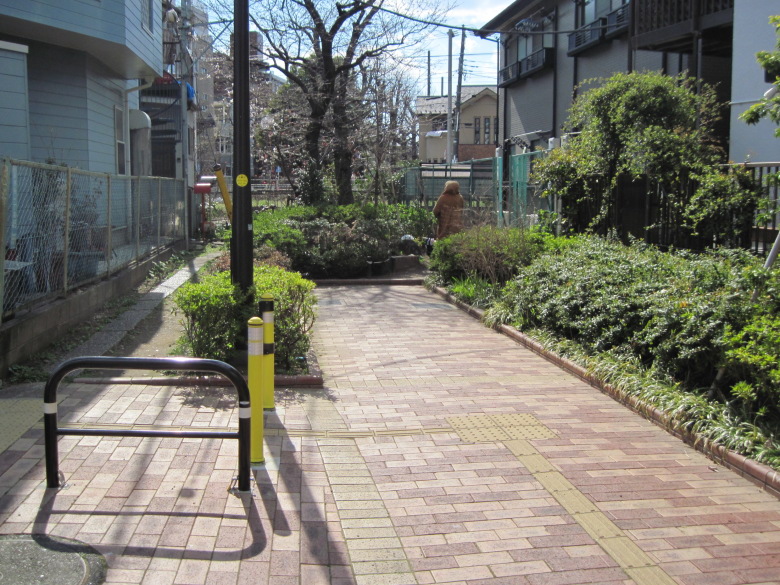
The Kitazawa River Greenway, blocked by the Tokyu Setagaya Line
The Tokyu Setagaya Line blocked my way, so I decided to end my walk here today.
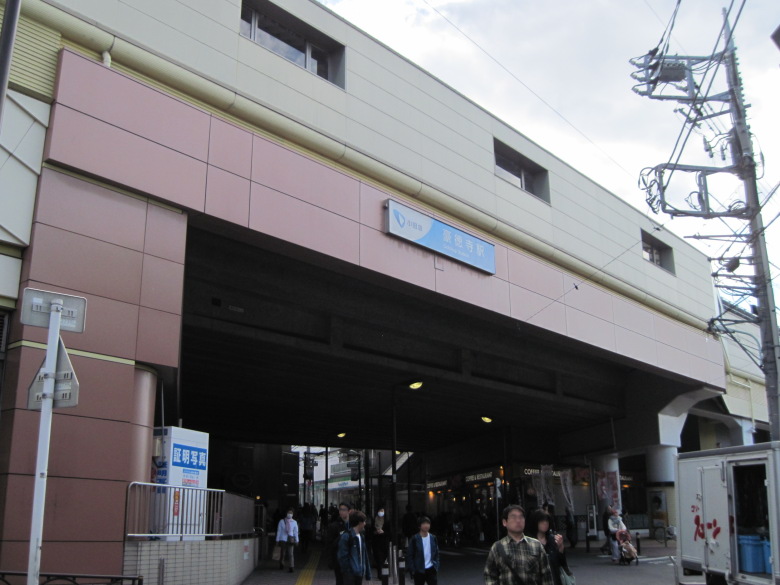
Gotokuji Station
I came back from Gotokuji Station on the Odakyu Line, but later I thought I should have taken the Setagaya Line since I rarely have a chance to take it.
Walking data
Course: Tokyu Denentoshi Line Ikejiri-Ohashi Station -> Meguro River Greenway -> Kitazawa River Greenway -> Odakyu Odawara Line Gotokuji Station
Distance: 4.8km
Time: 1h34m

